Skip to content
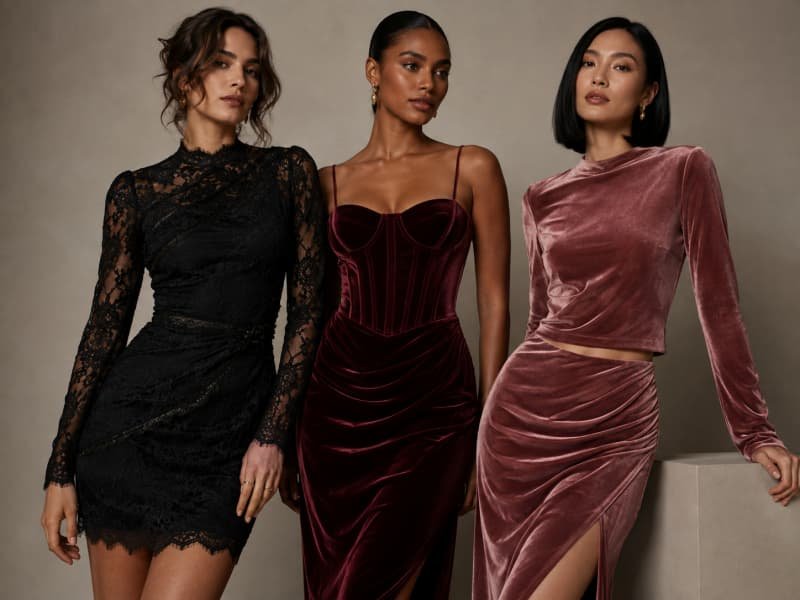
Romantic fashion becomes commercially interesting when it stops looking like a costume and starts feeling relevant to real evenings, social events and seasonal wardrobes. Lace brings transparency, softness and visible craft. Velvet contributes depth, warmth and a surface that changes as the wearer moves. Used carelessly, the combination can become heavy, dated or overdecorated. Used with discipline, it can support fitted party dresses, refined occasionwear, modern separates and stronger campaign pieces without losing comfort or production stability.
Brands can use romantic lace and velvet successfully by matching each fabric to the right silhouette, controlling decoration, building a focused color story and testing fit, stretch, shade and construction before bulk production. The strongest collections combine expressive hero styles with cleaner, repeatable products instead of applying both materials to every garment.
A collection may begin with a single image: a black lace sleeve against a wine-colored velvet bodice, a softly lit campaign shot or a vintage dress with a striking neckline. The real work begins after that moment. The development team must decide which details create value, which construction choices protect fit, which fabrics will remain stable after grading and which ideas can be reproduced consistently across a full size range. That translation from atmosphere to a wearable, sellable and repeatable product is what separates a beautiful mood board from a successful Fall/Winter collection.
What Defines Romantic Lace and Velvet?
Romantic lace and velvet are defined by controlled contrast: delicacy against depth, transparency against coverage and historical references against modern proportions. The look succeeds when lace creates lightness and detail while velvet adds richness and structure. Strong collections use these materials selectively, allowing the silhouette, fit and wearing occasion to remain clear rather than turning every garment into an elaborate statement piece.
What Makes the Look Feel Modern?
Modern romantic fashion borrows emotion from vintage clothing without copying an entire historical look. A high lace neckline can appear on a sharply cut mini dress, while a velvet corset may be paired with a straight skirt rather than a full ball-gown shape. A sheer sleeve can balance an open back, and a long velvet dress can feel current through a clean square neckline, asymmetric draping or a precisely placed slit. The reference may be historical, but the proportion should belong to a contemporary wardrobe.
Proportion usually matters more than decoration. Long sleeves work well with a shorter hem, while a fitted textured bodice becomes easier to read when the skirt is simple. A closed neckline can be balanced by an open back or controlled side cutout. These choices give the eye a clear hierarchy. They also reduce unnecessary sewing operations and help the garment photograph well from both full-length and close-up angles, which is particularly important for ecommerce product pages and social campaigns.
The most convincing products often have one dominant feature: a scalloped lace neckline, a velvet-covered corset, a transparent back panel or a draped hip. Adding every available romantic detail rarely makes a style more valuable. It usually increases cost, fit risk and visual noise. A useful review method is to examine the silhouette as a plain line drawing. When the shape remains desirable without color or texture, the lace and velvet are strengthening a sound product rather than hiding a weak one.
Is Dark Romance Still Growing?
Dark romance remains relevant because it offers femininity without relying only on pale colors, floral prints or sweet styling. Black lace, burgundy velvet, smoky transparency, corset seams, long sleeves and antique-inspired trims can feel sensual, polished and seasonally appropriate at the same time. The direction also works across several categories, from holiday party dresses and cocktail styles to fashion tops, wedding guest dresses and limited evening capsules.
The commercial version is normally more restrained than the runway interpretation. Customers may be attracted by a dramatic campaign image, but the products they wear repeatedly tend to have familiar entry points: a black lace mini, a fitted velvet midi, a corset dress with sheer sleeves or a lace-trimmed top that works with an existing skirt or trouser. The material creates the mood, while the recognizable silhouette reduces the risk of the garment feeling theatrical.
Dark romance should not automatically become gothic costume. Gothic references grow stronger when a range relies heavily on black, extreme volume, dense trim or literal historical motifs. Romantic occasionwear can use the same dark palette while remaining cleaner and easier to merchandise. Black creates drama, midnight blue feels polished, chocolate looks warmer, and oxblood or plum increases the event-driven effect. The collection should decide early whether its mood is mysterious, luxurious, sensual, vintage-inspired or softly feminine, because attractive individual styles do not automatically form a coherent range.
How Are Runways Using These Fabrics?
Recent Fall/Winter collections rarely treat lace or velvet as isolated ideas. The materials usually sit within a wider fabric story that includes chiffon, satin, mesh, tailoring wool, leather, sequins or embroidery. Velvet may lead a fitted dress, structure a corset panel or appear only as binding and straps. Lace may create an all-over overlay, reveal selected areas of skin, frame a neckline or repeat as a narrow trim across several products. The contrast keeps the collection layered rather than repetitive.
For a commercial label, the value of runway research lies in extracting repeatable design codes rather than reproducing complete looks. A practical code might use one lace motif across dresses and tops, one velvet quality in two silhouettes, a shared corset seam line, a limited palette of black, wine and antique rose, or the same scalloped edge at necklines, cuffs and hems. Repetition creates recognition and can simplify sourcing because approved materials, trims and fit blocks are used across more than one style.
Runway samples may rely on hand placement, delicate raw edges or highly fragile surfaces that are difficult to grade and reproduce. Before a concept enters the line plan, the team should consider how it will behave during cutting, sewing, packing, transportation, customer try-ons and care. An image can inspire the mood, but a commercially useful design must survive the full product journey. The strongest translation preserves the emotional effect while making the construction clearer, the fit more stable and the quality easier to repeat.
What Separates Romance from Costume?
The difference usually comes down to restraint, relevance and wearability. Costume-like garments depend heavily on literal historical details, while commercial romantic fashion selects only a few references and combines them with shapes customers already understand. A Victorian-inspired sleeve can sit on a clean bodycon mini, a corset seam can appear without exposed boning, and a lace jabot can be reduced to a narrow neck detail. The historical idea remains visible, but it does not control the entire product.
Fabric quality also changes the result. Fine lace with a clear motif looks intentional, while a coarse lace with a shiny ground can make the same design appear inexpensive. Velvet needs enough pile density and stable recovery to look rich in movement. A surface that is too flat, overly reflective or easily crushed can create a theatrical impression even when the pattern is well designed. Clean finishing, accurate seam tension and carefully managed edges often communicate more value than additional embellishment.
The product should make sense beyond the campaign image. A romantic dress becomes easier to wear when it works with boots, a long coat, simple heels or an evening bag already in the customer’s wardrobe. Fit provides the final distinction. A balanced neckline, controlled sleeve volume, correct waist position and comfortable movement make expressive fabrics look sophisticated. Poor fit makes even expensive materials feel decorative rather than designed, which is why romantic styling and technical development cannot be separated.
Which Lace and Velvet Types Work Best?
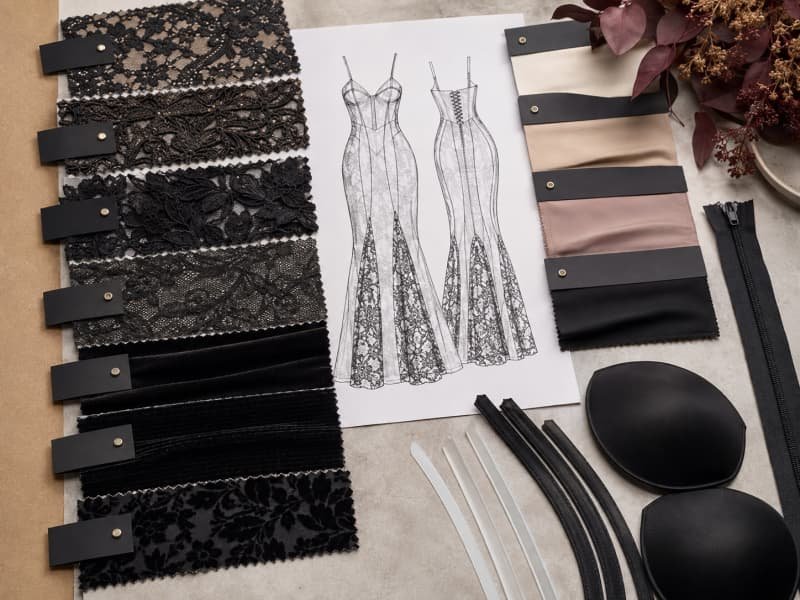
The best lace or velvet is the one that supports the intended silhouette, fit, price and care requirement. Fine lace suits sleeves, overlays and transparent panels, while denser lace provides stronger pattern definition. Stretch velvet works well for fitted dresses; woven velvet suits structured shapes. Lining, support layers and trims must be developed at the same time because they directly affect movement, opacity and bulk-production consistency.
Which Lace Types Suit Fall/Winter?
Lace should be selected according to its job in the garment rather than its appearance on a hanger. Fine lace can create delicate sleeves, yokes, overlays and fitted bodices. Corded lace has a stronger outline and reads clearly in photography. Guipure offers more body and structure, while stretch lace supports close-fitting products when its recovery is stable. The material choice should be reviewed together with silhouette, lining and seam construction because each factor changes how the lace behaves on the body.
Chantilly-style lace works well for refined designs where transparency is important. It can sit over skin-tone lining, tonal lining or selected sheer zones, but its delicate ground may distort during cutting and sewing. Corded lace is more visible from a distance because the raised outline defines the motif; it suits occasion bodices and statement panels, although several overlapping layers can create bulk at darts, side seams and zipper areas. Guipure is useful for structured inserts and premium trims, yet its density can resist soft draping.
Stretch lace is practical for bodycon dresses, bodysuits and fitted sleeves, but stretch alone is not enough. Recovery matters more: the fabric should return close to its original dimension after extension and rest. A lace that stretches easily but remains elongated can create loose sleeves, rippling side seams and an unstable neckline. Embroidered mesh and eyelash lace also require specific checks because embroidery tension may pucker the ground, while decorative edges can become unstable when they are cut or joined without a clear finishing method.
Which Velvet Types Suit Each Silhouette?
Velvet is not a single standard fabric. Its behavior changes with the knitted or woven base, pile height, fiber composition, backing, finish and stretch direction. Stretch velvet is often the most practical choice for bodycon dresses, fitted minis, draped midis and close-cut tops because it follows the body without requiring excessive seam shaping. The pattern must still account for growth and recovery, particularly at the waist, seat, elbows and zipper area.
Woven velvet gives a richer, more tailored appearance. It can suit corset dresses, structured minis, jackets, shaped bodices and clean column silhouettes. Because it has little natural stretch, comfort must come from pattern shaping, vents, seam placement and carefully controlled ease. A woven velvet dress can look strong while standing but become uncomfortable when sitting if the hip, thigh and torso movement have not been tested in the correct fabric.
Crushed velvet has deliberate surface variation, which can make minor pressure marks less noticeable but also creates a stronger retro character. Panne velvet has a flattened, highly reflective surface and requires careful styling because excessive shine can reduce perceived quality. Burnout or devore velvet combines transparent and opaque areas, making it useful for sleeves, overlays and evening dresses. The lining color and skin exposure become part of the design, and the pattern scale should be reviewed on the body rather than only as a flat swatch.
| Fabric Type | Typical Weight | Typical Stretch | Suitable Uses | Main Risk |
| Fine lace | 60-130 gsm | Low to moderate | Sleeves, yokes, overlays | Snagging and distortion |
| Stretch lace | 80-170 gsm | Often 20-40% crosswise | Bodycon dresses, bodysuits | Poor recovery |
| Corded lace | 120-250 gsm | Usually low | Occasion bodices, panels | Bulk at seams |
| Guipure lace | 180-350 gsm | Minimal | Structured inserts, trims | Weight and stiff drape |
| Embroidered mesh | 100-220 gsm | Depends on base mesh | Sleeves, overlays, placement | Embroidery tension |
| Eyelash lace | 70-160 gsm | Low to moderate | Necklines, hems, cups | Unstable edge finishing |
| Stretch velvet | 220-330 gsm | Often 20-40% crosswise | Fitted and draped dresses | Growth and zipper waves |
| Woven velvet | 180-320 gsm | Minimal | Corsets, tailoring, columns | Restricted movement |
| Burnout velvet | 90-190 gsm | Low to moderate | Sheer sleeves, overlays | Uneven transparency |
How Do Lining and Structure Affect the Result?
The shell fabric creates the first impression, but the internal construction controls comfort, shape and longevity. A poorly chosen lining can fight against the outer fabric and create problems that appear to be pattern faults. A stretch velvet shell paired with a rigid woven lining may move over the body while the lining restricts it, causing pulling at the bust, hips or armhole. A compatible stretch lining is often more suitable for close-fitting styles, although the exact stretch relationship should be tested rather than assumed.
Fine lace needs a lining that supports the visual effect. A heavy or shiny lining can flatten the motif and make the garment appear dense, while a matte tonal lining usually produces a more refined result. A contrasting skin-tone lining increases motif visibility and requires careful shade selection for the intended market. Corset and bustier styles add another layer of complexity because the outer fabric, interlining, boning, cups, elastic support and closure must work as one system. Stronger boning does not automatically create better fit if the bust position and neckline tension remain unbalanced.
Transparency should be planned zone by zone. The technical pack needs to state which areas are fully lined, partially lined or intentionally sheer. Seam allowances, darts, labels and support tapes can become visible through lace, so clean internal finishing may require narrow seams, binding, appliqué placement or concealed construction. The garment should be reviewed in movement, not only on a dress form. Sitting, raising the arms, walking and turning often reveal lining drag, neckline movement and stress points that do not appear during a static fitting.
Are Sustainable Options Suitable?
Sustainable lace and velvet options can be suitable, but the claim must be matched to real material performance and traceable documentation. A recycled fiber content does not automatically guarantee stable recovery, consistent color or long-term durability. An organic natural-fiber claim does not remove the need to review dyeing, finishing, shrinkage and care. The first sourcing step is to define the requirement precisely, such as recycled polyester content, certified organic cotton, restricted-substance compliance or a customer-specific preferred-material standard.
Certificate scope matters. A certificate may cover a supplier, a process or only selected product articles. The development team should confirm that the chosen fabric, color and production batch fall within the relevant scope before the claim appears in product marketing. Availability is equally important. Fashion lace may depend on specific motifs and seasonal colors, while certified options can have longer lead times, higher minimums or fewer color choices. These trade-offs need to be understood before the collection calendar and target price are fixed.
Performance testing remains essential. Recycled-content velvet should still be checked for pile density, shade stability, stretch and recovery, while lace should be reviewed for dimensional stability, snagging and seam behavior. The garment must remain desirable, durable and suitable for its intended use. A responsible material decision is weakened when the finished product loses shape quickly, cannot be produced consistently or requires an unrealistic care routine. Sustainability should strengthen the product brief rather than replace technical judgment.
Which Colors and Silhouettes Lead?
Deep jewel tones, black, chocolate and softened winter neutrals provide the strongest base for romantic lace and velvet. Leading silhouettes include fitted minis, corset midis, long-sleeve lace dresses, clean columns and softly draped maxis. The most balanced ranges combine a small number of dramatic occasion styles with simpler dresses, tops and sets that repeat the same fabric story at more accessible prices.

Which Colors Suit Romantic Collections?
Black remains the most dependable commercial choice. It defines lace patterns clearly, gives velvet a deep and sophisticated surface and works across party, cocktail, going-out and formal categories. It also allows brands to introduce stronger silhouettes without making the product feel unfamiliar. Burgundy, oxblood and wine are natural seasonal alternatives, especially in velvet, where the pile reflects light differently as the garment moves. The visual depth is attractive, but it makes shade approval and nap direction more important.
Plum and aubergine provide similar richness with a more fashion-led character. Midnight blue offers the formality of black without repeating a black-heavy range, while forest green suits holiday and evening products. Chocolate brown creates a warmer, softer mood that works well for neutral-led brands. Antique rose, dusty berry and mauve bring femininity without appearing too springlike. Cream or winter-white lace can also feel refined, although the styling and product naming should clearly separate it from bridalwear when that is not the intended category.
Color should be approved on the final fabric and under more than one light source. A shade that looks balanced under office lighting can change in daylight, warm retail lighting or campaign photography. Velvet requires particular care because the pile alters light reflection, while lace changes according to the lining underneath it. A black lace placed over black lining reads subtle and tonal; the same lace over a warm skin-tone lining creates a stronger graphic contrast. Color approval therefore needs to evaluate the complete material combination, not only an isolated swatch.
| Color Direction | Best Material Expression | Suitable Silhouettes | Strongest Use | Main Approval Point |
| Black | Lace and velvet | Mini, midi, corset, column | Party, cocktail, going-out | Detail visibility |
| Burgundy / wine | Velvet-led | Fitted midi, draped maxi | Holiday and occasionwear | Pile-related shade change |
| Plum / aubergine | Velvet or tonal lace | Corset midi, long sleeve | Premium evening edits | Lighting response |
| Midnight blue | Woven velvet, corded lace | Column and formal midi | Formal and wedding guest | Black-blue distinction |
| Forest green | Velvet | Mini, midi, structured bodice | Holiday capsules | Batch consistency |
| Chocolate | Soft velvet, tonal lace | Draped and fitted shapes | Neutral-led fashion ranges | Lining warmth |
| Antique rose | Lace-led | Mini, soft midi, corset top | Feminine occasionwear | Avoid springlike brightness |
| Cream / ivory | Lace | Long sleeve, overlay, top | Winter events and separates | Transparency and staining |
Which Dress Silhouettes Work Best?
The strongest silhouette is the one that uses the fabric’s natural behavior rather than forcing it into an unsuitable shape. Stretch velvet works well for bodycon minis, asymmetric fitted dresses and draped midis because it follows the body and provides visual depth without requiring too many style lines. Recovery must remain stable at the waist, hips, elbows and zipper. Firm woven velvet is better suited to corset bodices, shaped minis, structured shoulders and clean columns, where its body supports the design.
Fine lace performs well in long sleeves, fitted overlays, high necks and transparent panels because it adds visual interest without excessive weight. Corded or denser lace suits areas that need clearer pattern definition, such as the bodice, waist or hem. Mini dresses are particularly useful when the material is visually heavy; a shorter length balances long sleeves or a closed neckline. Midi dresses support cocktail and wedding guest categories, while maxi dresses create impact but demand careful control of fabric consumption, garment weight and walking ease.
Corset and bustier dresses remain important because they combine a historical reference with a familiar contemporary silhouette. Their commercial strength depends on disciplined fit development. Cup position, underbust balance, neckline security, waist suppression, boning and closure tension need to remain stable across the size range. Halter and backless designs can make velvet feel lighter by exposing the shoulders and upper back, while clean column shapes allow the material to carry the romantic mood without additional decoration. Each silhouette should have a clear reason for using the chosen fabric.
Which Products Extend the Collection?
A strong seasonal collection does not need to depend entirely on dresses. Tops, skirts, sets, bodysuits and jumpsuits can repeat the same visual codes while reaching customers with different styling preferences and price expectations. A velvet corset top can coordinate with a matching mini skirt or an existing trouser category, while a lace bodysuit can work beneath tailoring as well as with an evening skirt. A velvet midi skirt introduces the texture to customers who may not want a full velvet dress.
Coordinated sets are especially useful because they photograph as complete looks but allow separate purchase. A lace-trim camisole and velvet skirt can move across more occasions than a highly detailed gown, and each piece can be styled with items already in the customer’s wardrobe. Jumpsuits offer another polished event option, although torso length, rise, seat fit and movement require more testing than a dress. Refined fashion tops can use lace sleeves, velvet bodies or corset seams to carry the seasonal mood at a lower retail price.
Extension products should repeat a limited number of recognizable codes. The same lace motif, velvet quality, button, bow or scalloped edge can connect several categories. Too many unrelated materials make the range look fragmented and increase sourcing complexity. A practical program may use one velvet across two dresses and one top, one lace across a dress, bodysuit and skirt, and a shared lining palette. This creates visual consistency while keeping the number of production variables manageable and increasing the chance that approved components can support repeat orders.
Which Occasions Offer the Strongest Potential?
Romantic lace and velvet naturally suit occasions where customers expect more visual impact. Holiday parties, cocktail events, winter weddings, birthdays, homecoming, formal dinners and evening social events are strong categories. The product requirements still vary. A going-out mini can prioritize a close fit and stronger skin exposure, while a wedding guest midi needs secure coverage, sitting comfort and enough movement for a longer event. A homecoming dress may focus on youthful proportions, whereas a formal style needs more attention to lining, hem movement and support.
Holiday capsules are particularly suitable for velvet because the material communicates seasonality immediately. Black, wine, green and midnight blue can create a concise color story without requiring a broad palette. Lace can support the range through sleeves, overlays and coordinating tops. The range becomes more useful when the occasion is defined with enough precision to guide fit and construction. A club dress and a formal dinner dress may share velvet, but their neckline security, coverage, garment length and movement should not be developed to the same standard.
Launch timing is as important as product design. Event-driven garments need to arrive before the customer’s occasion, not simply during the same season. Brands should work backward from campaign photography, ecommerce upload, wholesale delivery and expected purchase windows. Fabric approval, sampling, fitting, testing and bulk delivery are part of the merchandising plan, not isolated factory tasks. A technically successful dress can still underperform when it reaches the market too late, so the seasonal calendar should allow enough time for correction without sacrificing the key selling period.
How Can Brands Make the Trend Commercial?
Brands can commercialize romantic lace and velvet by dividing the range into hero pieces, repeatable core styles and accessible extension products. Clear material roles, reusable fit blocks and controlled decoration help protect price, lead time and quality. The goal is not to make every garment dramatic; it is to build a collection where the strongest ideas attract attention and simpler products convert that attention into reliable sales.

How Should Lace and Velvet Be Balanced?
Lace and velvet do not need equal visual weight. One material should normally lead while the other supports the design. A velvet dress may use lace at the neckline, sleeve, side panel or cup edge. A lace dress may use velvet straps, binding, a waistband or corset panel. This creates contrast without making the garment difficult to understand. It also makes production planning easier because the most demanding material can be concentrated in areas where it creates the greatest visual value.
A useful starting point is to think in visual ratios rather than strict formulas. A clean commercial style may use approximately 80-90% of one material and 10-20% of the other, while a stronger statement style may move closer to 60/40. These figures are design-planning references, not universal rules. Tonal combinations are generally easier to commercialize. Black lace over black lining feels refined and forgiving, while black lace over a skin-tone lining creates greater exposure and requires a more precise shade decision.
The balance should be reviewed at full garment scale. A five-centimeter lace trim can look narrow on a swatch board but dominate a fitted mini dress. A small velvet bow may appear minor in a technical drawing and become the strongest feature in ecommerce photography. Material compatibility matters as well. Heavy velvet beside very soft lace can pull a seam out of shape, while a rigid lace insert inside a stretch velvet body may restrict movement. When the fabrics behave differently, the placement may need stabilization, support or redesign.
Do All Styles Need Strong Decoration?
No. When every product includes corsetry, lace, velvet, ruffles, crystals, cutouts and elaborate trims, the range loses hierarchy. Customers cannot identify the hero style, and production teams face a high number of operations and inspection points on every SKU. A commercially useful assortment needs different levels of intensity. The exact mix depends on brand position and channel, but a line plan should clearly distinguish pieces that carry campaign imagery from styles designed for repeatable sales and outfit building.
Hero products can justify complex lace placement, internal support or premium materials because they establish the collection’s identity. Core styles should preserve the same mood through cleaner patterns, fewer trims and more reliable fit. Extension products allow customers to participate in the trend without buying a full occasion dress. A simple velvet mini, a lace long-sleeve dress and a corset top may support the commercial program more effectively than three equally elaborate gowns because each product plays a different role.
The strongest ranges use drama selectively and repeat recognizable details across different price levels. A premium lace motif can appear as an all-over overlay on one hero dress, as a sleeve on a core style and as a narrow trim on an entry product. This approach keeps the visual story connected while adjusting material consumption and labor. It also provides useful information after launch, because the brand can see whether customers respond primarily to the color, silhouette, fabric or decorative treatment before expanding the next drop.
| Range Role | Planning Share | Product Character | Typical Examples | Main Purpose |
| Hero styles | 15-25% | Strongest visual statement | Corset velvet midi, lace maxi | Campaign and brand image |
| Core styles | 45-55% | Clear trend, simpler construction | Fitted mini, long-sleeve lace dress | Volume and repeat potential |
| Extension styles | 20-30% | Accessible price and styling | Tops, skirts, bodysuits, sets | Cross-selling and wider reach |
| Experimental styles | 5-10% | New shape or technique | Burnout velvet, unusual placement | Testing future direction |
How Can Brands Avoid a Heavy Look?
Visual weight can be reduced through proportion, exposure, movement and material placement. Open necklines, exposed shoulders, shorter hems and transparent sleeves create breathing space around dense fabrics. A velvet mini with a clean neckline can feel lighter than an all-over lace midi even when the velvet has a higher physical weight. Selective lining is one of the most effective tools: the body can remain covered while sleeves are sheer, or a transparent yoke can sit above a structured velvet bodice.
Drape also changes the impression. Lightweight velvet can form a cowl neckline, twisted waist or softly falling skirt. Movement breaks up the dense surface and prevents the garment from appearing rigid. A narrow lace edge can define a neckline without covering the whole dress. Color influences visual weight as well. Black-on-black looks compact and dramatic, while dark velvet combined with a softer tonal lace creates more depth. A skin-tone lining beneath black lace increases contrast and makes the motif appear lighter, although it also creates a more exposed look.
A common mistake is adding embellishment to make the product appear premium. Premium appearance often comes from cleaner finishing, more accurate fit and better fabric behavior. A plain velvet dress with a stable neckline, smooth zipper and well-balanced drape can look more expensive than a highly decorated style with puckered seams and uneven lace placement. Before adding another detail, the team should review whether the garment needs more decoration or simply needs stronger proportion, construction and fit.
How Should Price Architecture Be Planned?
Lace and velvet costs should not be evaluated only by price per meter. Total garment cost is affected by fabric consumption, usable width, nap direction, motif placement, cutting loss, lining, internal support, sewing time and quality-control requirements. Velvet generally needs one-way cutting so the pile reflects light consistently, which reduces marker efficiency compared with fabrics that can be placed in both directions. Lace may require motif matching or controlled placement, creating additional consumption and cutting time.
Labor rises when a garment includes appliqué, scalloped-edge placement, narrow seam allowances, cups, boning, binding, hand positioning, invisible zippers or multiple lining layers. A simple-looking lace dress can therefore require more production time than a visibly decorated stretch dress. Before sampling, the product team should define target retail, target factory cost, expected order quantity, fabric quality, color count, size range and testing requirements. These decisions reduce the chance of approving a beautiful sample that cannot meet its planned price.
Cost engineering should protect the feature the customer notices. Keeping a premium lace neckline while simplifying an unseen internal seam may preserve value. Replacing the defining lace with a generic trim may lower cost but weaken the entire product. Color count also matters because each velvet shade can require separate dyeing minimums, lab approval and production control. When initial volume is limited, a tighter palette often delivers better material consistency, a clearer merchandising story and more efficient use of approved components across the collection.
How Do Lace and Velvet Styles Reach Production?
Lace and velvet reach reliable bulk production through a controlled sequence: a complete development brief, material testing, fit approval, construction trials, pre-production confirmation and documented quality checkpoints. Brands should lock the fabric, nap direction, lining, trims, measurements and workmanship before cutting begins. Complex styles benefit from a first-piece or pilot review so problems are corrected before they are repeated across the full order.

How Should Brands Prepare the Development Brief?
A useful development brief explains both the visible design and the intended product performance. A reference image alone does not show the required stretch, lining, internal support or acceptable level of transparency. The brief should include technical sketches, front and back views, measurement specifications, target fit, size range, fabric direction, lining zones, trim references, color standards and intended retail positioning. For lace, it should identify motif scale, scalloped-edge use and placement priorities. For velvet, it should state the approved nap direction.
The wearing occasion also changes the technical requirement. A cocktail dress, going-out mini and wedding guest midi may look similar in a sketch but need different levels of coverage, movement and support. Critical points should be highlighted before the first pattern is made, including neckline tension, bust support, waist contour, side-seam alignment, slit height, zipper position and transparency. These details help the pattern and sample teams focus on the places most likely to affect the wearer’s confidence and the garment’s commercial performance.
The team should identify what is fixed and what may be adjusted. A designer may consider the lace motif essential but allow the lining construction to change. Another project may require an exact neckline while permitting a different velvet weight. Clear priorities allow the manufacturer to suggest realistic solutions without diluting the design. They also reduce the risk that several sample rounds are spent correcting details that could have been agreed before cutting, which protects the collection calendar and improves the quality of each revision.
Which Sample Tests Reduce Risk?
Testing should focus on the risks created by the actual fabric and silhouette. Not every garment needs the same test package, but lace and velvet usually require more than visual swatch approval. Dimensional stability matters because shrinkage changes body length, sleeve length and fit. Stretch and recovery checks are essential for fitted lace and velvet. The fabric should be extended in the intended direction, released and measured after a defined rest period so growth is identified before the pattern is finalized.
Colorfastness should reflect the garment’s care method and destination market. Dark velvet can transfer color through rubbing, particularly when damp. Lace with embroidery may contain more than one fiber or thread type, so the ground and embroidery can behave differently during cleaning. Seam trials help identify puckering, slippage, needle damage and bulk. Velvet should be tested through the actual zipper construction, while lace should be trialed at darts, curved seams, scalloped edges and any placement areas that must remain consistent across sizes.
The garment should also be reviewed under normal and strong light to confirm opacity, lining shade and visible internal construction. Fit testing needs to include sitting, walking, raising the arms and opening or closing the zipper repeatedly. The values below are common starting points in many fashion programs, not universal rules. Final limits should follow the brand’s quality manual, product risk, destination market and chosen test method. The purpose of testing is not to create paperwork; it is to identify failures while they are still inexpensive to correct.
| Checkpoint | Common Starting Point | Purpose | Typical Failure |
| Dimensional stability | Often within ±3% after specified care | Protect garment measurements | Shortening, twisting, width loss |
| Dry / wet rubbing | Commonly grade 3-4 or higher | Reduce color transfer | Marks on skin or lining |
| Stretch recovery | Compare original and rested dimension | Prevent garment growth | Loose waist, elbows or seat |
| Critical fitted measurements | Often ±0.5-1.0 cm | Maintain contour and support | Unstable bust or waist fit |
| Non-critical measurements | Often ±1.0-1.5 cm | Control overall consistency | Uneven length or balance |
| Nap direction | One approved direction for all panels | Maintain shade consistency | Panels appear different colors |
| Lace placement | Match approved reference | Preserve design balance | Motif shifts between garments |
| Seam appearance | No major puckering or needle damage | Protect visual quality | Wavy zipper, snagged lace |
| Opacity review | Check under normal and strong light | Confirm intended coverage | Unexpected transparency |
| Closure function | Repeated opening during fit review | Confirm function under tension | Zipper catching or separating |
How Are Common Quality Problems Controlled?
Velvet shade variation is often caused by pile direction rather than dyeing alone. Every pattern piece should follow the approved direction, and cut bundles should remain clearly identified. Reversing one panel can make it appear lighter or darker even when it comes from the same roll. Pile crushing can occur during cutting, sewing, pressing, packing and transport. Heavy pressure and direct high-temperature pressing should be avoided unless the material has been tested, and pressing trials should establish the correct temperature, steam and protective method.
Zipper waves are common in stretch velvet. They can result from fabric growth, excessive seam tension, weak stabilization or an unsuitable zipper application. A seam trial using the production fabric, zipper and sewing method is more reliable than trying to correct the issue after the full sample is completed. Lace distortion often starts during cutting, so the material should be relaxed and handled without uneven tension. Placement lace needs a clear reference point so the motif does not shift visibly between sizes or individual garments.
Seam allowances, labels and support tapes can become visible through transparent lace. Narrow seams, binding, appliqué or strategically placed lining may be required. Embroidered lace can pucker when embroidery tension is too strong for the base mesh and should be reviewed before bulk material approval. Fit problems should also be separated from fabric problems. A neckline may gape because the pattern is too long, the lace recovery is weak or the lining is pulling the shell. Correct diagnosis prevents repeated pattern changes when the real cause is material behavior.
What Must Be Approved Before Bulk Production?
Bulk production should begin only after design, material and workmanship standards are connected in one approved reference. The production fabric needs confirmation for color, weight, hand feel, stretch, recovery, pile direction and surface appearance. Lining, zipper, cups, boning, elastic, thread and decorative trims should be approved with the shell rather than as unrelated components. Measurements and grading also require final confirmation because fitted velvet and lace dresses can react visibly to small changes at the bust, waist and hip.
The pre-production sample should represent the intended bulk construction. Temporary sample methods should be removed or clearly documented, and workmanship instructions should cover seam type, stitch density, pressing, lace placement, zipper application, support layers and finishing. Packing needs to be tested as well. Velvet can develop pressure marks when folded too tightly or compressed for long periods, while lace can snag on exposed hardware or rough packaging. A garment that leaves the sewing line correctly can still arrive damaged when packing has not been considered.
Complex styles benefit from first-piece confirmation or a controlled pilot run before full quantity is released. This allows the team to verify fit, construction sequence, pressing and surface handling under real production conditions. Duolan Apparel focuses on fashion dresses, occasionwear, party dresses, body-conscious styles, fashion sets, refined tops and velvet dresses, supported by fabric development, pattern engineering, sampling and scalable manufacturing resources. Brands can submit a mood board, technical pack, original sample or fabric direction for a development review and custom quotation before committing the collection to bulk production.
A romantic Fall/Winter range becomes valuable when the mood survives the practical realities of fit, cost, delivery and repeat production. When lace and velvet are selected according to their real behavior, the collection can feel expressive without becoming fragile or overworked. Product teams preparing a seasonal drop can contact Duolan Apparel with sketches, tech packs, reference garments, target fabrics, color standards and expected quantities. The development team can review material options, construction risks, sampling priorities and production readiness before providing a tailored quotation.