Skip to content
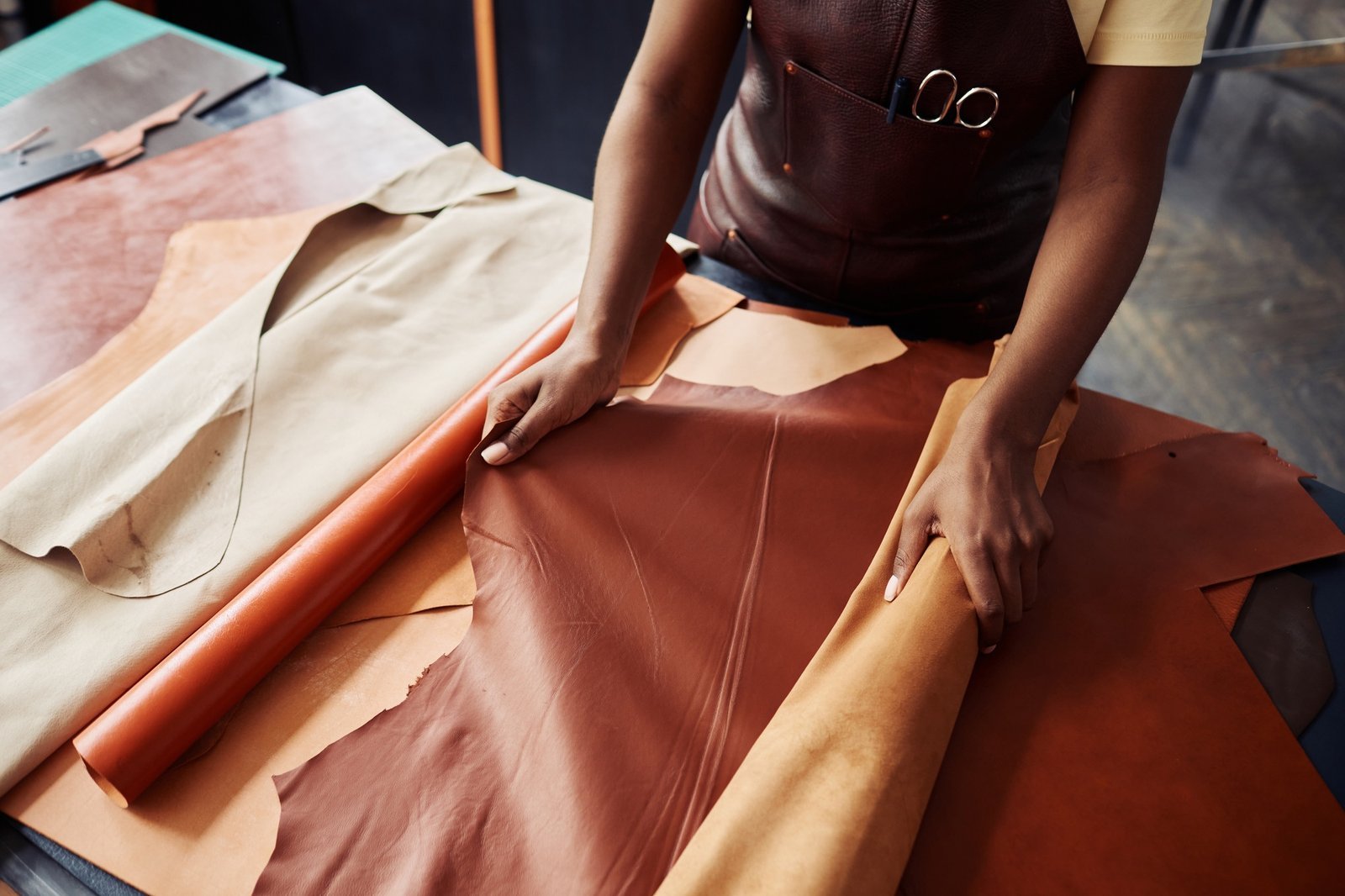
Corduroy is one of those fabrics that looks familiar until a product team has to choose the right version for a real garment. A soft pinwale sample may produce a neat fitted mini dress, while a broad, heavy wale can turn the same pattern into something bulky, stiff, and visually oversized. The ribs affect more than appearance: they influence cutting direction, fabric consumption, seam thickness, pressing, fit, shade consistency, and how the garment looks after wear. That is why a useful definition must go beyond saying that corduroy is simply a ribbed cotton fabric.
Corduroy is a woven cut-pile fabric identified by parallel raised ribs called wales. It is often made from cotton, but polyester, viscose, elastane, and blended fibers are also used. Its warmth, softness, weight, stretch, drape, and durability depend on the wale count, pile density, fiber composition, ground construction, dyeing process, and finishing method.
A swatch can look excellent under showroom lighting and still fail once it is cut, pressed, washed, stretched across the body, or repeated across several production rolls. In one development meeting, the difference between two nearly identical brown corduroys may be only a few ribs per inch and a small change in weight, yet that difference can decide whether a dress feels refined or heavy. The following guide explains how to read those differences before they become expensive sample revisions or bulk-production problems.
What Is Corduroy Fabric?
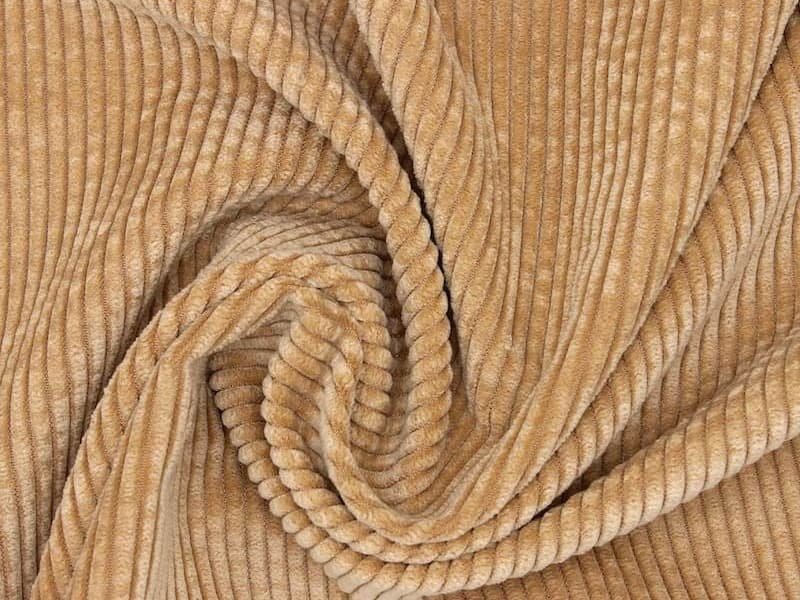
Corduroy is a woven cut-pile fabric with lengthwise raised ribs known as wales. It may be made from cotton or blended fibers, and it ranges from fine, lightweight qualities to heavy, wide-rib constructions. The fabric’s character is shaped by wale count, pile height, pile density, weight, composition, and finishing rather than by fiber content alone.
Surface and Structure
Corduroy is defined by construction, not by one specific raw material. The woven ground holds the fabric together, while additional pile yarns create the raised surface. These yarns are cut and brushed so that parallel ribs stand above recessed channels. The result is a fabric with more depth and stronger light-and-shadow effects than poplin, twill, canvas, or other flat woven materials. When the cloth moves, the pile reflects light from changing angles, so a solid color can appear richer and more dimensional without printing or surface decoration.
That structure also changes how the fabric behaves in clothing. Fine ribs tend to look smoother and create less bulk at darts, curved seams, and narrow hems. Broad ribs form a stronger graphic line and usually work best when the garment shape is simple enough to let the texture remain visible. The base construction matters just as much as the pile. When the ground is too open, it may show through as pale lines when the fabric bends or stretches across the bust, hips, elbows, or seat, making a new garment look prematurely worn.
Wales and Wale Count
A wale is one raised rib, and wale count generally means the number of ribs measured across one inch of fabric. A higher count produces narrower, more closely spaced ribs; a lower count produces wider, more prominent ribs. The number is useful when comparing materials, but it is not a universal naming system. One supplier may describe a 16-wale quality as pinwale, while another reserves that label for fabrics with 18 or more ribs per inch. Physical measurement is more reliable than a trade name printed on a hanger card.
Wale count should be read together with pile density, pile height, weight, and hand feel. Two fabrics with the same count can look completely different if one has thick, full ribs and the other has sparse pile that exposes the ground cloth. The scale also needs to suit the garment. Very broad wales can overwhelm narrow straps, small collars, shaped bust panels, or short body lengths, while fine wales behave more like a subtle texture from a distance. In product development, the rib scale is part of the silhouette rather than a neutral surface detail.
Corduroy and Velvet
Corduroy and velvet are both pile fabrics, but their surfaces are organized differently. Velvet has a nearly continuous pile that creates a smooth, uninterrupted sheen. Corduroy separates the pile into ribs with visible channels between them, giving it a more graphic, casual, and structured character. Velvet is often selected when a design relies on fluid shine and formal richness, while corduroy is more common in retro dresses, pinafores, skirts, trousers, jackets, matching sets, and transitional or cold-season fashion.
The difference becomes practical in the sample room. Both fabrics have a nap, so panels cut in opposite directions may appear to be different shades. Corduroy adds another complication because the ribs must also look straight, balanced, and intentionally aligned. Wide-wale versions can create thick seam intersections, while velvet is more likely to show pressure marks and bruised pile. Replacing one with the other therefore requires more than changing the fabric line on a tech pack; pattern ease, seam construction, pressing, drape, and garment positioning all need to be reviewed.
| Feature | Corduroy | Velvet | Cotton Twill |
| Surface | Raised parallel ribs | Continuous cut pile | Flat diagonal weave |
| Typical visual effect | Textured, dimensional, often retro | Smooth, rich, and lustrous | Clean, practical, and understated |
| Usual drape | Structured to medium | Soft to fluid | Medium to structured |
| Directional nap | Yes | Yes | Usually no |
| Common apparel uses | Dresses, skirts, jackets, trousers, sets | Occasion dresses, tops, gowns | Trousers, skirts, jackets, workwear |
| Main production concern | Wale direction, alignment, seam bulk | Pressure marks and nap damage | Shrinkage, puckering, and skew |
Hand Feel and Appearance
Corduroy can feel velvety, dry, crisp, dense, soft, or slightly stiff depending on the yarns and finishing process. Fine-wale cotton qualities often feel smoother because the ribs are narrow and closely spaced, while wide-wale fabrics usually feel more substantial. Pile height also changes the impression. A high pile can create deeper color and a plush touch, but it may flatten more quickly under pressure. A shorter, dense pile often gives a cleaner surface and better appearance retention in garments exposed to repeated rubbing.
Finishing can transform the same basic construction. Brushing lifts the pile, softeners reduce a dry hand, washing relaxes stiffness, and pigment dyeing creates a more casual surface with controlled fading. Dark shades such as black, navy, burgundy, forest green, and chocolate often show strong changes when viewed with or against the nap. That variation is normal in a pile fabric, but it becomes a manufacturing defect when different garment panels have inconsistent nap direction or when roll shades are mixed without controlled allocation during cutting.

How Is Corduroy Fabric Made?
Corduroy is produced by weaving a stable ground cloth with additional pile yarns, cutting the pile floats into ribs, brushing and shearing the surface, and then applying dyeing and finishing treatments. Each step affects wale regularity, pile density, shade, softness, shrinkage, strength, and the way the fabric performs during cutting, sewing, washing, and wear.
Ground and Pile Weaving
Production begins with a woven base strong enough to hold the pile and survive the later cutting and brushing processes. Additional yarns are inserted to form floats over selected groups of warp yarns. These floats will eventually become the raised ribs. Their spacing controls the wale count, while yarn thickness and the quantity of pile yarn influence how full each rib feels. A well-built ground remains stable when the fabric is pulled, folded, or sewn, and it prevents the channels from opening excessively during wear.
Ground quality is especially important for fitted or stretch garments. When the base is too loose, the cloth beneath the pile becomes visible across high-tension areas. A useful development check is to bend the fabric sharply across the ribs and then stretch it over a contrasting surface. If the ground becomes highly visible, the material may not be suitable for a close-fitting dress or slim skirt even if it looks rich when lying flat. The same test also reveals whether the ribs separate, crack visually, or recover unevenly after tension is released.
Pile Cutting and Brushing
After weaving, specialized cutting equipment opens the pile floats. The newly cut fiber ends are brushed upward, separated, and sheared to create a more uniform rib height. This stage gives corduroy its recognizable surface, and small errors can remain visible throughout the life of the garment. Missed cuts may leave flat lines, uneven shearing can create stripes with different sheen, and aggressive brushing may weaken the pile or produce excessive lint. Inspection must therefore consider more than color and fabric weight.
A consistent roll should show regular rib spacing, even pile height, and similar color depth from one selvedge to the other. Inspectors normally view the fabric from several angles because directional lighting can hide or exaggerate defects. The material should also be rubbed and folded to see whether the pile remains anchored. A beautiful but loosely held pile may shed, flatten, or expose the base after limited use. For apparel, a stable medium pile often provides a better balance of softness, color depth, and wear resistance than an extremely high surface that looks luxurious only before handling.
Fiber Composition
Cotton remains the most familiar corduroy fiber because it gives a natural hand, absorbs dye well, and supports the fabric’s matte, comfortable appearance. Cotton-rich qualities can also shrink or crease if they are not properly finished. Polyester may be blended in to improve strength, drying speed, dimensional stability, and crease recovery, although too much synthetic content can create a shinier or less breathable surface. Viscose can soften the hand and improve drape, but wet strength and dimensional change need closer evaluation.
Stretch corduroy commonly includes about 1% to 5% elastane, though the percentage alone does not predict performance. A carefully engineered 2% elastane construction may recover better than a softer fabric with twice the elastane content. What matters is controlled extension and the ability to return close to the original dimension after wear. For a fitted dress, poor recovery can cause bagging at the waist, hip, seat, elbows, or knees. Composition should therefore be linked to measurable needs such as structure, comfort, recovery, wash stability, surface appearance, and intended care.
Dyeing and Finishing
Corduroy may be piece-dyed, yarn-dyed, pigment-dyed, printed, garment-dyed, washed, brushed, softened, or pre-shrunk. Piece dyeing usually creates a more even solid shade, while pigment dyeing often produces a dry, casual surface that fades at edges and seams. Garment dyeing can create depth and variation, but it also increases the need to control shrinkage, trim compatibility, and batch-to-batch color. Washing can make a stiff cloth more wearable, yet excessive abrasion may weaken ribs or create uneven pale areas.
Finishing should be approved on a complete garment rather than only on a small swatch. A wash that looks attractive on flat cloth can create distorted hems, light seam edges, flattened ribs, zipper rippling, or different shrinkage between shell and lining. Pre-shrinking reduces risk but does not replace testing. Lengthwise and widthwise dimensional change should be measured separately, because even a 2% reduction equals two centimeters on a garment that measures one meter. Pressing trials are equally important: high heat or excessive pressure can permanently crush the pile and leave shiny patches.
| Production Stage | Main Purpose | What to Check | Typical Risk |
| Ground weaving | Creates strength and stability | Density, skew, tensile behavior | Open construction or distortion |
| Pile weaving | Sets rib spacing and fullness | Wale regularity and pile coverage | Uneven or thin ribs |
| Pile cutting | Opens floats into raised ribs | Complete and even cutting | Missed cuts or broken pile |
| Brushing and shearing | Lifts and evens the surface | Pile height, lint, softness | Patchy shine or fuzziness |
| Dyeing | Creates the required shade | Side-to-side and roll shade | Color variation and rubbing transfer |
| Washing and softening | Adjusts hand and appearance | Shrinkage, abrasion, recovery | Edge fading or pile flattening |
| Pre-shrinking and setting | Improves dimensional stability | Length and width change | Residual shrinkage or surface damage |
| Final inspection | Confirms bulk consistency | Nap, defects, shade, width | Mixed-quality rolls reaching cutting |

Which Types of Corduroy Are Available?
Corduroy is commonly grouped by wale count, weight, fiber composition, stretch, and finish. Pinwale has many narrow ribs, while wide-wale and elephant cord have fewer, broader ribs. The best option depends on silhouette, garment scale, season, drape, seam thickness, desired texture, and whether the product needs stability or close-body stretch.
Pinwale Corduroy
Pinwale corduroy has fine, closely spaced ribs and is often found around 17 to 22 or more wales per inch, although supplier definitions vary. From a short viewing distance, the surface can look almost like a softly textured plain fabric. That makes it useful for dresses, blouses, fitted tops, lightweight skirts, children’s garments, and designs with small panels or detailed shaping. Fine ribs usually create less bulk at curved seams, darts, narrow hems, collars, and concealed zipper areas.
Pinwale should not automatically be assumed to be lightweight. Some versions are densely woven and firm, while others are soft and shirt-weight. Fabric weight, pile density, opacity, and ground stability must be checked alongside the rib count. Stretch pinwale is often a practical choice for fitted fashion because the fine texture stays visually clean across the body, but it must be examined under extension. If the ribs spread and expose the base cloth, the finished garment may look pale or worn at the bust, hip, or seat despite fitting correctly by measurement.
Standard and Narrow Wale
Standard-wale corduroy usually falls around 8 to 12 ribs per inch, while narrow-wale versions often sit around 13 to 16. These middle ranges offer a recognizable corduroy appearance without the extreme visual weight of broad ribs. They are versatile for dresses, skirts, trousers, cropped jackets, overshirts, fashion sets, and utility-inspired pieces. Standard wale can add enough texture to make a simple silhouette feel developed, while narrow wale remains cleaner for more shaped or contemporary garments.
The balance between rib scale and design detail is important. A button-front mini dress, for example, may work well in standard wale if the placket, pockets, and topstitching are simple and aligned. A dress with several princess seams, small bust panels, or complex curved cutouts may look cleaner in narrow wale because the ribs do not dominate every seam. The fabric should be laid over the pattern or draped on a form during early development so the team can judge whether the vertical lines flatter the intended proportions or make the garment feel visually crowded.
Wide Wale and Elephant Cord
Wide-wale corduroy normally has about 4 to 7 ribs per inch, while extra-wide or elephant cord may have only 1.5 to 4. The broad ribs create a bold, tactile surface that suits statement jackets, overshirts, structured skirts, pinafores, coats, and simple A-line or utility dresses. In these products, the material is not a quiet background; the scale of the ribs becomes one of the main design elements and can create a strong retro, collegiate, or workwear-inspired mood.
Broad ribs also bring practical limits. Seam intersections become thicker, narrow hems may not turn cleanly, and facings, collars, cuffs, pocket edges, and concealed zippers can feel bulky. Gathering and delicate ruching are rarely convincing in a heavy wide wale because the surface fights against small folds. The lines may also add visual width on a close-fitting silhouette. Good development usually simplifies the pattern, uses larger uninterrupted panels, grades seam allowances carefully, and allows enough ease for the fabric to move without the ribs spreading or crushing at high-tension areas.
Stretch and Washed Corduroy
Stretch corduroy is designed for closer fits and greater movement. It commonly stretches across the width, making it useful for fitted dresses, slim skirts, shaped trousers, corset-inspired casual pieces, and fashion tops. The critical measurements are extension and recovery rather than the elastane percentage alone. A fabric that stretches easily but remains enlarged after relaxation will bag during wear. The approved bulk quality should therefore be used for pattern development, because changing to a similar-looking stretch construction can alter ease, zipper behavior, seam tension, and grading.
Washed, pigment-dyed, or garment-dyed corduroy creates a softer, more casual appearance. It can work especially well for vintage-inspired dresses, overshirts, and coordinated sets where slight edge fading is intentional. The effect must remain controlled, however. Excessive washing can create random pale patches, flatten the ribs, weaken the surface, or produce different results between sample and bulk. Development teams should approve a wash standard with clear shade, abrasion, hand-feel, and dimensional references rather than relying on a broad instruction such as ‘make it softer’ or ‘give it a vintage wash.’
| Corduroy Type | Indicative Wales per Inch | Typical Weight Range | Common Apparel Uses |
| Extra-wide / elephant cord | 1.5-4 | 300-500+ GSM | Heavy jackets, coats, statement skirts |
| Wide wale | 4-7 | 260-400 GSM | Pinafores, overshirts, A-line skirts |
| Standard wale | 8-12 | 200-330 GSM | Dresses, trousers, jackets, coordinated sets |
| Narrow wale | 13-16 | 170-280 GSM | Fitted skirts, fashion dresses, tops |
| Pinwale | 17-22+ | 130-240 GSM | Shirts, soft dresses, lightweight separates |
| Stretch corduroy | Varies | 170-300 GSM | Body-conscious dresses, fitted skirts, slim trousers |

What Are Corduroy’s Key Properties?
Corduroy is valued for warmth, texture, color depth, durability, and its ability to hold structured or semi-fitted shapes. Its main limitations include directional shading, pile flattening, lint attraction, seam bulk, possible shrinkage, and reduced drape in heavier qualities. Performance varies widely with weight, wale count, pile density, composition, construction, dyeing, and finishing.
Warmth and Breathability
The raised pile traps small pockets of air, so corduroy usually feels warmer than a flat woven fabric of similar weight. Medium and heavy qualities are therefore closely associated with autumn and winter clothing. Fine pinwale can still work in spring, transitional seasons, mild climates, or air-conditioned indoor settings. The season is determined by the complete construction rather than the name of the fabric. A lightweight, unlined cotton pinafore and a fully lined, bonded wide-wale dress will feel entirely different even if both are called corduroy.
Breathability depends mainly on fiber content, density, garment fit, and lining. Cotton-rich qualities generally absorb moisture better than polyester-rich versions, although a tightly woven cotton fabric may still feel warm. Close-fitting designs reduce airflow, and full lining, fusible interlining, boning, cups, or padded structures add further heat. A realistic wearing trial should include walking, sitting, arm movement, and time in a warm room. Touching a swatch for a few seconds cannot show whether a finished garment will feel comfortable during several hours of wear.
Durability and Surface Wear
A well-constructed corduroy can be durable because the woven ground provides strength and the textured pile disguises minor surface marks. However, the pile is usually the first part to show age. Repeated friction can flatten ribs around elbows, knees, seat areas, cuffs, underarms, pocket openings, and bag-contact points. Dark shades may reveal these areas as shiny or lighter patches because compressed fibers reflect light differently. Appearance retention therefore depends on pile density and anchoring, not only on tensile strength.
Development teams can perform simple comparative checks before laboratory testing. Rub the same area repeatedly with a clean cloth, fold it sharply, press it lightly with steam, and then view the surface from several directions. A fabric that immediately shows permanent flattening may not suit trousers, fitted skirts, or jackets exposed to frequent contact. Sewing conditions also affect wear. Excessive presser-foot pressure, heavy topstitching, or rough handling can crush the pile during production, causing a new garment to look used before it reaches the customer.
Stretch, Recovery, and Fit
Non-stretch corduroy behaves like a conventional woven fabric and may offer only limited mechanical give. Stretch qualities add elastane or use a more flexible construction, but comfortable extension is only half of the requirement. Recovery determines whether the garment returns close to its original shape after movement. Poor recovery creates bagging at the seat, waist, elbows, or knees and may cause the ribs to remain visibly spread after wear. This problem is especially noticeable in close-fitting dark garments.
Stretch should be measured in both directions because many corduroys extend mainly across the width. Pattern orientation should still follow the approved nap and rib direction; rotating pieces to gain more movement can create shade mismatch and a visibly inconsistent garment. The fabric also needs time to relax after being unrolled, especially if it has been held under tension during finishing or transport. Cutting immediately can lead to measurement changes later. Fit samples should use the confirmed material, because a small change in extension or recovery can alter ease, zipper operation, seam appearance, and size grading.
Shrinkage, Color, and Care
Cotton-rich corduroy can shrink during washing, particularly when it has not been sufficiently pre-treated. Many apparel programs aim for dimensional change around 3% or less under the specified care cycle, but the acceptable limit must reflect the garment and the brand’s own standard. A 2% reduction equals two centimeters on a one-meter length, which is enough to change the proportion of a mini or midi dress. Width shrinkage can tighten the bust, waist, or hip and place extra strain on the ribs.
Care instructions should protect both dimensions and surface appearance. Turning the garment inside out reduces abrasion, washing with similar colors limits visible transfer, and moderate heat helps avoid excessive shrinkage or pile damage. Pigment-dyed and dark corduroy require particular attention to dry and wet rubbing fastness. Pressing should use a soft surface, controlled steam, and light pressure because a hard board can flatten the ribs and create shine. The final care label should be based on tested garment performance, not on a generic recommendation copied from another corduroy quality.

How Do You Choose Corduroy for Clothing?
Choose corduroy by matching wale count, weight, composition, stretch, pile density, drape, opacity, and finish to the intended silhouette. Before bulk production, test shrinkage, colorfastness, recovery, seam appearance, nap direction, pressing response, and wash performance. The fabric, pattern, construction, trim package, and finishing method should be approved as one connected system.
Match the Fabric to the Silhouette
The best corduroy is not automatically the softest, heaviest, or highest-priced quality. It is the one that supports the intended shape without creating avoidable fit or production problems. Fine pinwale usually suits fitted mini dresses, shirt dresses, shaped tops, slim skirts, and products with smaller panels. Standard wale works well for A-line dresses, trousers, casual jackets, and coordinated sets. Wide wale is most convincing in simple, structured garments where broad ribs can remain visible instead of being broken by many seams and gathers.
Weight is a useful starting point but not a complete decision. Lightweight qualities around 130-190 GSM may suit soft dresses, shirts, and transitional pieces. Medium weights around 190-280 GSM are commonly used for skirts, dresses, trousers, and lighter jackets, while fabrics above 280 GSM generally create more structure and warmth. A dense 210 GSM fabric can still feel firmer than a loose 250 GSM construction. Drape, opacity, pile coverage, recovery, fold thickness, and seam trials should therefore carry more weight than a single GSM figure on a specification sheet.
Plan for Nap and Cutting
Corduroy has a directional nap. Running a hand along the fabric usually reveals one direction that feels smoother and another that feels rougher, and the surface may look lighter or darker depending on the direction of the pile. Major pattern pieces should normally be cut in one consistent direction. Mixing directions to improve marker efficiency can make sleeves, pockets, bodice panels, or skirt sections look like different shades even when they came from the same roll.
One-way cutting generally increases fabric consumption, and the effect can be significant for garments with full skirts, asymmetric pieces, large collars, or multiple panels. Costing should therefore use an actual one-way marker rather than a standard non-directional estimate. Wale alignment should be reviewed at center fronts, patch pockets, plackets, collars, and visible seam lines. Perfect matching is not always possible on curved panels, but the result should look balanced. Rolls also need inspection for bow and skew because ribs that do not run straight can produce twisting or visibly slanted panels after sewing.
Control Sewing and Pressing
Pile surfaces can cause layers to move against one another during sewing, so presser-foot pressure, feeding, needle size, stitch length, and thread tension need trialing on the approved fabric. Heavy qualities may require graded seam allowances to reduce bulk at waist seams, collars, cuffs, facings, pockets, and zipper openings. Topstitching should also be tested. A thick decorative thread may complement broad ribs but crush a fine pile, while a very short stitch can make the surface look tight and puckered.
Pressing is one of the most common sources of avoidable damage. Direct pressure on a hard board can flatten the wales and leave permanent glossy areas. A needle board or soft pressing surface allows the pile to sink rather than being crushed. Steam and heat must match the fiber composition, and operators should use only the pressure needed to shape the seam. Fusible interlining requires a separate bonding test because high temperature, long dwell time, or excessive pressure can alter the outer surface even when the adhesive bond itself appears successful.
Test Before Bulk Production
A sound fabric brief should include more than a color and the word ‘corduroy.’ It should define the intended wale range, weight, composition, stretch direction, hand feel, finish, opacity, wash effect, care method, target silhouette, and critical performance requirements. Before approval, compare several swatches under the same lighting and sew trial seams using the planned thread, needle, interlining, zipper, and lining. The material should be viewed flat, folded, stretched, rubbed, steamed, washed, and worn on a fitted sample.
Laboratory and garment testing should work together. A fabric can pass basic strength tests and still create poor commercial results if the nap direction, rib regularity, shade, or seam appearance is inconsistent. A pre-production sample should use confirmed bulk fabric, trims, pattern, construction, wash method, and pressing conditions. When those elements are substituted with sample-room alternatives, the approval may hide the exact risks that appear later. Clear standards also make repeat orders easier because the team can compare new material and production against an agreed physical and measurable reference.
| Quality Check | Practical Measurement | What It Helps Prevent | Development Note |
| Wale count and regularity | Ribs per inch across several width points | Wrong texture scale or uneven stripes | Measure the physical roll, not only the supplier name |
| Fabric weight | GSM from representative areas | Incorrect drape, warmth, or seam bulk | Use together with density and hand feel |
| Dimensional change | Length and width after the stated care cycle | Fit and garment-length variation | Test shell, lining, and wash process together |
| Stretch and recovery | Extension under load and residual growth after rest | Restricted movement or bagging | Check both fabric directions |
| Colorfastness to rubbing | Dry and wet transfer rating | Staining, crocking, and surface fading | Especially important for dark and pigment-dyed shades |
| Pile recovery | Appearance after rubbing, pressing, and washing | Flattened or shiny high-contact areas | View from several angles |
| Wale straightness | Bow and skew inspection | Twisted or slanted garment panels | Assess before marker placement |
| Roll shade | Controlled light-box comparison | Mixed-color panels within one garment | Allocate rolls and shade lots during cutting |
| Seam trial | Puckering, slippage, bulk, and stitch balance | Poor finished appearance or discomfort | Use intended production machine settings |
| Pre-production garment | Complete fit, care, and appearance review | Sample-to-bulk inconsistency | Use confirmed bulk fabric and trims |
From Swatch to Production
Corduroy development works best when fabric selection, pattern engineering, sample review, testing, and production planning are connected from the beginning. A design team may start with a reference image, an original sample, a tech pack, or a seasonal fabric idea, but the next step should be a practical review of rib scale, weight, stretch, recovery, seam placement, lining, washing, and the expected wearing conditions. That review often prevents repeated sample rounds because the product is built around the behavior of the chosen material rather than forcing an unsuitable fabric into a fixed design.
Duolan Apparel supports custom fashion dresses, fitted styles, skirts, fashion tops, jackets, and coordinated collections through fabric sourcing, pattern development, sampling, fit correction, bulk preparation, and repeat-production coordination. For a corduroy project, send the design sketch or tech pack, target wale direction, color reference, size specification, expected quantity, and launch date. The development team can evaluate suitable material options and production risks before sampling, helping move the product from an attractive swatch to a garment that remains consistent after sewing, pressing, washing, inspection, packing, and commercial wear.

Custom Corduroy Product Inquiry
For custom corduroy dresses, skirts, tops, jackets, or coordinated women’s fashion collections, contact Duolan Apparel . Include your design files, target market, required size range, preferred fabric character, expected order volume, and launch schedule so the development team can review the project on a practical, production-ready basis.