Skip to content
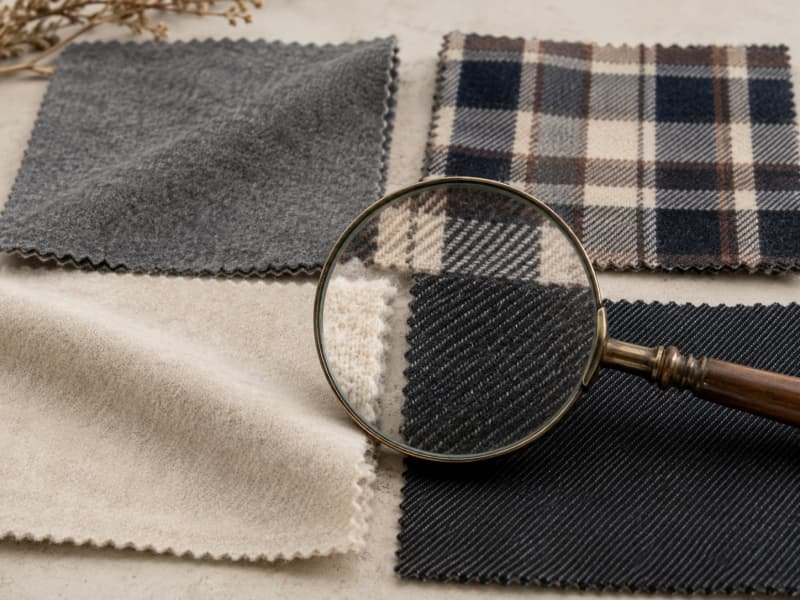
Flannel is one of those fabrics that almost everyone recognizes, yet many people define it differently. A shopper may picture a red checked shirt, a designer may think of softly brushed cotton, and a tailoring team may mean a compact wool cloth used for trousers or jackets. Each interpretation points to a real product, but none explains the whole category. For clothing brands, that gap matters because the word flannel alone does not tell a patternmaker how much the fabric will stretch, a production manager how it should be cut, or a customer how it should be washed. The same warm, fuzzy hand that looks convincing in a small swatch can behave very differently once it is made into a fitted dress, a pleated skirt, an overshirt, or a repeatedly laundered pajama set.
Flannel is a soft fabric, usually woven, with a gently raised or napped surface created through brushing, yarn choice, weaving, milling, or a combination of finishing processes. It can be made from cotton, wool, polyester, viscose, or blended fibers, and it may be solid, striped, printed, or checked. Flannel describes the fabric; plaid describes a pattern.
The most useful way to understand flannel is not to ask whether it looks rustic or feels cozy on the first touch. A better question is whether its fiber, construction, weight, surface, care method, and bulk consistency suit the garment being developed. That is where a familiar fabric becomes a serious product-development decision. A beautiful check can lose alignment after washing, a heavily brushed face can pill at the underarm, and a soft wool quality can collapse when a structured waistband is added. The sections below explain how to recognize those risks before they reach production.
What Is Flannel Fabric?
Flannel is a soft fabric, usually woven, with a lightly raised surface that improves warmth and comfort. Its texture may come from brushing, napping, soft yarns, or milling. Flannel can be made in solid colors, checks, stripes, or prints, so it should not be confused with plaid, which describes a pattern rather than a fabric.
How Flannel Feels
Flannel is identified more reliably by its hand and surface than by a single color or motif. Compared with poplin, broadcloth, or a smooth twill of similar weight, it normally feels softer, warmer, and less crisp. The face may show a visible nap, or it may have only a low, velvety softness that becomes apparent when the cloth is moved under light. Lightweight shirt flannel can feel airy and gently peached, while dense wool flannel may feel compact, dry, and quietly refined rather than obviously fuzzy.
That first touch is important, but it should never be the only approval point. Strong brushing can create an impressive showroom softness while also releasing loose fibers, blurring fine checks, or increasing pilling after wear. A dependable quality is judged in its intended condition: after laundering or dry cleaning, after pressing, and after the fabric has been sewn through collars, waistbands, darts, and pocket edges. The best flannel is not necessarily the fluffiest one; it is the fabric whose softness survives the way the garment will actually be used.
Woven Structure and Nap
Traditional flannel is generally woven, most often in plain or twill construction. Plain weave can provide a balanced base and a straightforward appearance, while twill often gives the fabric a softer drape and a subtle diagonal character. Woven flannel usually has limited mechanical stretch unless elastane is added or the weave is intentionally relaxed. That distinction affects pattern ease, seam choice, grading, and fit, especially in fitted skirts, shaped dresses, and narrow sleeves.
The familiar surface is commonly created by brushing or napping. During finishing, controlled rollers lift tiny fiber ends from the yarns, producing a thin layer above the base cloth. One-sided brushing keeps the opposite face cleaner and can suit dresses or refined shirts. Double-sided brushing increases warmth and softness but also adds bulk at enclosed seams. Some wool flannels rely more on milling and yarn character than visible brushing, which is why an unbrushed or lightly raised cloth can still belong to the flannel family.
Flannel terminology that affects sourcing and garment construction
| Term | What It Describes | What to Confirm |
| Flannel | Fabric construction, hand, and finish | Fiber, weave, nap, weight, and care |
| Plaid | Crossing horizontal and vertical color lines | Repeat, scale, symmetry, and matching points |
| Yarn-dyed check | Pattern woven from colored yarns | Shade consistency and repeat accuracy |
| Printed check | Pattern applied to the fabric surface | Registration, penetration, and colorfastness |
| Brushed fabric | Surface fibers mechanically raised | One-sided or double-sided brushing |
| Napped fabric | A directional raised surface | One-way cutting and surface consistency |
Flannel Is Not Plaid
Flannel and plaid answer two different questions. Flannel tells you what kind of fabric you are handling; plaid tells you how the color lines are arranged. A flannel can be plain black, heather gray, floral, striped, windowpane, or checked. A plaid can be woven into flannel, printed onto polyester shirting, or produced in cotton twill. Treating the two words as interchangeable can lead to incorrect sourcing because a checked appearance says nothing about weight, fiber content, nap, shrinkage, or warmth.
The distinction becomes practical when a checked garment is developed. Yarn-dyed plaid is formed from colored yarns and usually shows the pattern on both sides, while printed plaid is applied to the surface and must be checked for registration and penetration. Large or asymmetric repeats can increase fabric consumption because panels need to be positioned carefully. Center fronts, patch pockets, collars, cuffs, waist seams, and visible side seams usually receive the highest matching priority, while curved armholes and shaped darts naturally interrupt the pattern.
Common Naming Confusion
Retail language is often looser than technical language. A knitted fabric with a brushed interior may be marketed as flannel knit because it offers similar warmth, even though it behaves more like fleece or brushed jersey. The term brushed cotton may describe a crisp poplin with a softened face, a twill shirting, or a true cotton flannel. Flannelette can refer to a lighter cotton-rich quality, but the exact meaning varies among markets and suppliers.
For that reason, a fabric card should never be approved on its commercial name alone. A useful specification records fiber percentages, woven or knitted construction, finished weight, usable width, brushing on one or both sides, stretch and recovery, shrinkage, surface appearance, and the intended care method. A sealed physical swatch remains the most reliable hand standard because words such as soft, peached, full, compact, or premium are interpreted differently by different mills and product teams.
What Is Flannel Made Of?
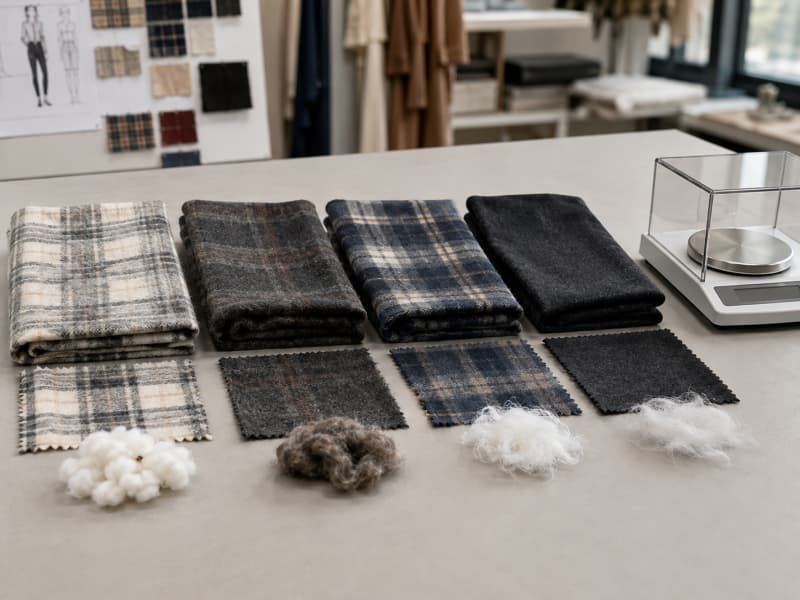
Flannel can be made from cotton, wool, polyester, viscose, or blended fibers. Cotton versions are common in casual and washable clothing, wool flannel is widely used for tailoring, and synthetic blends can improve stability or cost control. Fiber content changes warmth, moisture behavior, drape, pilling, shrinkage, pressing, and care requirements.
Cotton Flannel
Cotton flannel is widely used because it combines a familiar natural hand with absorbency and everyday comfort. It appears in casual shirts, shirt dresses, pajama sets, overshirts, skirts, and relaxed coordinated looks. Depending on yarn size, weave density, and brushing, it can range from a light, airy fabric for blouses to a fuller cloth that supports collars, cuffs, pockets, and shirt-jacket details. Yarn-dyed checks are especially common because the woven pattern works naturally with the soft surface.
Its main development risk is dimensional change. Cotton fibers, relaxed yarn structures, and aggressive brushing can all influence shrinkage after washing and drying. The amount is not responsibly predicted from composition alone, so the actual production quality should be tested in the proposed care cycle. Checked cotton flannel also needs skew control because vertical lines can twist after laundering. When shrinkage is stable, pattern compensation may be possible; when results vary by roll, the fabric itself needs correction before bulk cutting.
Wool Flannel
Wool flannel is often more refined than the casual image of flannel suggests. It can be lofty and warm when produced from woolen-spun yarns, or smoother and more compact when made in a finer tailoring quality. Wool offers resilience and shape recovery, which makes the fabric suitable for trousers, pleated skirts, tailored dresses, jackets, blazers, and softly structured separates. Its surface can look muted and elegant rather than visibly hairy, particularly in solid gray, navy, camel, or melange shades.
Selection should focus on structure as much as softness. A very soft wool quality may collapse in a waistband or lose the clean line of a pleat, while a dense fabric may feel too warm or rigid for the target market. Pressing trials are essential because excessive steam, pressure, or temperature can create shine, distortion, or felting. Washable wool requires a controlled treatment and verified care process; otherwise, dry-clean-only instructions may be more appropriate for the finished garment.
How fiber content changes flannel performance
| Fiber Base | Typical Advantages | Main Risks | Common Uses |
| 100% cotton | Soft, absorbent, familiar hand | Shrinkage, skew, lint | Shirts, dresses, pajamas |
| 100% wool | Warm, resilient, refined drape | Cost, felting, care sensitivity | Trousers, skirts, jackets |
| Polyester-rich | Stable, quick drying, easy care | Pilling, static, heat retention | Overshirts, uniforms, sets |
| Cotton-polyester | Balanced comfort and durability | Less natural hand, persistent pills | Casual shirts, skirts, dresses |
| Wool-polyester | Shape retention and cost balance | Pressing sensitivity, blend variation | Tailored separates |
| Stretch blend | Mobility and closer fit | Growth, poor recovery, seam stress | Fitted dresses and skirts |
Synthetic and Blended Flannel
Polyester and blended flannels are useful when stability, faster drying, crease recovery, or cost control are priorities. Cotton-polyester blends may reduce shrinkage and improve durability, while wool-polyester blends can retain a tailored appearance at a more manageable price. Viscose blends can add softness and drape, and a small elastane percentage may support fitted skirts or dresses. The trade-off is that the surface, heat balance, and long-term wear may differ from an all-natural fiber quality.
Synthetic fibers are strong, which can make visible pills remain attached to the surface instead of breaking away. Polyester-rich fabrics may also feel warmer in active wear, develop static, retain oily soil, or react differently to pressing. Elastane should be assessed through both extension and recovery because a fabric that stretches easily but does not return can bag at the waist, seat, elbows, or knees. Composition is therefore a starting point, not a guarantee of performance.
Yarn, Weave, and Finish
Two flannels with identical fiber percentages can behave very differently because yarn and construction have such a strong influence. Short fibers and low-twist yarns often produce a soft, easily raised surface, but they may also increase lint and pilling. Higher twist can improve strength and cleanliness, although too much twist can make the cloth feel hard and reduce the effectiveness of brushing. Weave density must also be balanced: an open fabric may distort, while an overly tight one may feel stiff.
Finishing completes the performance profile. Washing, milling, softening, compacting, shearing, and stabilizing can change the hand, width, weight, and shrinkage of the same greige fabric. Buyers should therefore evaluate the finished article rather than relying on the loom-state construction. Usable width should be measured after finishing, because brushing and compacting can reduce width and increase garment consumption. For custom checks, yarn-dyeing lead time, repeat confirmation, and shade continuity also become part of the sourcing plan.
Which Types of Flannel Are Common?
The main commercial categories are cotton flannel, wool flannel, synthetic or blended flannel, and flannelette. Brushed cotton and fleece may feel similar but are not automatically equivalent. The useful differences are found in fiber content, woven or knitted construction, surface treatment, weight, stretch, drape, warmth, and the garment each fabric is expected to support.

Cotton and Wool Types
Cotton and wool flannel often occupy different parts of a clothing collection. Cotton qualities are familiar, soft, and commonly washable, so they work well in casual shirts, day dresses, pajama-inspired sets, mini skirts, and overshirts. Wool qualities are chosen when warmth, resilience, and a more polished shape are needed. They are more natural choices for pleated skirts, tailored trousers, blazers, office dresses, and softly structured jackets.
The production methods also differ. Cotton may need prewashing, dimensional testing, and check-skew control before the pattern is finalized. Wool requires careful steam handling, appropriate fusible selection, and pressing trials to avoid shine or distortion. Substituting cotton for wool, or wool for cotton, changes more than the fiber label. The pattern balance, seam bulk, care instruction, garment cost, and customer expectation may all need to be reviewed.
Flannelette and Brushed Cotton
Flannelette usually describes a soft cotton or cotton-rich fabric developed to resemble flannel, often at a lighter weight or more accessible price. It is common in sleepwear, bedding, children’s products, and casual clothing, but the term is not used consistently in every market. One mill may use it for a lightweight double-brushed cotton, while another may apply it to a lower-density blend. A full specification is more reliable than the name.
Brushed cotton is an even broader expression because any cotton base can be brushed. A fine poplin may remain light and relatively crisp after brushing, while a twill can become fuller and much closer to classic cotton flannel. The correct comparison should be made after the proposed wash cycle and in the intended silhouette. A soft swatch may become transparent, bulky, unstable, or heavily frayed once it is cut into a full garment.
Flannel and Fleece
Fleece and flannel overlap in warmth and softness, but their structures are usually different. Flannel is generally woven and relatively flat, while fleece is commonly knitted and then raised to form a loftier pile. Fleece often provides more stretch and insulation for its weight, making it suitable for hoodies, sporty jackets, loungewear, and outdoor layers. Flannel is more naturally adapted to shirts, dresses, skirts, trousers, and tailored shapes.
This difference changes garment engineering. Fleece often needs stretch-compatible seams, reduced bulk, and careful handling of pile direction. Woven flannel follows woven pattern rules but requires control of shrinkage, fraying, check alignment, and nap direction. Replacing one with the other can alter fit, drape, stitch type, pressing, and brand positioning. A fleece version may feel athletic and functional, while flannel can range from rustic casualwear to refined tailoring.
Lightweight to Heavy Flannel
Flannel is available across a broad weight range, usually expressed in grams per square meter. Weight is a practical starting point, but it does not fully describe warmth or quality. A heavily brushed lightweight fabric can feel warmer than a smooth cloth of the same mass, while a dense wool flannel may feel compact rather than fluffy. Thickness, density, fiber type, and air permeability should therefore be considered alongside GSM.
The silhouette determines the useful range. Lightweight qualities can support blouses, pajama sets, and soft shirt dresses, but they need checks for transparency and seam stability. Medium weights are versatile for skirts, overshirts, and structured dresses. Heavy flannel can work in jackets and outer layers, although seam intersections, mobility, and finished garment weight become more important. Gathered or tiered styles usually need less bulk than clean A-line or tailored products.
Practical flannel weight ranges for garment development
| Approximate Weight | General Character | Suitable Womenswear | Key Checks |
| 110-150 GSM | Light and shirt-like | Blouses, light dresses, pajamas | Transparency, fraying, stability |
| 150-200 GSM | Light to medium | Shirts, shirt dresses, skirts | Shrinkage, drape, check skew |
| 200-260 GSM | Medium and fuller | Overshirts, sets, structured dresses | Bulk, seam appearance, pilling |
| 260-340 GSM | Heavy apparel weight | Jackets, winter skirts, outer layers | Pressing, mobility, seam thickness |
| Above 340 GSM | Dense or outerwear-oriented | Coats and heavy overshirts | Garment weight, comfort, cost |
How Does Flannel Perform in Clothing?
Flannel usually provides softness, warmth, and a comfortable surface, but its performance depends on fiber, weight, weave, brushing, and finishing. Cotton can shrink or skew, wool can felt under unsuitable care, and synthetic-rich surfaces may hold pills. A successful garment matches the fabric to the silhouette, climate, wash method, and expected level of wear.

Warmth and Comfort
Flannel feels warm because its raised surface holds small pockets of relatively still air close to the body. The effect is influenced by thickness, density, brushing level, fiber content, garment fit, and layering. A loose cotton flannel can provide immediate comfort without feeling excessively heavy, while dense wool flannel can offer more sustained warmth in a tailored garment. Polyester-rich qualities may reduce airflow and feel warmer during active wear, depending on construction.
Comfort is not determined by warmth alone. A lined fitted dress traps more heat than an unlined shirt, and double-layer pockets or fused panels create local thickness. Climate also changes the answer: a fabric that is suitable for a Canadian winter overshirt may be too warm for an indoor autumn dress in a milder market. Product teams should define where, when, and how the garment will be worn before approving the fabric weight and lining strategy.
Shrinkage and Shape
Shrinkage is one of the most important risks in cotton and cotton-rich flannel. Length and width can change at different rates, creating shorter sleeves, tighter bodies, or distorted checks. Wool may shrink or felt when exposed to unsuitable combinations of heat, moisture, and agitation. Synthetic blends can be more stable, but they may still relax or change if finishing tension was not properly controlled. The actual fabric must be measured in the intended care cycle.
Skew deserves separate attention because it can make an otherwise acceptable garment look poorly constructed. In a checked shirt dress, a vertical line that rotates after laundering will be obvious along the center front and side seams. Stable, repeatable shrinkage can sometimes be built into the pattern, but variable behavior cannot be solved by adding extra length. Fabric-only testing should be followed by finished-garment testing because seams, linings, interlinings, and trims can influence the final result.
Pilling and Surface Change
Pilling begins when loose fibers work out of the yarn, entangle, and remain on the surface. Brushing intentionally exposes fiber ends, so flannel requires realistic evaluation at high-friction zones such as underarms, elbows, seat areas, pocket edges, side seams, and handbag-contact points. Polyester-containing blends can show persistent pills because strong synthetic fibers hold them in place, while cotton pills may break away more readily but still leave a frosted or worn appearance.
Laboratory pilling grades are useful, yet they should be supported by wear trials and laundering because customer perception is highly visual. Dark navy, black, burgundy, and deep green can show frosting more clearly than pale colors. A thick nap may also flatten after sitting, ironing, compression packing, or repeated washing. The goal is not to keep the surface looking untouched forever; it is to ensure that normal aging remains appropriate for the product’s price and styling.
Fit and Garment Use
Flannel is more versatile than the classic checked shirt. In womenswear, it can support belted shirt dresses, pleated and A-line skirts, cropped overshirts, coordinated sets, tailored trousers, pinafore dresses, jackets, blazers, pajama-inspired pieces, and cold-season jumpsuits. The fabric should follow the silhouette. Gathered dresses need softness without excessive bulk, while fitted skirts need recovery and smooth seam appearance. Overshirts need enough body to support pockets, cuffs, and plackets.
Pattern scale and surface direction also influence fit and appearance. Large checks can overwhelm small panels or create waste when matched across a wide size range. Bias-cut sections may stretch more than straight-grain panels, and darts or princess seams naturally disrupt the repeat. A development team should decide which visual alignments matter most and then balance those priorities against fabric consumption, sewing time, and the structure needed for comfortable movement.
How Do You Choose Flannel for Production?
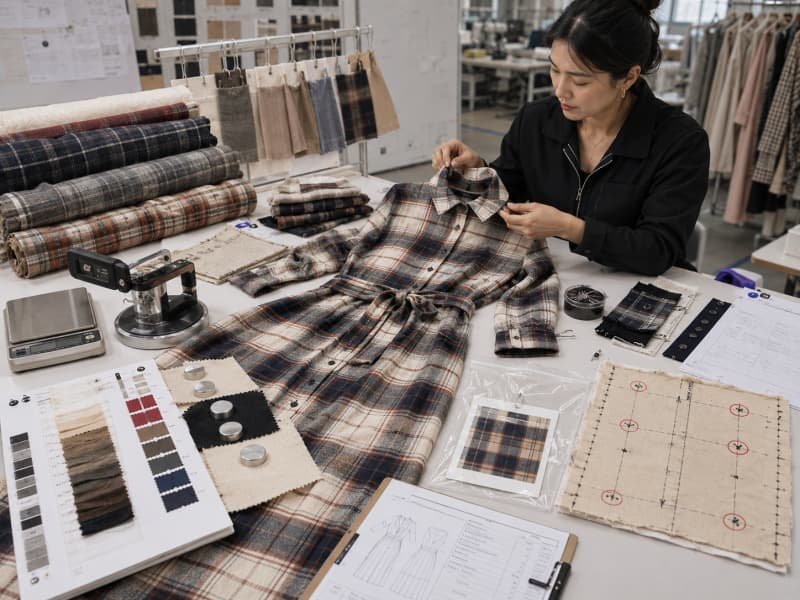
Choose production flannel by working backward from the garment, target market, care method, climate, retail price, and expected wear. Confirm fiber, weave, finished weight, usable width, nap, stretch, shrinkage, pilling, colorfastness, and bulk availability. Test the actual fabric, make a representative sample, and seal a physical standard before bulk cutting begins.
Match Fabric to the Garment
The first production question should not be which fabric feels softest. It should be which fabric allows the garment to fit, move, wash, and sell as intended. A lightweight shirt dress needs drape, opacity, and seam stability. A pleated skirt needs enough body to hold its folds. A cropped overshirt needs structure and abrasion resistance. A fitted mini dress may need stretch, recovery, lining, and a surface that does not exaggerate puckering along shaped seams.
Testing the most difficult area early can save a full sample round. A collar-and-placket mock-up reveals bulk in an overshirt, a waistband section shows whether pleats will sit cleanly, and a fitted seat panel exposes recovery problems before grading begins. Fabric substitution should be treated as a technical change, not a simple purchasing decision. Moving from cotton to a polyester-rich blend can affect heat balance, pressing, pilling, hand, and pattern ease even when weight looks similar.
Control Checks and Nap
Checked flannel requires more planning than a solid fabric because repeat size and symmetry affect marker efficiency. Large repeats can increase consumption when every front, pocket, collar, cuff, and waistband must align. Asymmetric patterns often require all major pieces to be cut in one direction. Nap creates a similar issue: panels cut in opposite directions may reflect light differently and appear as two shades even when they come from the same roll.
The production standard should state where matching is mandatory. Center fronts, patch pockets, front yokes, waist seams, side seams, collars, and cuffs usually carry the highest visual value. Perfect matching at curved armholes, darts, or heavily flared panels may be unrealistic. Agreeing on priorities before costing prevents later disputes and allows the marker team to estimate consumption honestly. Fabric should also be relaxed and shade-grouped before cutting so that directional surface and color differences remain controlled.
Test Before Bulk Approval
A practical test plan connects the fabric to the garment and market rather than applying every available method without purpose. Dimensional change, skew, pilling, dry and wet rubbing, wash colorfastness, weight, stretch recovery, and seam performance are frequent priorities. The acceptance level should reflect the product. A rustic overshirt may tolerate more surface variation than a clean fitted dress, while a dark skirt may require especially careful wet-rubbing control.
Results should lead to decisions. If shrinkage is high but stable, the pattern and process may be adjusted. If pilling is weak, brushing intensity, yarn quality, or fiber blend may need to change. If a check rotates after laundering, the fabric should be corrected rather than hidden through garment measurements. Production-lot verification may also be necessary because finishing settings can change hand, weight, width, and shrinkage even when the mill uses the same article number.
Practical flannel controls before bulk production
| Control Area | Useful Measurement | Production Decision |
| Fabric weight | GSM or oz/yd2 | Confirms garment suitability and lot consistency |
| Dimensional change | Length and width percentage | Guides pattern compensation or fabric correction |
| Skew | Percentage or angular distortion | Protects checks and long seams from twisting |
| Pilling | Graded surface appearance | Assesses wear on the raised face |
| Crocking | Dry and wet staining grade | Controls color transfer during wear |
| Stretch recovery | Extension and residual growth | Supports fitted garments and size stability |
| Seam performance | Slippage, puckering, or strength | Confirms stitch and construction suitability |
From Approval to Repeat Production
Bulk consistency begins when all approval tools describe the same product: the fabric swatch, garment sample, test report, tech pack, trim card, measurements, workmanship notes, pressing standard, and care label. Incoming rolls should be inspected for defects, shade, usable width, weight, surface direction, and check repeat. Early production should be compared with the sealed sample before the full order advances, because this is the most efficient point to correct puckering, shine, misalignment, or handling damage.
Repeat orders need the same discipline. A later fabric lot may use a different fiber batch, dye lot, loom, or finishing line, so the original standard remains the reference but the new material still requires confirmation. Duolan Apparel supports fashion brands with fabric sourcing, pattern and fit development, sample execution, material testing coordination, production-readiness review, and bulk manufacturing for fashion dresses, refined tops, sets, skirts, and seasonal womenswear. Brands can submit a tech pack, reference garment, color direction, quantity, destination market, and delivery window to request a custom flannel development and production quotation.
A reliable flannel garment is not simply one that feels soft in the showroom. It should retain the intended hand, shape, color, fit, surface, and check alignment through cutting, sewing, transport, customer wear, and the care process printed on the label. When the material is chosen with the silhouette in mind and controlled with physical standards, testing, and early production checks, flannel can support everything from relaxed autumn shirts to refined wool tailoring without losing its commercial character.
For a custom flannel dress, shirt dress, skirt set, overshirt, jacket, tailored separate, or coordinated seasonal collection, contact Duolan Apparel with your tech pack, reference sample, target fiber content, color or check direction, expected quantity, destination market, and required delivery date. The team can review fabric suitability, identify construction and testing risks, prepare development samples, and build a production plan around the approved garment standard.