Skip to content

A jersey fabric can feel soft, flexible, and expensive in a showroom, then behave very differently once it is cut into a fitted dress. Two rolls may carry the same composition label and nearly the same weight, yet one produces a smooth bodycon silhouette while the other turns transparent at the hip, twists after washing, or grows several centimeters along a maxi hem. That gap between a fabric name and its real performance is the reason experienced product teams never approve jersey by touch alone. They study the knit structure, fiber blend, weight, stretch direction, recovery, opacity, shrinkage, and sewing response before deciding whether the material belongs in a T-shirt, draped midi, ruched mini, or sculpted occasion dress.
Jersey fabric is a knitted textile formed from interlocking yarn loops rather than crossed warp and weft yarns. Its looped structure gives it softness, natural stretch, flexibility, and fluid movement. Jersey can be made from cotton, viscose, modal, polyester, wool, nylon, or blended fibers, often with elastane added to improve recovery and help a garment retain its shape during wear.
A dress developer once approved a fluid jersey because the sample looked elegant under studio lights. During an extended fitting, the waist relaxed, the skirt became visibly sheer in daylight, and the hem dropped unevenly overnight. The pattern was not the main problem; the fabric had been chosen without testing recovery, stretched opacity, or hanging growth. The rest of this guide explains how jersey actually works, which specifications matter, and how to match the fabric to the garment before those hidden risks reach production.
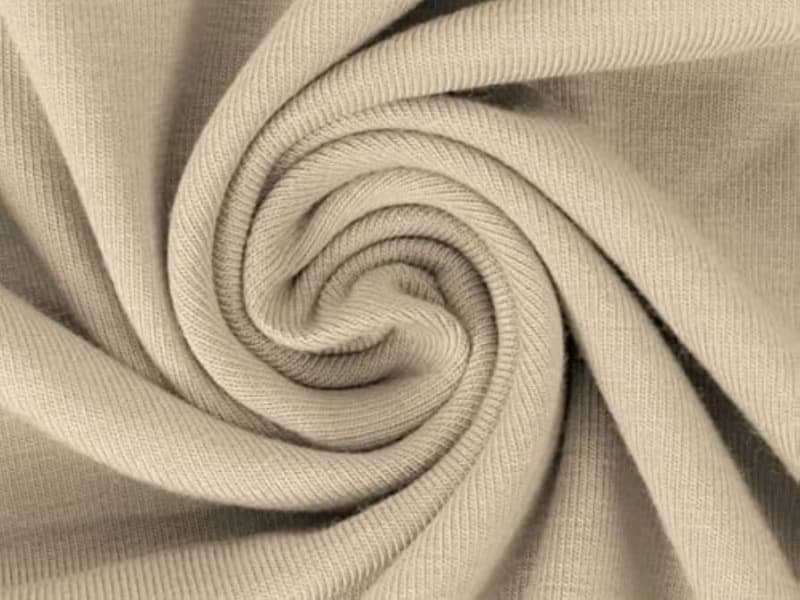
What Is Jersey Fabric?
Jersey is a family of knitted fabrics made from connected yarn loops. Unlike woven cloth, its looped construction creates natural widthwise stretch, softness, and easy movement. Jersey is not one fixed fiber or weight: cotton, viscose, modal, polyester, wool, and blended yarns can all produce jersey fabrics with very different drape, recovery, opacity, and durability.
How Jersey Is Knitted
Jersey is produced by drawing one yarn loop through another in a continuous sequence. The loops can open, shift, and partially return when tension is released, which is why the fabric usually stretches more easily than woven cloth. Most apparel jersey is produced on circular knitting machines that create a tubular fabric before slitting, dyeing, finishing, and inspection. Flat knitting is also used for certain engineered panels and heavier fashion constructions, but circular knitting remains common for yardage used in tops and dresses.
Machine gauge, stitch length, yarn count, knitting tension, and finishing conditions all influence the finished fabric. A loose knit may feel exceptionally soft and fluid but can become unstable during spreading, show excessive transparency, or snag more easily. A tighter knit often provides better coverage and recovery, although it may feel warmer and less fluid. The most useful fabric approval therefore combines hand feel with measurable data, including GSM, usable width, stretch in both directions, recovery, shrinkage, spirality, and pilling performance.
Structure, Not a Fiber
Jersey describes a knit structure rather than one specific raw material. Cotton jersey, viscose jersey, and polyester jersey may share a broadly similar loop formation, but they do not behave alike. Cotton tends to provide a familiar natural hand and moisture absorption, viscose creates softer drape, polyester supports color clarity and durability, and elastane improves stretch recovery. A fabric description that says only “jersey” leaves too many unanswered questions for product development.
A more useful specification combines construction and composition, such as “single jersey, 95% viscose and 5% elastane, 220 GSM” or “cotton-modal interlock, compact finish, 180 GSM.” Even those descriptions need physical confirmation because two fabrics with the same blend and weight can use different yarns, knit densities, and finishes. One may support a fitted midi dress while another grows at the waist within a few hours. The structure tells you how the fabric is built; the fiber and finishing tell you how it is likely to feel, age, and respond to care.
Jersey and Woven Fabric
The practical difference between jersey and woven fabric begins with yarn arrangement. Jersey uses connected loops, while woven textiles use warp and weft yarns crossing at right angles or in another defined weave. This changes stretch, drape, edge behavior, seam engineering, and pattern requirements. Jersey normally offers more natural movement and greater fit tolerance, while woven fabric often provides clearer structure and more predictable shape when the design relies on darts, panels, or tailoring.
| Performance Area | Jersey Fabric | Woven Fabric |
| Construction | Interlocking yarn loops | Crossed warp and weft yarns |
| Natural stretch | Usually moderate across width | Usually limited without elastane |
| Drape | Soft, fluid, or body-following | Can be fluid, crisp, or structured |
| Cut edges | May curl; usually limited fraying | Often frays and may need edge finishing |
| Fit behavior | More forgiving around body curves | Relies more on shaping and closures |
| Typical seams | Overlock, coverstitch, stretch stitch | Lockstitch, French seam, bound seam |
| Common uses | T-shirts, fitted dresses, tops, loungewear | Shirts, tailored dresses, trousers, jackets |
| Frequent risk | Growth, curling, waviness, skipped stitches | Fraying, seam slippage, stiffness, puckering |
Neither structure is automatically better. Problems appear when a pattern and construction method are transferred from one fabric family to another without adjustment. A woven-style waist seam may stretch and ripple in soft jersey, while a knit pattern with negative ease can become restrictive in a stable woven fabric. Neckline support, seam allowance, stitch elasticity, pattern reduction, hem method, and pressing temperature must all follow the behavior of the approved material rather than the appearance of the original sketch.
From Workwear to Fashion
The name is associated with Jersey in the Channel Islands, where knitted wool garments were historically produced for practical warmth and movement. As knitting equipment and yarn technology developed, jersey moved from functional workwear into everyday and fashion clothing. Designers valued its ability to follow the body without the rigid inner structure used in many woven garments, and the fabric became increasingly important in women’s dresses, tops, sportswear, and relaxed tailoring.
Modern jersey now ranges from lightweight cotton used in basic T-shirts to fine modal dress fabrics, dense compression-inspired knits, and polished double-knit constructions. The history matters because it shows that jersey has never been one fixed material. Its role changes with fiber choice, knitting technology, finishing, and fashion expectations. The practical question is not simply whether a fabric is jersey, but whether that particular jersey can deliver the intended silhouette, comfort, price, care performance, and production consistency.

What Is Jersey Fabric Made Of?
Jersey can be knitted from natural, regenerated, or synthetic fibers. Cotton offers a familiar hand, viscose and modal create fluid drape, polyester supports durability and color performance, and elastane improves recovery. The final result depends on the complete fabric system, including fiber quality, yarn construction, stitch density, GSM, finishing, dyeing, and the way the material is stabilized before cutting.
Cotton Jersey
Cotton jersey is widely used for T-shirts, casual dresses, children’s garments, sleepwear, and relaxed fashion tops because it feels familiar against the skin and absorbs moisture. Its quality varies with fiber length, yarn preparation, knitting density, and finishing. Combed cotton removes more short fibers and normally creates a smoother surface than basic carded yarn, while compact-spun constructions can reduce hairiness and help the fabric retain a cleaner appearance through repeated wear.
Pure cotton jersey stretches mechanically because the loops open under tension, but its recovery can be limited. A closely fitted dress may grow at the waist, hip, seat, or neckline unless the knit is dense enough or elastane is added. Shrinkage also requires attention. A fabric that loses 4% in length can shorten a 100-centimeter garment by roughly 4 centimeters after washing. Pre-relaxation, compaction, wash testing, and pattern confirmation should therefore occur before final approval rather than after a garment has already been graded across the full size range.
Viscose and Modal Jersey
Viscose and modal jerseys are often selected when a style needs a softer touch, fluid drape, and a more polished surface than basic cotton. They suit cowl necklines, ruching, gathered skirts, relaxed midi dresses, and fitted garments that rely on graceful movement. Viscose can feel cool and elegant, yet its softness may also create instability during spreading, cutting, and sewing if the fabric has not been fully relaxed or if the construction is excessively open.
Long garments need special care because regenerated-cellulose jersey can grow vertically under its own weight. A maxi dress may appear balanced immediately after sewing and then develop an uneven hem after hanging for a day or two. Modal often offers a smooth hand and can provide stronger dimensional behavior than some standard viscose fabrics, but the label alone is not a guarantee. Hanging growth, wash shrinkage, pilling, shade continuity, stretched opacity, and waist recovery should be confirmed on the actual fabric lot and preferably on a complete garment.
Polyester Jersey
Polyester jersey can provide strong color clarity, quicker drying, dimensional stability, and durable recovery, especially when blended with elastane. It is widely used for printed dresses, fitted tops, bodycon silhouettes, and fashion products that need consistent color across repeat production. Polyester also works well with selected digital and sublimation printing systems when the yarn, dye, and heat-setting process are properly matched.
The trade-offs deserve equal attention. A dense polyester fabric may feel warmer than cotton or viscose, while lower-quality filament yarns can produce excessive shine, snagging, or an inexpensive surface. Pressing temperature must be controlled because too much heat can glaze the face, alter dimensions, or weaken the elastic component. Approval should include surface luster, air permeability where relevant, snagging, pilling, rub fastness, stretch recovery, seam appearance, and opacity under tension rather than relying on a single attractive color swatch.
Elastane and Blend Design
Elastane, also called spandex, increases stretch range and helps the knitted structure return toward its original dimensions. Everyday jersey blends commonly contain around 2% to 5% elastane, while close-fitting and compression-inspired fabrics may contain approximately 5% to 10% or more. Those percentages are broad market references, not performance guarantees, because yarn placement, knitting tension, heat setting, and fabric density determine how effectively the elastic fiber works.
More elastane does not automatically make a better dress fabric. Excessive extension can reduce opacity, expose lining edges, and make measurements difficult to control during sewing. Strong compression can also feel uncomfortable around the bust, armhole, or waist. Product teams should record widthwise stretch, lengthwise stretch, immediate recovery, and residual growth after repeated extension. A fabric that stretches 60% but remains permanently enlarged may be less useful than one that stretches 30% and returns cleanly after wear.
| Fiber or Blend | Main Benefit | Common Risk | Suitable Garments |
| 100% cotton jersey | Natural hand and everyday comfort | Shrinkage and weaker recovery | T-shirts, relaxed dresses, casual tops |
| Cotton-elastane | Comfort with improved shape retention | Spirality or shrinkage if poorly finished | Fitted tops, casual bodycon dresses |
| Viscose-elastane | Fluid drape and soft touch | Growth, pilling, and instability | Ruched dresses, draped midi styles |
| Modal-elastane | Smooth surface and refined movement | Dimensional or shade variation | Premium tops, soft fitted dresses |
| Polyester-elastane | Recovery, color clarity, and durability | Heat retention or surface shine | Bodycon, printed, and occasion dresses |
| Nylon-elastane | Smooth hand and strong elasticity | Snagging and higher material cost | Sculpted or compression-inspired styles |

Which Types of Jersey Are Common?
The most common jersey categories include single jersey, double jersey, interlock, and stretch jersey. Single jersey is generally light and fluid, double jersey is thicker and more stable, interlock has a smooth two-sided surface, and stretch jersey contains elastic fiber for stronger recovery. Each construction creates a different balance of coverage, drape, edge behavior, sewing stability, and fit support.
Single Jersey
Single jersey normally has a smooth face with visible vertical knit stitches and a reverse side showing more obvious loop formations. It is one of the most widely used knit structures because it can be soft, flexible, economical, and comfortable. Depending on fiber, density, and weight, it works for T-shirts, slips, casual dresses, fitted basics, lightweight layering pieces, and ruched fashion styles.
Its apparent simplicity hides several production risks. Cut edges tend to curl, which can slow sewing and make seam alignment less accurate. The fabric may skew or twist after washing if yarn torque, knitting balance, and finishing are poorly controlled. Lightweight single jersey should be checked at the bust, hip, and seat because a fabric that appears opaque when relaxed can become transparent when stretched by 20% to 40%. Necklines and armholes may need binding, clear elastic, stabilizing tape, or another support method to prevent growth.
Double Jersey
Double jersey is produced with two needle systems and usually has a knitted construction on both sides. It is generally thicker, more stable, and less likely to curl than single jersey. The added body can provide stronger coverage and a smoother silhouette, which makes double jersey useful for fitted midi dresses, polished daywear, skirts, coordinated sets, light jackets, and knit garments that need more control without becoming as rigid as woven tailoring.
Heavier weight is not always beneficial. Dense double jersey can feel warm and may create bulky seam intersections at waist joins, zipper points, hems, or layered panels. It can also reduce the finesse of small gathers and soft ruching. Hanging growth still needs evaluation because the fabric’s own weight may lengthen a midi or maxi garment over time. Trial sewing should confirm needle size, presser-foot pressure, differential feed, stitch density, and pressing conditions before the bulk line is set.
Interlock Jersey
Interlock is a double-knit structure formed by interlocking two rib-like constructions. Both sides usually look smooth and similar, creating a clean appearance inside and outside the garment. It often provides better opacity and reduced edge curling compared with single jersey, which makes it useful for premium tops, unlined dresses, children’s clothing, and styles where the reverse side may remain visible.
Interlock can feel soft while still holding a clearer silhouette, but not every interlock has strong recovery. Some versions are firm and controlled, while others remain flexible and may grow during wear. The denser construction can produce tunneling or bulky hems if thread tension and stitch formation are not balanced. For dresses, interlock is a strong option when the design needs coverage, a refined surface, and moderate structure; it is less suitable for extremely fine gathers, sheer layering, or very light movement.
Stretch, Ponte, and Rib
Stretch jersey is a broad commercial term for a jersey construction containing elastane or another elastic component. It may be cotton-based, viscose-based, polyester-based, or made from several blended fibers. The terms two-way and four-way stretch are useful only when supported by measurements, because suppliers do not always apply them consistently. A 10-centimeter strip that extends to 15 centimeters has 50% extension under that test method, but recovery must still be measured separately.
Ponte is a dense double knit often used for sculpted dresses, office styles, and clean coordinated sets because it offers a smooth surface and stronger shape support. Rib jersey has visible vertical channels and usually stretches significantly across the width, making it useful for tank dresses, fitted tops, and column silhouettes. Each construction demands its own pattern reduction and seam treatment. Using one bodycon pattern across several “stretch jerseys” without checking extension and recovery is a common cause of inconsistent fit.
| Jersey Type | General Structure | Main Behavior | Common Applications |
| Single jersey | Light to medium, one main knit face | Soft, fluid, may curl | T-shirts, relaxed dresses, ruched styles |
| Double jersey | Medium to heavy, two-sided knit | Stable, opaque, controlled | Fitted midi dresses, skirts, polished sets |
| Interlock | Dense and smooth on both sides | Clean surface, reduced curling | Premium casual dresses, refined tops |
| Stretch jersey | Variable structure with elastane | Enhanced stretch and recovery | Bodycon, cutout, close-fitting garments |
| Ponte knit | Dense double-knit blend | Firm, smooth, shape-supporting | Office dresses, sculpted silhouettes |
| Rib jersey | Visible vertical rib formation | High widthwise stretch and texture | Tank dresses, column dresses, fitted tops |
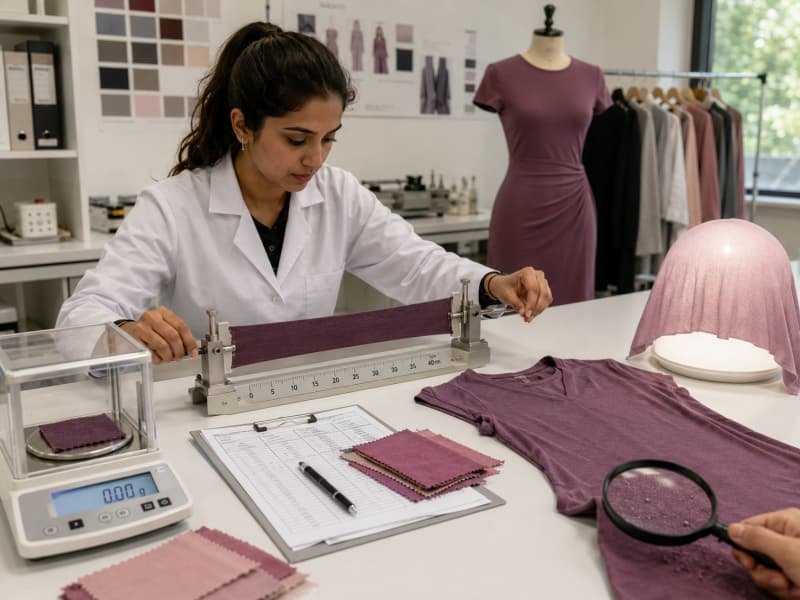
How Does Jersey Fabric Perform?
Jersey is valued for comfort, stretch, and drape, but its performance changes with fiber content, weight, knit density, and finishing. Some jerseys are light and breathable, while others are dense and supportive. Important risks include shrinkage, pilling, spirality, edge curling, seam growth, poor recovery, and opacity loss, all of which should be evaluated before a fabric is approved for production.
Stretch and Breathability
Most jersey fabrics stretch naturally because their loops can open under tension. Widthwise movement is normally greater than lengthwise movement, although elastane blends can provide meaningful extension in both directions. Breathability is not guaranteed by the word jersey. Fiber type, yarn size, knit density, finishing, and fabric weight all influence how air and moisture move through the cloth.
A lightweight cotton jersey may feel comfortable in warm weather, while a dense polyester-elastane fabric can feel warmer even when it stretches well. Viscose and modal often feel cool against the skin, but a tightly knitted version may still restrict airflow. The wearing situation matters: a summer day dress may prioritize breathability, a party bodycon dress may prioritize recovery and opacity, and a vacation maxi may need both fluid movement and controlled vertical growth. Comfort should be judged after extended wear, not only during a short fitting.
Drape and Recovery
Drape describes how a fabric falls, folds, and moves under its own weight. Recovery describes how effectively it returns after stretching. A viscose jersey can create beautiful fluid movement but may relax at the waist, while a dense polyester-elastane construction can hold a sculpted silhouette with less flowing movement. Cotton jersey sits between those extremes depending on yarn quality, GSM, and finishing.
GSM is useful but incomplete. Two fabrics at 220 GSM can behave very differently because one may use a compact yarn and tight stitch formation while the other uses bulkier yarn and a more open structure. Drape should be assessed on a large panel or full garment because a small swatch cannot show how a maxi skirt will hang. Recovery should be checked after repeated extension, since a fabric may return well once and still develop residual growth after hours of wear.
Shrinkage, Spirality, and Pilling
Jersey can shrink in both width and length when fibers and loops relax after washing, steaming, or heat setting. A 5% length reduction equals 6 centimeters on a 120-centimeter dress, which is enough to change the intended hem position. Results should therefore be recorded by direction and repeated on the proposed consumer-care cycle rather than estimated from fiber content alone.
Spirality appears when knit columns or garment side seams rotate after laundering. It can result from yarn torque, knitting imbalance, or inadequate finishing. Pilling develops when loose fibers migrate to the surface and form small balls under friction, especially around the underarm, hip, and seat. A fabric may pass a dimensional check and still look defective if side seams twist or the face becomes fuzzy. Full-garment wash tests reveal those problems more clearly than isolated laboratory swatches.
Seams and Care
Jersey sewing problems often include wavy seams, tunneling at hems, skipped stitches, needle holes, broken elastic yarns, puckering, and seam growth. These defects can come from the wrong needle point, excessive thread tension, high presser-foot pressure, poor differential-feed settings, or insufficient fabric relaxation. Fine elastic jersey normally requires a compatible ballpoint or stretch needle and trial sewing before production begins.
Care instructions should be based on complete garment testing. Cotton may need controlled drying to manage shrinkage, viscose may distort when wet, and polyester-elastane can lose recovery if exposed to excessive heat. Product teams should measure body length, chest, waist, hip, neckline, sleeve opening, and hem before and after several wash cycles. Visual checks should also cover twisting, color change, seam puckering, print damage, neckline growth, surface pilling, and whether the garment still looks balanced when worn.
- Check fabric and garment dimensions after the first wash and again after several repeated cycles.
- Evaluate rubbing, washing, perspiration, and light fastness according to the garment color and target market.
- Stretch seams to the expected dressing load so a visually clean seam is also strong enough in use.
- Inspect pale and dark fabrics under daylight, retail lighting, and photography conditions for opacity and shade consistency.
- Allow long jersey garments to hang before final hemming whenever vertical growth is a realistic risk.

How Do You Choose Jersey for Clothing?
Choose jersey by matching fiber, structure, GSM, stretch, recovery, opacity, and drape to the garment silhouette and wearing conditions. Lightweight fluid jersey suits relaxed or ruched designs, while denser fabrics work better for fitted dresses. Final approval should combine measurable test results, a full-garment fitting, wash evaluation, and bulk-lot comparison rather than relying only on softness or a supplier’s fabric name.
Jersey for Tops and Casual Styles
T-shirts and fashion tops often use jersey from roughly 140 to 220 GSM, although fiber, season, opacity, and retail position can move outside that range. Lightweight cotton supports casual comfort and printing, cotton-elastane improves neckline recovery, and viscose or modal can create a smoother, more refined appearance for fitted tops, cowl necklines, and draped details.
Neckline construction is a common failure point. A soft fabric with weak recovery may need a stable rib binding, clear elastic, neck tape, or controlled self-fabric binding. White, cream, and pastel colors should be checked over multiple skin-tone backgrounds because the same weight can appear more transparent in pale shades. A successful top is not simply soft; it should recover after dressing, sit flat at the neckline, remain smooth around the armhole, and retain measurements after laundering.
Jersey for Dresses
Dress fabric selection starts with silhouette. A relaxed T-shirt dress, ruched mini, fitted midi, and structured office dress should not use the same jersey simply because all four are knitted. Fluid viscose-elastane suits gathers and draped necklines, cotton-elastane supports casual fitted styles, polyester-elastane can provide stronger recovery for bodycon dresses, and interlock or ponte works when a cleaner, more controlled shape is required.
| Dress Style | Indicative GSM | Stretch Requirement | Main Selection Priority |
| Lightweight casual dress | 150-190 GSM | Moderate widthwise stretch | Softness, breathability, opacity |
| Ruched mini dress | 180-240 GSM | Two-way or four-way stretch | Recovery, drape, seam control |
| Bodycon dress | 220-320 GSM | Controlled multidirectional stretch | Coverage, compression, recovery |
| Fitted midi dress | 240-360 GSM | Moderate controlled stretch | Shape support, hanging stability |
| Relaxed maxi dress | 170-240 GSM | Moderate stretch | Drape, vertical growth, hem balance |
| Structured knit dress | 280-420 GSM | Low to moderate stretch | Stability, smoothness, silhouette |
These figures are practical development ranges rather than fixed standards. A 250 GSM viscose jersey can feel softer and hang more fluidly than a 200 GSM compact polyester construction. A full-size sample should be assessed while standing, sitting, walking, and wearing the garment for an extended period. Opacity should be checked at the areas under greatest tension, while long dresses should be observed for vertical growth and hem imbalance after hanging.
GSM, Stretch, and Fit
GSM measures fabric weight per square meter. It helps compare substance and coverage, but it does not independently define quality, stretch, or recovery. Heavier jersey often gives better opacity and support, yet its own weight may pull a long skirt downward. Lightweight jersey can drape beautifully but may cling, reveal underwear lines, or require lining.
Stretch affects pattern dimensions and negative ease. If a garment waist measures 64 centimeters for a 70-centimeter body, the pattern uses approximately 8.6% negative ease. That may feel comfortable in a soft fabric with strong recovery and restrictive in a firmer fabric with limited extension. A useful material record should include GSM, usable width, stretch in both directions, repeated-cycle recovery, relaxed and stretched opacity, wash shrinkage, hanging growth, and the approved negative-ease range. Patterns should not be transferred between fabrics merely because their weights look similar.
Testing and Bulk Approval
Testing priorities should reflect the garment, color, care claim, and target market. A relaxed T-shirt and a fitted occasion dress do not carry the same risk. The dress may require stricter control of opacity, recovery, seam strength, dimensional stability, and shade continuity because the fabric remains under greater tension during wear and because small visual defects become more obvious on a close silhouette.
- Confirm GSM and usable width against the approved development standard and costing assumptions.
- Measure widthwise and lengthwise shrinkage after the proposed wash and drying method.
- Record extension and recovery in both directions, including residual growth after repeated cycles.
- Check spirality, pilling, rubbing fastness, wash fastness, perspiration fastness, and light fastness when relevant.
- Evaluate relaxed and stretched opacity at the bust, waist, hip, and seat under more than one lighting condition.
- Inspect seam bursting, skipped stitches, needle damage, waviness, and hem tunneling on the actual sewing setup.
- Compare bulk rolls with approved sample yardage for shade, width, GSM, hand feel, stretch, and surface appearance.
A test report does not replace a fitting, and a fitting does not replace material testing. Both are needed because the final product is a system made from fabric, pattern, thread, elastic, trims, seams, pressing, and care conditions. Bulk material should also be compared with the approved sample yardage. A change in yarn lot, dyeing, knitting tension, or finishing can alter hand feel and recovery even when the composition printed on the specification remains unchanged.
From Fabric Brief to Production
The most reliable jersey development starts with a clear product brief rather than a request for “something soft and stretchy.” A useful brief identifies the intended garment, target composition, GSM range, desired drape, stretch direction, recovery level, opacity, color plan, size range, care method, order volume, delivery window, and market-specific testing requirements. Those details allow the development team to compare materials on the performance that matters instead of sending visually similar swatches that behave differently.
Duolan Apparel supports custom jersey-knit dresses, fitted mini and midi styles, ruched silhouettes, fashion tops, and coordinated collections for established fashion labels and product teams. Development can begin from a tech pack, original sample, reference garment, fabric concept, or collection brief, with support covering material sourcing, alternative evaluation, pattern adjustment, sampling, fit correction, pre-production review, and scalable manufacturing. For a project assessment or quotation, send the design files, target fabric requirements, size range, color plan, expected quantity, testing needs, and requested delivery date to duolan apparel.