Skip to content
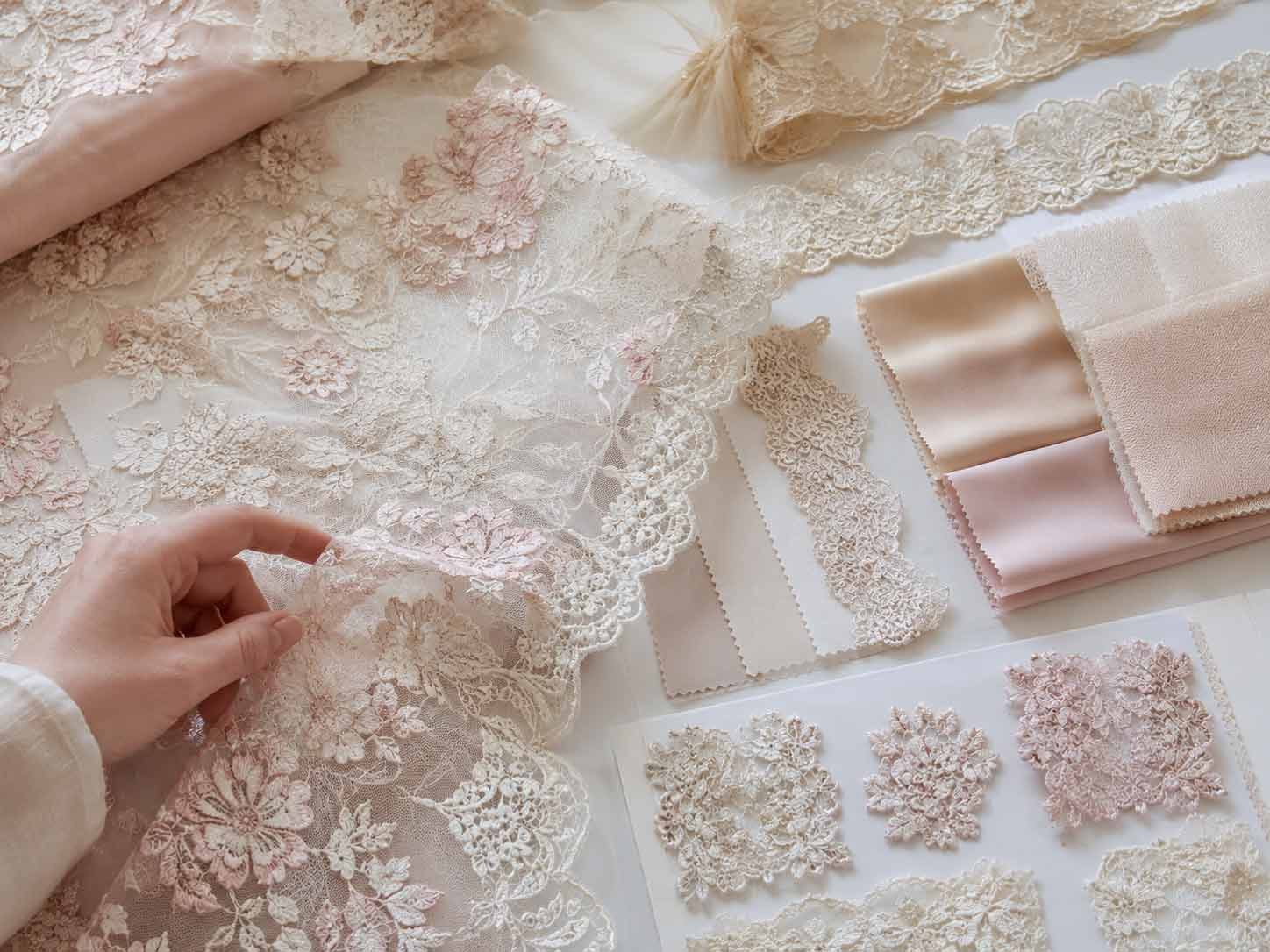
Lace is often judged from a distance. People notice floral motifs, transparent areas, and delicate edges, then assume every lace will feel soft, drape elegantly, and behave in much the same way. In real garment development, that assumption can become expensive. One lace may recover cleanly around the body, another may remain completely rigid, and a third may look refined on a swatch yet scratch the skin, distort during cutting, or grow at the waist after several hours of wear.
Lace fabric is a decorative openwork textile in which yarns create visible motifs around intentionally formed spaces. It may be knitted, embroidered, looped, twisted, braided, knotted, or handmade with needles and bobbins. Lace can contain cotton, silk, viscose, polyester, nylon, elastane, metallic yarns, beads, or mixed materials, so its performance depends on both construction and fiber composition.
The useful question is therefore not simply whether a lace looks attractive. The more important question is whether its weight, stretch, recovery, ground strength, motif repeat, border, lining, and sewing behavior suit the intended garment. Two visually similar black floral laces can produce very different dresses: one sits smoothly, keeps the neckline stable, and survives production; the other exposes seam allowances under retail lighting and leaves the factory team repairing pulled threads after every operation. The sections below explain how to tell the difference before those problems reach bulk production.
What Is Lace Fabric?
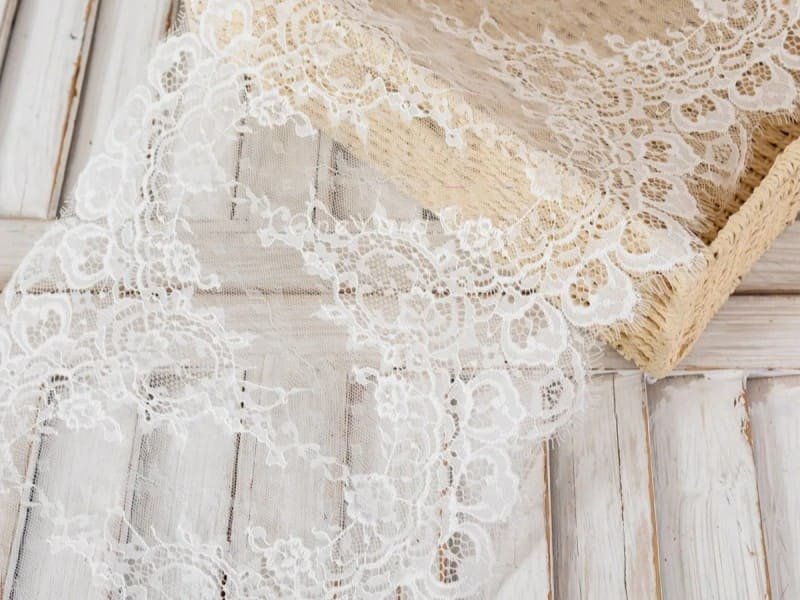
Lace fabric is an openwork textile in which yarns form decorative motifs around intentionally created spaces. It can be soft or structured, stretch or rigid, flat or dimensional. Lace is not one fixed fiber or construction; its performance depends on the ground, yarn composition, motif density, finishing, embellishment, and the way it is combined with lining and garment structure.
Composition and Structure
The word lace describes a visual and structural family rather than one raw material. Lace may be produced from cotton, silk, linen, viscose, polyester, nylon, elastane, metallic yarns, or several fibers used in different parts of the same article. Two fabrics can share an almost identical floral drawing and still behave differently because one uses a soft nylon ground while the other relies on dense polyester embroidery, thick cording, and a firmer finishing route.
Cotton lace usually has a dry, natural handle and is common in summer dresses, blouses, trims, and relaxed romantic styles. It may crease more readily and should be checked for shrinkage after washing. Viscose can create softness and fluidity, although dense viscose embroidery may become heavy. Polyester is widely used for clear motifs, stable color, shape retention, and commercial repeatability, while nylon is common in fine net grounds and elastic lace because it can create lightweight structures with useful strength.
Elastane is introduced when the fabric needs true extension and recovery, but the percentage on the content label does not predict the complete result. Yarn placement, knitted structure, embroidery density, heat-setting temperature, dyeing, and softening all influence actual stretch. A useful technical record therefore includes ground and embroidery composition, finished weight, usable width, stretch direction, recovery, repeat size, border position, color standard, care route, and any testing required for the destination market.
| Lace Construction | Common Fiber Options | Typical Handle | Main Garment Consideration |
| Fine net lace | Nylon, polyester, or blends | Lightweight and delicate | Snagging, seam support, and transparency |
| Cotton lace | Cotton or cotton blends | Dry, soft, and natural | Shrinkage and crease recovery |
| Stretch lace | Nylon or polyester with elastane | Flexible and close-fitting | Extension, recovery, and lining compatibility |
| Guipure-style lace | Polyester, cotton, or viscose | Firm and dimensional | Weight, seam bulk, and motif stability |
| Embroidered tulle | Synthetic ground with mixed embroidery | Ranges from soft to rigid | Ground strength and embroidery density |
| Beaded lace | Synthetic or blended base with decoration | Heavy and highly decorative | Decoration security and hanging growth |
Lace vs Mesh
Mesh is usually defined by a repeated network of holes, while lace uses open spaces as part of a decorative motif. A basic mesh may repeat the same diamond, hexagonal, or square opening across the full width. Lace normally combines open areas with flowers, leaves, scrolls, geometric lines, medallions, cords, or embroidered surfaces, so the density and visual emphasis change from one part of the pattern to another.
The distinction becomes less obvious when embroidery is placed on a mesh ground. In that case, the underlying textile may technically be tulle or net, while the embroidery creates the lace appearance. For garment development, the commercial name matters less than the physical structure. The team needs to know whether the ground stretches, how strong it is near dense motifs, whether it curls after cutting, and how it behaves around seams, edges, pressing, and repeated movement.
A quick hand pull is not enough to evaluate either material. Some meshes extend because of their knitted structure but recover poorly. Some embroidered laces appear rigid until the open ground expands unevenly between motifs. Stretch should be measured in both directions, and the surface should be inspected after release for enlarged holes, permanent growth, broken filaments, distorted motifs, or whitening where the yarn has been overstressed.
Lace and Embroidery
Lace and embroidery overlap, but they are not identical. Embroidery is a process in which decorative stitches are added to an existing ground such as tulle, mesh, organza, cotton voile, or another fabric. Traditional needle lace and bobbin lace can create a textile structure without a conventional woven or knitted base. Embroidered lace, by contrast, depends on the stability and behavior of both the supporting ground and the decorative stitching placed on top of it.
Chemical lace is produced by embroidering onto a temporary soluble ground. After that support is removed, the remaining stitches must connect strongly enough to form an independent structure. The result can resemble Guipure because there is no visible fine net under the motifs. In embroidered tulle, the mesh remains part of the finished article, so a strong-looking flower can still sit on a fragile ground that tears at the seam or around a zipper.
The construction route affects sewing time and comfort. Dense embroidery, metallic thread, cords, beads, and sequins can create skipped stitches, needle deflection, seam ridges, and roughness against the skin. Decorations inside seam allowances may need to be removed before stitching, with loose ends secured and selected beads or motifs replaced afterward. These operations should be planned during sampling because they influence labor, consistency, repair rates, and the final appearance of the garment.
What the Name Does Not Tell You
Traditional names are useful for describing visual families, but they do not work as complete modern specifications. One supplier may use the term Chantilly for a very fine floral net, while another uses it for a heavier machine-made lace with a different yarn, denser motif, and firmer finish. Commercial labels such as Alencon-style, Guipure, corded lace, stretch lace, and embroidered lace can each cover a broad range of constructions and qualities.
A familiar name does not confirm composition, finished weight, stretch percentage, recovery, usable width, motif dimensions, border depth, surface softness, shrinkage, colorfastness, sewing performance, batch consistency, or future availability. The supplier article number and a retained approved standard are therefore more dependable than the category name alone. The standard should be large enough to show the full repeat, border, ground, motif density, color, and finished hand rather than only a small decorative corner.
This distinction becomes critical when a material is replaced. A visually similar substitute can alter fit, marker yield, seam behavior, lining choice, pressing, care performance, and sewing time. Material substitution should be treated as a controlled product change, with the critical garment area resampled and the relevant tests repeated. Approving a replacement from a phone photograph or a small loose swatch transfers too much risk into cutting and production.

How Is Lace Fabric Made?
Lace is made by manipulating yarns into decorative motifs connected by open spaces. Traditional lace uses needles, bobbins, loops, knots, or crochet methods. Modern commercial lace is commonly produced through warp knitting, machine embroidery, jacquard systems, or soluble-ground techniques, followed by dyeing, washing, heat setting, softening, inspection, repair, trimming, and other finishing operations.
Handmade Construction
Handmade lace develops through repeated, controlled movements of individual threads. Needle lace is built with a needle and working thread over a temporary pattern. The maker gradually forms outlines, connecting bars, fillings, loops, and decorative areas, then releases the completed textile from its foundation. Because the structure grows one section at a time, subtle changes in thread tension and stitch size can influence the final dimensions and appearance.
Bobbin lace uses many threads wound onto small bobbins. These threads are crossed and twisted around pins positioned on a pattern attached to a lace pillow. Crochet lace, tatting, knotted lace, and related techniques use different tools, but all depend heavily on manual consistency. Their visual value often comes from fine craftsmanship and controlled irregularity that would be difficult to reproduce through a standard industrial machine route.
Handmade elements can work in limited luxury programs, couture details, artisan collections, and localized motifs, but they need a commercial definition when repeated across many garments. A practical approval should record finished dimensions, thread composition, color, motif orientation, stitch density, attachment method, washing limits, repair procedure, inspection points, and acceptable visual variation. Without a shared tolerance, one team may interpret variation as craftsmanship while another records it as a defect.
Machine Production
Most lace used in commercial womenswear is machine produced. Warp-knitting systems, particularly Raschel-type machines, can create floral patterns, geometric structures, scalloped borders, stable grounds, and elastic constructions. Multiple guide bars control the movement of different yarns, allowing the machine to build the ground and decorative pattern within the same process. The number and movement of those yarn systems influence pattern complexity, density, openness, and production speed.
Machine embroidery provides another major route. A net, tulle, organza, or mesh ground passes beneath multiple embroidery heads while programmed stitches create the motif. Depending on the equipment, the design may include several thread colors, cording, sequins, beads, appliques, cutwork, or raised three-dimensional details. Soluble-ground production removes a temporary base after embroidery, so the stitch program must keep every major motif connected once that support disappears.
Machine production improves repeatability, but it does not eliminate variation. Yarn count, supplier, ground tension, needle condition, embroidery speed, stitch density, dye temperature, heat-setting conditions, drying tension, and finishing chemicals can all change the finished width, hand, stretch, color, or motif dimensions. Approval should therefore be based on the dyed and finished production quality rather than an unfinished grey fabric or an early sample made from another lot.
Pattern Engineering
A lace pattern may begin as artwork, but the commercial result depends on how that artwork is translated into yarn movement, stitch density, scale, repeat, and border placement. A floral drawing that looks balanced on paper can become too heavy, too open, or difficult to cut after it is converted into embroidery or knitting data. Pattern engineers decide where motifs connect, how large the unsupported spaces can be, and which outlines need additional density or cord.
Repeat size affects both design and cost. A large directional floral repeat can create impressive placement opportunities, yet it may prevent pattern pieces from rotating and increase unused fabric between them. Scalloped borders can remove the need for a conventional hem, but they restrict marker placement because the garment edge must align with a fixed part of the width. Dense flowers may also need to avoid darts, cup seams, zippers, or high-friction areas.
For fitted garments, major motif placement should be reviewed on the body and across the graded size range. A flower that appears balanced on a flat base-size pattern may sit differently over the bust or hip in larger sizes. Photographic placement maps can identify the intended position of important motifs on fronts, backs, sleeves, cups, and hems while allowing controlled adjustment when body proportions change. This creates visual consistency without forcing unrealistic identical placement across every size.
Finishing and Consistency
Lace normally passes through several stages after knitting or embroidery, including washing, dyeing, heat setting, softening, coating, drying, width setting, trimming, repair, shade separation, rolling, and final inspection. Each stage can change the material. Heat may improve dimensional stability and elastic recovery, but excessive temperature can damage elastane, shrink the ground, flatten cording, or mark sequins and coatings.
Softening can improve the first touch, although the result must be checked after the intended care process because some effects reduce after washing or professional cleaning. Tension during drying and width setting can also alter repeat dimensions and finished width. A lace that was approved before finishing may therefore consume differently, fit differently, or present a noticeably different motif scale once the final bulk route is completed.
Bulk consistency should be reviewed through measurable characteristics and a large retained standard. Rolls should be shade grouped before cutting, particularly for pale neutrals, red, navy, black, and saturated fashion colors where minor differences can appear across panels. The approved cutting should contain the full repeat and border so that inspectors can compare motif scale, density, ground, scallop, hand, shade, and surface finish rather than relying only on a small swatch.
| Control Point | What to Record | Common Development Concern | Bulk Action |
| Finished weight | g/m2 from several roll positions | Drape and lot variation | Compare with retained approved standard |
| Usable width | Defect-free cutting width | Consumption and marker yield | Measure several positions on every lot |
| Repeat size | Length and width after finishing | Motif placement and grading | Confirm full repeat before marker approval |
| Stretch | Extension in both directions | Fit and lining compatibility | Use the same defined test method |
| Recovery | Immediate and delayed return | Permanent waist or hip growth | Compare after defined rest intervals |
| Shade | Within-roll and roll-to-roll comparison | Panel mismatch | Shade group rolls before cutting |
| Hand and border | Touch, scallop depth, and straightness | Comfort, hem placement, and pressing | Inspect against large approved cutting |

Which Types of Lace Are Common?
Common fashion laces include Chantilly, Guipure, Alencon-style, corded, stretch, embroidered, and beaded lace. Each type creates a different balance of softness, structure, transparency, stretch, weight, and sewing difficulty. The most suitable choice depends on the garment silhouette, lining, motif placement, desired surface effect, care method, production volume, repeat-order plan, and total cost per accepted garment.
Fine and Lightweight Laces
Chantilly-style lace is known for a fine net ground, delicate motifs, and a light transparent appearance. It is widely used for soft overlays, sheer sleeves, yokes, veils, lingerie-inspired panels, and occasion dresses that need surface detail without excessive weight. Modern commercial qualities may use different fibers and machine routes, so the familiar name should be followed by a physical assessment of weight, ground strength, softness, repeat, and finishing.
Fine lace can drape beautifully, but it requires controlled handling. The ground may distort during spreading, especially when many plies are stacked or pulled under tension. Narrow seam allowances can open, and rough machine surfaces, damaged tables, jewelry, hook-and-loop tape, or exposed zipper teeth may cause snags. Low-tension spreading, limited ply height, sharp cutting tools, fine needles, controlled presser-foot pressure, protected pressing, and careful storage reduce avoidable damage.
Lightweight lace often reveals more internal construction than expected. Cup edges, seam allowances, zipper tape, boning, labels, and lining joins may remain visible through the open areas. The garment should be reviewed in daylight, strong retail lighting, and camera flash. A very light lining is not automatically the best partner; the lining must still provide the opacity, stretch, support, and shape required by the silhouette without creating ripples or pulling the lace out of balance.
Structured Laces
Guipure lace is built from motifs connected by bars or bridges rather than a conventional fine net ground. It usually feels firmer, heavier, and more dimensional than fine lace, making it suitable for statement minis, fitted shells, collars, structured sleeves, skirt panels, and garments where the motif itself contributes to the silhouette. Its open areas can still reveal lining or skin, so greater weight does not necessarily mean full opacity.
Alencon-style and corded laces use raised outlines to give floral or geometric motifs stronger definition. They are common in formal dresses, corset bodices, bridal-inspired styles, and occasionwear. The raised areas can produce elegant depth, yet they also create sewing challenges. Dense intersections may cause visible ridges, needle deflection, skipped stitches, or bulky seams, particularly around cups, waist shaping, princess seams, and close curved panels.
Motif joining can create a cleaner result than a conventional straight seam. Selected flowers may be cut, overlapped, and appliqued across the join so that the seam becomes less obvious. This technique requires skilled labor, a repeatable method, and clear inspection standards. Structured lace should also be checked for weight, hanging behavior, connecting-bar strength, cord security, edge fraying, pressing marks, packing creases, skin comfort, and compatibility with zippers, cups, boning, and lining.
Stretch and Embroidered Laces
Stretch lace usually contains elastane within a knitted ground and is used for bodycon dresses, fitted tops, bodysuits, close sleeves, ruched products, and lingerie-inspired fashion. Some articles extend mainly across the width, while others provide useful movement in both directions. The words stretch lace should always be supported by measured extension and recovery because easy hand stretch does not prove that the material will return cleanly after wear.
Embroidered lace includes decorative stitching on tulle, mesh, organza, or another support. It can be flat, corded, sequined, beaded, appliqued, metallic, or three-dimensional. The ground and embroidery should be judged separately. A strong-looking floral motif may sit on a weak net, while dense stitching can make certain areas rigid and leave neighboring open areas very flexible. This uneven behavior can affect the bust, waist, hip, sleeve cap, and seam lines.
Heavy embroidery increases thread use, machine time, weight, cutting difficulty, and sewing labor. Decorations may need to be removed from seam allowances and replaced after sewing. Stretch lace should be tested together with the lining, zipper, elastic, tape, cups, and support materials because any rigid component can block movement. The complete garment should also be checked for motif opening, transparency change, seam stress, permanent growth, and decoration security after repeated wear movements.
| Lace Type | Broad Commercial Weight* | Typical Stretch | Common Womenswear Use | Main Production Risk |
| Chantilly-style | 40-120 g/m2 | Low or none | Sleeves, overlays, soft dresses | Snagging and distortion |
| Fine stretch lace | 50-160 g/m2 | Moderate to high | Bodycon styles and fitted sleeves | Poor recovery and motif opening |
| Guipure | 150-400 g/m2 | Usually low | Structured dresses and panels | Weight, rigidity, and seam bulk |
| Corded lace | 100-260 g/m2 | Low to moderate | Formal and occasionwear | Raised seam intersections |
| Embroidered tulle | 80-300+ g/m2 | Ground dependent | Statement dresses and overlays | Ground tearing and uneven rigidity |
| Beaded lace | 180-500+ g/m2 | Usually low | Evening and event dresses | Decoration loss and hanging growth |
*The weight ranges above are broad commercial guides rather than fixed definitions. Actual values vary with the ground, yarn count, embroidery coverage, cording, beads, sequins, coatings, and finishing. A supplier quotation should always state the finished article weight and usable width because two materials sold under the same category name may create very different consumption, drape, sewing time, and packing requirements.
Choosing by End Use
The most familiar lace name is not always the best choice. Selection should begin with the finished garment and the wearing situation. A soft midi overlay needs a different balance of weight and movement from a corset mini. A bodycon dress depends on controlled stretch and recovery, while a formal full-skirted dress may be more sensitive to hanging weight, motif placement, and the way the lace sits over several support layers.
The team should ask whether the garment needs stretch, how much structure the shell must provide, whether the lace will touch the skin, how transparent the design should appear, whether a scalloped border is required, and whether major motifs must be matched or engineered. Care method, size range, color count, production quantity, repeat availability, and the presence of cups, boning, sequins, or beads also narrow the practical options.
Material price per meter can be misleading. A lower-priced lace with a narrow usable width, large directional repeat, frequent defects, or slow sewing behavior may cost more per accepted garment than a higher-priced article that cuts efficiently and remains stable. The useful comparison includes actual consumption, cutting loss, lining, sewing labor, decoration preparation, inspection, repair, testing, packing, and repeat-order reliability rather than the swatch price alone.
- Does the garment need stretch, and in which direction?
- Should the finished silhouette feel soft, fluid, crisp, or structured?
- How much skin, lining, or internal support should remain visible?
- Will major motifs, borders, or scallops require engineered placement?
- Does the style include cups, boning, corsetry, beads, sequins, or appliques?
- What care method, size range, quantity, color plan, and repeat-order period are expected?

What Are Lace Fabric Properties?
Lace properties vary with fiber, ground, motif density, stretch, finishing, and decoration. It may be soft or abrasive, breathable or heavily covered, rigid or elastic, lightweight or substantial. Open spaces do not automatically guarantee comfort, and a delicate appearance does not prove weakness. Performance should be assessed in the complete garment with its lining, seams, support materials, care method, and intended fit.
Softness and Comfort
Softness depends on yarn type, thread size, ground construction, embroidery density, cording, coatings, softener, decoration, and the condition of the reverse side. A fine nylon ground with viscose embroidery may feel smooth and flexible, while a polyester lace with metallic yarn and thick cording can feel crisp or abrasive. The front surface alone is not enough because the embroidery back, cut threads, bead stitches, and heat-sealed edges may touch the body.
Hand feel should be checked after the intended care process. Some finishing agents create a pleasant first touch that reduces after washing or professional cleaning, allowing stiffness or rough thread ends to become more noticeable. Heat and moisture can also change the surface. A fabric that feels comfortable on a swatch table may become irritating around the neckline, underarm, waist, sleeve, side seam, inner thigh, or center-back zipper after several hours of movement.
Wear trials should include sitting, walking, raising the arms, turning, and contact with the intended lining and undergarments. Comfort can be improved with lining, binding, enclosed seams, softer thread, protective backing, and motif placement away from friction points. The best solution preserves the intended transparency and appearance instead of adding a heavy lining after sampling that changes drape, stretch, fit, and the visual depth of the lace.
Stretch and Recovery
Stretch describes how far the material extends, while recovery describes how closely it returns to its original dimension. For fitted lace garments, recovery is often the more important measure because a fabric can stretch easily and still leave permanent growth at the waist, hip, seat, elbow, or sleeve. Testing should record direction, original length, applied method, maximum extension, hold time, and the measurement after a defined recovery period.
A simple development calculation is: stretch percentage equals the extended length minus the original length, divided by the original length, multiplied by one hundred. A ten-centimeter sample extended to fourteen centimeters has forty percent extension. That figure is only comparable when the same load and procedure are used. Immediate recovery can be followed by another measurement after approximately thirty minutes and a longer rest when growth risk is high.
Lace may extend unevenly because dense embroidery resists movement while the open ground expands between motifs. Excessive negative ease can enlarge holes, expose more skin or lining, change motif proportions, pull seams open, and overload zippers or neckline edges. The lace, lining, seam, elastic, tape, zipper, cups, and internal support should therefore be tested as one system rather than as separate materials with unrelated stretch results.
Breathability and Durability
Open areas can improve airflow, but the complete garment determines actual comfort. Dense embroidery, synthetic coatings, sequins, beads, fusible backing, cups, boning, and several lining layers can reduce ventilation. A sheer unlined sleeve may feel airy, while the same lace over a close polyester lining feels much warmer. Garment ease also matters because a loose overlay allows more air circulation than a highly tensioned bodycon shell.
Durability depends on how the lace is constructed and where it is used. Fine grounds can snag on jewelry, damaged tables, zipper teeth, hook-and-loop fasteners, rough trims, or packing edges. Dense motifs may remain intact while the connecting net tears. A loose overlay faces fewer stresses than a fitted mini with a center-back zipper, narrow straps, a high slit, and repeated tension around the waist and hip.
Practical durability checks include seam opening, neckline stability, stretch recovery, slit reinforcement, zipper-area strength, underarm abrasion, snagging, motif security, edge fraying, cord attachment, bead loss, and appearance after the intended care cycle. Testing should reflect the product and destination market rather than copying a generic checklist. Delicate lace can still be commercially durable when the structure, seam, support, packing, care, and wearing conditions are controlled together.
Lining and Care
Lace may need lining for opacity, comfort, support, shape retention, seam protection, or color effect, but it does not always need to be fully lined. Sleeves, yokes, back panels, and selected waist areas may remain transparent by design. The lining should be chosen for mechanical compatibility as well as appearance, because a rigid woven lining can restrict stretch while a weak elastic lining may grow beneath the lace.
Tonal lining creates a quieter, integrated surface, while contrast lining makes motifs more visible. A skin-tone lining can create an illusion effect, but shade selection should reflect the target customer range rather than one mannequin color. The combination should be reviewed in daylight, strong front lighting, and camera flash for opacity, cup visibility, seam show-through, support-component visibility, and color interaction.
Care instructions must protect the complete garment, including lace, lining, cups, boning, adhesives, zippers, labels, sequins, beads, metallic yarn, and decorative trims. Common precautions include gentle mechanical action, protective laundry bags, low heat, protected pressing, supported drying, and separation from rough items. Final instructions should follow garment testing that checks dimensional change, staining, color change, embroidery damage, decoration security, seam appearance, surface distortion, and pressing response.
| Property | Practical Check | Common Development Starting Point* | Why It Matters |
| Finished weight | Compare several areas and rolls | Often controlled near +/-5% of approved standard | Drape and lot consistency |
| Dimensional change | Test after the intended care cycle | Frequently reviewed near +/-3% | Fit, length, and hem balance |
| Colorfastness | Washing, rubbing, perspiration, or cleaning | Grade 3-4 or better is often discussed | Fading and color transfer |
| Residual growth | Measure after defined recovery time | Often reviewed below about 3-5% | Waist, hip, and elbow bagging |
| Usable width | Measure defect-free cutting width | Confirm against approved minimum | Consumption and marker yield |
| Seam behavior | Test intended seam and direction | Brand- and product-specific acceptance | Splitting and distortion |
| Decoration security | Pull, abrasion, and care trial | No visible loss under approved method | Returns, repair, and appearance |
| Shade consistency | Compare rolls and panel combinations | No obvious difference in normal viewing | Finished garment uniformity |
*The figures above are common commercial discussion points rather than universal standards. Final tolerances should follow the fabric type, color, test method, garment construction, care route, target market, and brand requirements. A technical limit is only useful when the test procedure is defined and the same method is applied to the approved sample, bulk fabric, and any replacement material.

How Do You Choose Lace for Clothing?
Choose lace by working backward from the finished garment. Define the silhouette, stretch, support, transparency, lining, motif placement, care method, target price, quantity, and repeat-order requirements before approving the fabric. The best lace is the one that reproduces the intended appearance, fit, comfort, and performance consistently through sampling, bulk production, delivery, wear, and future reorders.
Fit and Silhouette
Lace should be selected according to the shape the garment must create. Fine draping lace suits overlays, soft midi dresses, flowing sleeves, and layered occasionwear. Guipure or corded lace can support structured panels and statement surfaces. Stretch lace is more suitable for close silhouettes that require body movement. The correct choice depends on how the fabric responds after it is curved, tensioned, lined, seamed, and worn rather than how impressive it looks flat.
Fit is influenced by weight, stretch, recovery, motif density, direction, friction, lining, border firmness, and embroidery placement. A rigid lace cannot be fitted like jersey. A stretch lace may support negative ease, but excessive tension can open the motifs and alter opacity. Dense flowers can resist extension while the ground stretches, creating uneven pressure around the bust, waist, hip, sleeve, and neckline.
The sample should be reviewed on a body and through movement, including sitting, walking, turning, raising the arms, and wearing the intended undergarments. Critical areas include neckline stability, bust coverage, cup placement, underarm comfort, waist compression, hip movement, sleeve mobility, zipper behavior, slit opening, and hem balance. A major motif that looks balanced on the pattern table may create unintended emphasis or expose internal construction once it is positioned on the body.
Lace and Lining
Lace and lining should behave as one garment system. They need compatible extension, recovery, weight, drape, shrinkage, surface friction, and care requirements. When lace stretches forty percent but the lining stretches only fifteen percent, the lining controls the garment. When the lining stretches farther but recovers poorly, it can sag beneath the shell and become visible at the neckline, armhole, zipper, or hem.
A layered trial panel should use the intended lace, lining, seam, thread, needle, edge finish, elastic, stabilization, and pressing method. It should be stretched, hung, photographed, pressed, and cleaned according to the proposed care label. This small test can expose bubbling, friction, color change, seam show-through, shrinkage differences, static, and uneven recovery before a full sample consumes high-value fabric and skilled sewing time.
Internal support must be included from the beginning. Cups, boning, mesh reinforcement, fusible materials, elastic tape, stay tape, and zipper support can change fit and transparency. Adding them after the lace has been approved may make the surface look flatter, create visible edges, or restrict movement. Tonal, contrast, and illusion linings should each be assessed under realistic lighting because the same lace can appear substantially different over another color or opacity.
Cutting and Sewing
Pattern repeat has a direct effect on material consumption and visual consistency. A small non-directional repeat usually offers better marker efficiency. A large directional floral repeat requires more space between pattern pieces and prevents rotation. Scalloped borders can create attractive hems, necklines, and sleeves, but they restrict placement, and the border depth must work across the graded size range rather than only on the base-size sample.
Before consumption is calculated, the team should measure the full repeat, usable width, design direction, scallop depth, distance between major motifs, left-right symmetry, dense zones, open zones, and defect distribution. Cutting loss can rise by roughly ten to thirty percent or more when a lace has a large directional repeat, engineered borders, or strict matching requirements. That range is illustrative; the actual result depends on style, size mix, width, marker, and placement rules.
Sewing methods should follow the ground and motif. Fine lace may use narrow overlocked seams, French seams, binding, or stabilized transparent joins. Guipure and corded lace may use overlapped motif seams or applique methods. Stretch lace requires seams that extend without breaking. Decorations inside seam allowances may need removal, with their threads secured and selected pieces replaced later. Needle size, pressure, feed, stitch length, tension, speed, and pressing should be tested on production-quality fabric rather than a substitute.
Production Approval
Before bulk production, the material, color, pattern placement, fit, construction, testing, workmanship, and packing standard should be confirmed in one controlled file. The lace record should identify the supplier article, composition, finished weight, usable width, stretch direction, extension, recovery, repeat dimensions, border position, approved shade, care method, and required performance checks. The garment record should include the approved sample, measurements, graded pattern, seams, lining, trims, pressing limits, and defect criteria.
A pre-production sample should use bulk-intent materials and processes. Approval of an early sample made from substitute lace does not prove that the final article will fit, drape, sew, or recover in the same way. Bulk rolls should be shade grouped before cutting, and first-piece approval should confirm measurements, motif position, lining behavior, seam quality, decoration clearance, zipper support, scalloped edges, and pressing appearance before the full line continues.
Changes after approval should be documented because replacing the lace, lining, border, color, or repeat can reopen fit, consumption, sewing time, testing, cost, and delivery. Even a visually similar material may require a partial resample. For a practical development review, provide the tech pack or reference sample, target lace direction, size and color range, quantity by style, lining and motif expectations, destination market, test requirements, packing details, and planned launch date.
A well-developed lace dress is not created by choosing the most decorative swatch. It comes from matching the fabric to the silhouette, engineering the pattern and lining, controlling motif placement, validating fit and care, and translating the approved sample into repeatable cutting and sewing standards. When these decisions are made early, the finished collection is more likely to remain consistent across sizes, colors, production lines, delivery windows, and repeat orders.
Request a Custom Lace Dress Development Review
Duolan Apparel supports custom womenswear development for fashion brands that require coordinated fabric sourcing, pattern development, sampling, fit review, specialist construction, bulk production, and quality control. Send the team your technical package, reference garment, preferred lace direction, target quantity, size range, destination market, testing requirements, and delivery schedule to receive a production-based review and quotation for your custom lace dress program.