Skip to content
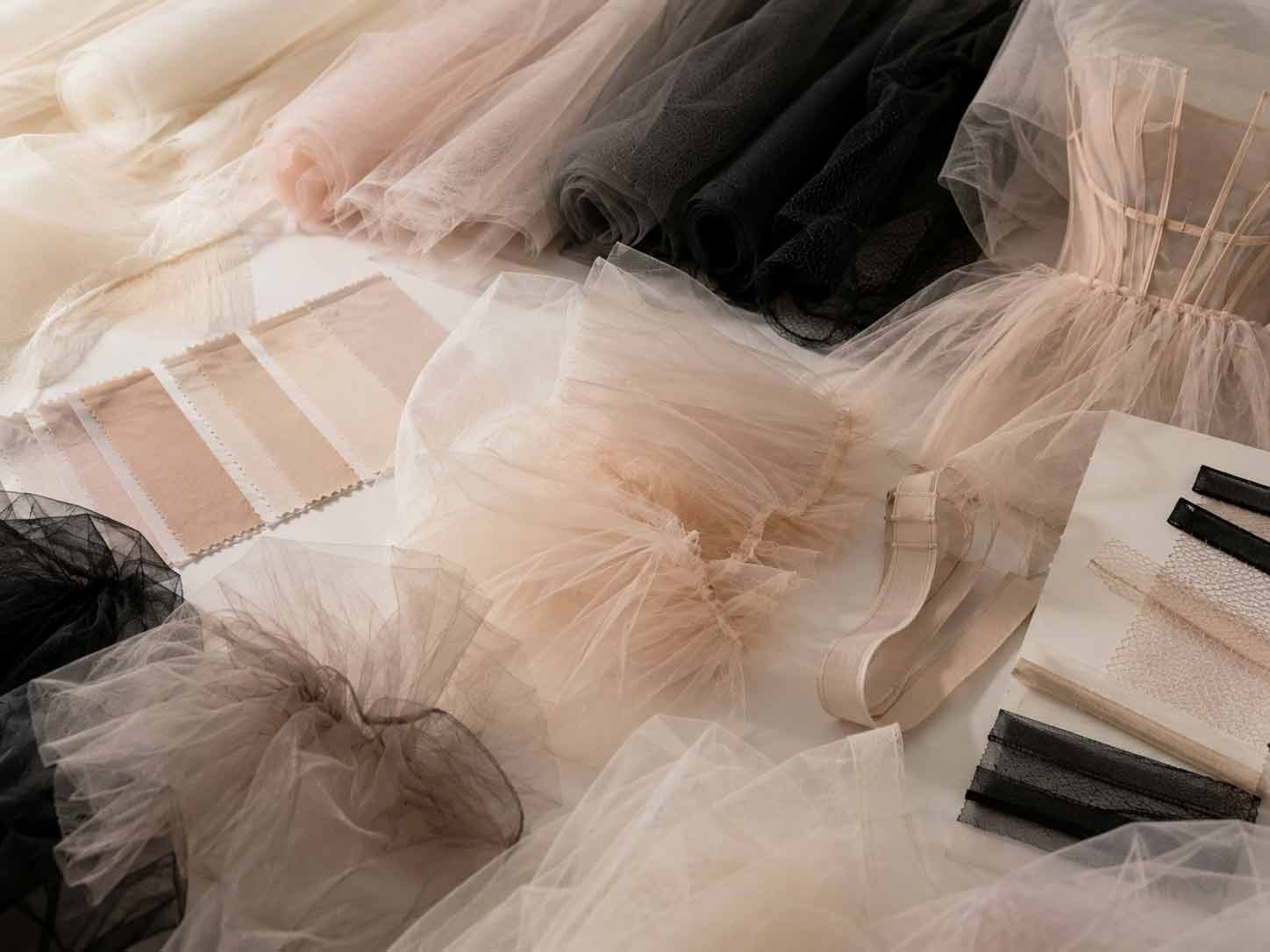
Mesh can make a dress look weightless, sculpted, sporty, romantic, or deliberately revealing, yet the name itself tells a product team surprisingly little. Two swatches may both be sold as mesh, while one is soft enough for an illusion neckline and the other is firm enough to control a fitted waist. Their hole patterns may look similar, but their stretch, recovery, drape, snag resistance, dye response, and behavior under sewing tension can be completely different.
Mesh fabric is a textile with an open structure formed by spaced yarns, loops, or intersections. It is not one specific fiber. Mesh may be made from polyester, nylon, elastane blends, cotton, or other materials, and its breathability, stretch, transparency, strength, and drape depend on both the fiber composition and the way the structure is constructed.
That distinction becomes important as soon as a design leaves the sketchbook. A development team can approve a beautiful mesh because the shade and softness look perfect on a table, then discover during fitting that the waist grows, the side seams twist, or the lining restricts the outer layer. The material was not necessarily defective; it was simply wrong for the job. The sections below explain how to judge mesh as part of a complete garment rather than as an attractive swatch in isolation.
What Is Mesh Fabric?
Mesh fabric is an open textile structure in which yarns are arranged to leave visible spaces between them. The term describes construction rather than a single raw material. Its final performance depends on fiber content, yarn size, hole geometry, fabric weight, elasticity, finishing, and the tension created when the garment is worn.
Structure, Not a Fiber
The word mesh describes how a textile is built rather than what its yarn is made from. This is the first distinction a designer or product developer must understand because two fabrics with similar openings can behave very differently. A lightweight polyester mesh used for a printed dress may feel relatively dry and stable, while a nylon-elastane mesh used for close-fitting sleeves may feel smoother, softer, and much more elastic. The visible pattern does not reveal those differences on its own.
Mesh openings may appear as dots, diamonds, squares, hexagons, or irregular shapes. Hole size affects appearance and airflow, but it does not determine quality by itself. Yarn thickness, stitch density, heat setting, surface finish, and stretch direction can be equally important. A very fine mesh may become highly transparent when stretched over the bust or hips, while a larger-hole material can provide more visual coverage when thicker yarns, prints, gathers, or multiple layers are used.
In dress development, mesh normally has a defined job. It may create controlled transparency, add a light surface layer, conform to the body, carry print or embroidery, or provide internal support. A fabric that performs one task well cannot automatically replace another type. Soft decorative mesh may produce beautiful ruching but offer little waist control, while power mesh may support the body effectively yet look too dense and firm for a floating sleeve or softly gathered skirt.
Common Fiber Compositions
Polyester is widely used in mesh because it offers useful dimensional stability, low moisture absorption, quick drying, and compatibility with many printing and heat-setting processes. It is common in printed dresses, sports-inspired styles, flocked overlays, fashion tops, and layered occasionwear. The finished quality still depends on yarn fineness and construction. A coarse polyester mesh can feel harsh, while a well-developed fine quality can feel smooth enough for a dress overlay.
Nylon is often chosen when softness, flexibility, and a smooth hand are important. Fine nylon mesh appears in illusion necklines, fitted sleeves, lingerie-inspired styles, dancewear, and panels that touch the skin directly. Elastane is frequently blended with polyester or nylon to increase stretch and recovery, although the percentage printed on a specification sheet does not predict performance by itself. Knit geometry, yarn tension, and heat setting can make two fabrics with similar compositions extend and recover very differently.
Cotton mesh can provide a more natural hand and higher moisture absorption, but it usually needs closer control of shrinkage, recovery, and shape retention. It is more common in casual products than tightly fitted occasion dresses. Whatever the fiber, the most useful supplier data includes finished composition, weight in grams per square meter, usable width, stretch in both directions, recovery after repeated extension, dimensional change after care, colorfastness, surface finish, and the recommended end use.
How Mesh Is Made
Most fashion mesh is knitted, although woven, braided, knotted, and bonded structures also exist. Knitting is especially common in womenswear because it can create softness, drape, controlled stretch, and stable open patterns without excessive fabric weight. Warp knitting uses multiple yarns running mainly in the fabric length and can produce consistent fine meshes, tulle-like structures, athletic qualities, and firm power mesh. Many warp-knit fabrics also resist excessive unraveling when cut.
Weft-knitted mesh uses yarns traveling mainly across the width and can create a softer, more flexible material with substantial crosswise extension. These qualities are useful in bodycon dresses, ruched overlays, sleeves, and garments designed to move closely with the body. Some weft-knit meshes can grow or twist if their recovery is weak, especially when long panels hang under their own weight. Woven mesh is generally more stable and less elastic unless stretch yarns are intentionally included.
Finishing changes the structure after knitting or weaving. Heat setting can stabilize synthetic yarns, while brushing can soften the hand. Flocking, foil, pigment printing, embroidery, bonding, and adhesive decoration may reduce stretch, alter airflow, increase weight, or change surface friction. For that reason, an untreated base fabric should not be treated as final approval. The printed, dyed, embellished, or otherwise finished mesh must be tested again under the same conditions expected in the completed garment.
Mesh, Net, and Tulle
Mesh, net, and tulle overlap as textile terms, and suppliers do not always use them consistently. In practical apparel work, mesh often refers to an engineered fabric with a controlled performance, while net frequently describes a visibly open decorative structure. Tulle is a fine net fabric usually selected for lightness, layered volume, ruffles, and sculptural shape. Soft stretch mesh normally follows the body more closely and is therefore common in fitted overlays, sleeves, and transparent body panels.
The fabric name should never replace measurable information. One mill may call a quality stretch tulle, another may call nearly the same material soft net, and a third may list it as fine stretch mesh. Product teams should compare specifications and physical behavior rather than relying on the commercial name. Reviewing the material in relaxed, stretched, layered, and washed conditions gives a much clearer picture of whether it is suitable for the intended dress.
| Specification | What to Confirm | Practical Importance |
| Fiber content | Polyester, nylon, elastane, cotton, or blend | Influences hand feel, dye response, heat sensitivity, moisture behavior, and care. |
| Finished weight | GSM after dyeing and finishing | Affects drape, opacity, warmth, support, and seam bulk. |
| Usable width | Width excluding unstable or damaged edges | Determines marker efficiency, consumption, and cutting yield. |
| Widthwise stretch | Measured at controlled extension | Influences bust, waist, hip fit, and ease of dressing. |
| Lengthwise stretch | Measured separately from width | Affects vertical growth, sleeve length, and garment length. |
| Recovery | Residual growth after repeated extension | Indicates whether the dress may bag at the waist, seat, elbow, or neckline. |
| Hole density | Appearance when relaxed and stretched | Controls transparency, airflow, print clarity, and visual refinement. |
| Dimensional change | Result after intended washing or cleaning | Protects measurements and keeps outer mesh compatible with lining. |
Which Types of Mesh Fabric Are Common?
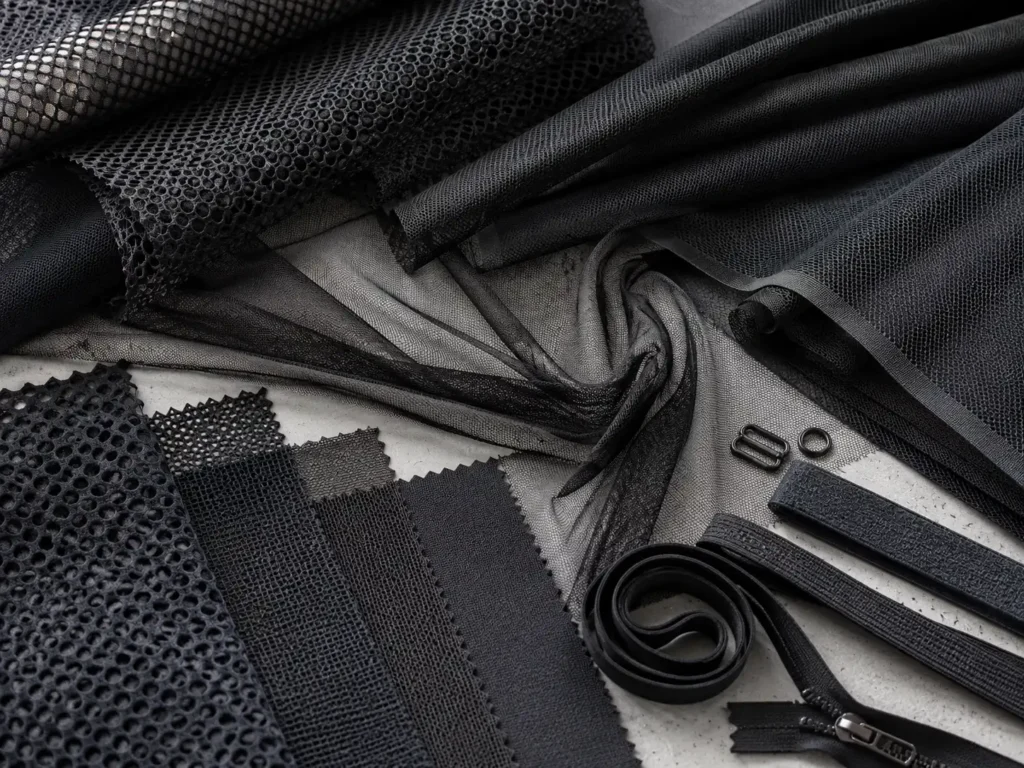
Common apparel meshes include polyester mesh, nylon mesh, stretch mesh, power mesh, illusion mesh, tulle, athletic mesh, and decorated mesh. They differ in weight, softness, hole size, stretch, recovery, support, and surface treatment. The correct type depends on whether the fabric must drape, contour, stabilize, cover, ventilate, or carry decoration.
Polyester and Nylon Mesh
Polyester mesh is a practical choice for fashion products requiring stable color, print compatibility, quick drying, or repeatable production. It is available in fine, medium, and large-hole constructions and can be developed with flocking, foil, pleating, transfer printing, digital printing, or textured finishes. For printed dresses, the finished material must be reviewed under stretch because fine lines can separate, colors may appear lighter, and motifs can distort across curved body areas.
Nylon mesh is often chosen for a softer, smoother, and more flexible hand. It is common in illusion sections, lingerie-inspired dresses, dancewear, fitted sleeves, and corsetry. Fine nylon qualities may blend more naturally against skin when the shade is carefully selected, but they require disciplined control of heat, dyeing, and pressing. A shade that looks neutral on a folded card can appear too pink, grey, yellow, or pale once the mesh is opened over the body.
Neither fiber is automatically better. Polyester may suit print-driven styles and programs where lower moisture absorption and dimensional consistency are useful. Nylon may be preferred for close-to-skin comfort, softness, or a finer visual effect. The choice also depends on the final care process, finish, target price, and repeat-order plan. A beautiful one-time stock mesh can be useful for a limited fashion drop but risky for a continuing style that requires dependable replenishment.
Stretch Mesh and Power Mesh
Stretch mesh is usually made from polyester or nylon combined with elastane and is used where the material must extend around the body and return close to its original shape. It appears in bodycon dresses, ruched overlays, sleeves, bodysuits, cut-out panels, and layered fitted styles. Some qualities stretch mainly across the width, while others provide useful extension in both directions. Pattern placement must follow the direction that supports the garment rather than the direction that merely improves marker efficiency.
Power mesh is denser and firmer. Its purpose is controlled support and compression rather than soft decorative drape. It can be placed inside a bodice, around the waist, behind a corset section, or beneath a lighter fashion mesh. Choosing the strongest available power mesh is not always sensible. Excessive firmness can flatten the bust, pull down a neckline, create pressure lines, or make a dress difficult to put on, while a weak quality adds bulk without meaningful support.
Stretch should be measured rather than described with vague terms such as good stretch. A 10-centimeter section that extends comfortably to 15 centimeters provides about 50 percent extension. Recovery should be checked after several extension cycles and again after a rest period. A fabric can extend generously but still be unsuitable if it remains longer or wider after release. Repeated testing is especially important for waist, seat, elbow, neckline, and cut-out areas that experience concentrated tension.
Illusion Mesh and Tulle
Illusion mesh is a fine, lightweight material designed to create a delicate transparent section or blend visually with the wearer’s skin. It is used in necklines, shoulders, sleeves, cut-outs, and bodice panels where the garment needs discreet support without a visible solid fabric. Color approval should be carried out under daylight, indoor lighting, and photography conditions. The same shade should also be checked when stretched because the apparent color becomes lighter as the openings expand.
Tulle is usually selected for volume, layering, ruffles, flounces, and decorative shape. Soft tulle can create floating movement, while a firmer quality can build pronounced skirt volume. Stretch tulle exists, but it should still be assessed separately from ordinary stretch mesh. A useful practical distinction is body behavior: illusion and stretch mesh tend to contour, while tulle tends to sit away from the body and create loft.
Many occasion dresses use both materials. Fine mesh may stabilize a plunging neckline or transparent shoulder, while tulle builds the skirt or supports a sculptural detail. The cleanest result comes from assigning each material a specific function instead of selecting it because its commercial name sounds appropriate. The same principle applies when combining mesh with satin, jersey, velvet, sequins, boning, cups, and lining.
Decorated and Technical Mesh
Decorated mesh includes printed, embroidered, sequined, beaded, flocked, foiled, bonded, and appliqued qualities. These fabrics are common in party dresses, occasionwear, evening-inspired fashion, and statement tops. Decoration changes the base performance. Embroidery reduces stretch in stitched areas, flocking can increase surface friction, sequins and stones add weight, and adhesive treatments may limit airflow or become less flexible after repeated cleaning.
Motif placement can affect both appearance and consumption. Border embroidery often requires directional cutting, while a large repeat may need additional fabric so motifs can be balanced across the center front, side seams, neckline, or hem. Heavy decoration requires sufficient structural support because gravity can stretch a fine mesh over time. The base fabric, thread, backing, adhesive, and ornament attachment should be tested as one system rather than approved separately.
Technical meshes include athletic mesh, spacer constructions, and higher-strength materials developed for ventilation, support, or impact management. Fashion collections sometimes use them for sport-inspired panels or sculptural details, but a dry or firm hand may be uncomfortable against skin. A product team should therefore test the exact position in the dress, including seam allowances and adjacent materials, before approving a technical quality for a style-led application.
| Mesh Type | Common Development Range* | Typical Stretch | Main Dress Application | Main Risk |
| Fine illusion mesh | 20-55 GSM | Low to moderate | Necklines, sleeves, transparent support | Shade mismatch, snagging, and visible seam allowances |
| Soft stretch mesh | 45-110 GSM | Moderate to high | Ruched dresses, overlays, bodycon styles | Growth, twisting, and excess transparency |
| Power mesh | 120-220 GSM | High with firm recovery | Internal waist and bodice support | Excess compression or restricted dressing |
| Fashion tulle | 15-65 GSM | Usually low | Skirts, ruffles, layered volume | Creasing, stiffness variation, and edge damage |
| Athletic mesh | 90-190 GSM | Construction dependent | Sport-inspired dresses and panels | Rough hand, visible holes, and seam exposure |
| Embroidered mesh | 80-260+ GSM | Usually reduced | Occasion and party dresses | Motif alignment, weight, and seam bulk |
| Flocked mesh | 60-160 GSM | Often lower than base | Textured dresses and overlays | Surface wear and reduced recovery |
*The ranges above are commonly encountered during apparel development but are not universal standards. Actual specifications vary with yarn count, knit construction, density, dyeing, heat setting, and surface finishing.

What Are the Properties of Mesh Fabric?
Mesh is generally lightweight, breathable, and partially transparent, but its performance varies widely. Fiber, weight, density, stretch direction, recovery, finishing, and garment tension influence airflow, coverage, durability, drape, comfort, and shape retention. Reliable evaluation requires testing the exact finished material rather than judging only its visible holes.
Breathability and Coverage
Mesh normally allows more airflow than a tightly constructed fabric because air can pass through its openings. That advantage makes it useful for summer dresses, dancewear, active-inspired garments, sleeves, and layered fashion pieces. Visible openness can still be misleading. A large-hole mesh covered with dense embroidery may provide less effective ventilation than a finer undecorated quality, while a breathable outer fabric can feel warm when it is combined with a dense lining, molded cup, power panel, or bonded decoration.
Garment fit also changes the wearing experience. When mesh is stretched tightly across the body, its holes usually become larger, but the material remains in continuous contact with the skin. A loosely gathered layer can create more air space even when the openings are smaller. Breathability should therefore be judged on the complete dress, including lining, cups, internal support, seam tape, embellishment, and the actual amount of body contact.
Coverage must be checked at high-tension areas such as the bust, waist, hip, seat, and upper thigh. A mesh that appears moderately opaque in a relaxed swatch may become much more revealing once stretched. Event and party dresses should also be reviewed under strong artificial lighting and camera flash because cups, briefs, seam allowances, labels, and lining edges can become more visible in photographs than they appear during an ordinary fitting.
Stretch and Recovery
Stretch describes how far the mesh extends, while recovery describes how effectively it returns. Both properties influence comfort, fit, appearance, and size consistency. A fabric with high stretch but poor recovery may feel comfortable during the first fitting and then grow at the waist, seat, elbow, or neckline. A fabric with strong recovery but insufficient usable stretch may strain seams, restrict movement, or make a pull-on dress difficult to wear.
A simple test begins with a marked 10-centimeter section. Extend it to the level expected in the garment, release it, and measure after 30 seconds and again after 10 minutes. If the mark rests at 10.5 centimeters, the material has five percent residual growth relative to its original length. One pull is not enough. Several extension cycles better represent dressing, sitting, walking, arm movement, and a realistic period of wear.
The outer mesh and lining should be tested together because two layers with different stretch profiles can twist, wrinkle, or pull against each other. Negative ease must be developed for the complete system rather than copied from another style. A zip-back corset dress, a pull-on mini dress, and a loosely ruched maxi dress require different stretch and recovery balances even when all three use a visually similar mesh.
Durability and Snagging
Mesh durability ranges from delicate to highly technical. Fine yarns and open constructions are naturally more vulnerable to snagging than dense solid fabrics. Jewelry, rough nails, exposed zipper teeth, hook-and-eye closures, metal hangtags, sequins, and poorly finished stones can pull individual yarns and disturb several neighboring openings. A small defect can become visually prominent because the regular hole pattern makes any distortion easy to notice.
The location of the mesh determines the stress it must tolerate. A loose skirt overlay experiences relatively little extension, while a fitted waist panel may be stretched every time the dress is worn. Sleeves must withstand repeated elbow and shoulder movement. Underarm and side-body sections face friction and perspiration, while seat areas may be exposed to abrasion from chairs. Test methods and construction decisions should therefore reflect the real garment position.
Packaging and internal components should not damage the product they are meant to protect. Smooth zipper guards can shield nearby mesh, and rough hook-and-eye tape should be separated from open fabric. Embellished garments should be packed so that stones and sequins cannot rub against adjacent panels. Hangtags, pins, and metal accessories should be positioned away from vulnerable areas. A sample that leaves the sewing line in good condition is not sufficient if it arrives at retail with pulled yarns.
Performance Testing
Testing gives a more reliable basis for approval than touch, appearance, or a supplier description. The exact program should reflect the garment, destination market, care method, fiber content, decoration, and customer requirements. Fabric weight helps confirm density and lot consistency. Stretch and recovery reveal fit risk. Dimensional-change testing identifies shrinkage or growth after washing, steaming, or dry cleaning, while colorfastness testing helps prevent visible shade loss, rubbing transfer, and staining.
Bursting strength is often relevant for knitted mesh because pressure in a fitted dress acts in several directions. Seam testing is equally important. A strong fabric may still fail when an unsuitable needle damages the yarn, a narrow seam concentrates stress, or thread tension creates a perforated line. Decorated qualities require additional checks for embroidery attachment, sequin retention, flock adhesion, foil cracking, stone bonding, and surface change after the proposed care process.
Bulk testing should use the actual production fabric. A report from a similar base material does not automatically confirm that a different color, print, finish, or lot will perform in the same way. Fabric should also be reviewed after each major process because heat, pigment, adhesive, washing, and embroidery can alter stretch, recovery, softness, dimensional stability, and visual coverage.
| Test | What It Measures | Practical Use in Mesh Dresses |
| Fabric weight | Mass per square meter | Confirms density, drape, opacity, and lot-to-lot consistency. |
| Stretch percentage | Usable extension in width and length | Supports pattern reduction, dressing ease, and movement decisions. |
| Recovery | Residual growth after extension | Predicts bagging at the waist, seat, sleeve, neckline, and hem. |
| Bursting strength | Resistance to multidirectional pressure | Important for fitted knitted structures and high-tension body areas. |
| Seam strength | Force required to damage the seam | Identifies risk at bust, hip, armhole, zipper, and cut-out attachments. |
| Dimensional change | Shrinkage or growth after care | Protects garment measurements and compatibility between layers. |
| Colorfastness | Resistance to washing, rubbing, perspiration, and light | Reduces staining, shade loss, and color transfer. |
| Snag resistance | Sensitivity to pulled yarns | Relevant to fine, open, embellished, and close-contact mesh. |
| Appearance after care | Overall change after washing or cleaning | Confirms whether the proposed care label is realistic. |
| Decoration retention | Security of embroidery, sequins, flock, foil, or stones | Prevents surface failure during wear, cleaning, and transport. |

How Is Mesh Fabric Used in Clothing?
Mesh can act as an outer fabric, overlay, transparent insert, sleeve material, lining, support layer, embroidery base, or ventilation panel. In dresses, it may create visual depth, body contouring, coverage, movement, or internal control. Successful use begins by defining the exact purpose of every mesh area before selecting the material.
Dress Silhouettes
Soft stretch mesh is particularly effective in fitted and ruched silhouettes because it can follow body curves without the visual weight of a dense solid fabric. It is widely used in bodycon mini dresses, printed midi styles, double-layered maxi dresses, off-shoulder shapes, long sleeves, and gathered side seams. In looser silhouettes, mesh can create light movement, visual depth, and a floating surface without adding the mass associated with heavy woven overlays.
Occasion dresses often combine several mesh functions. Fine illusion mesh may stabilize a neckline, embroidered mesh may form the outer body, power mesh may support the waist, and a compatible stretch lining may provide coverage. These materials should be treated as separate components because each has a different stretch, weight, seam, and pressing requirement. A single generic specification cannot control every layer effectively.
Photography should be considered during development. Fine nude mesh can disappear under some lighting, while large-hole or contrast mesh becomes visually dominant. Printed mesh may distort across the bust, waist, and hip, especially when the artwork contains circles, faces, stripes, or geometric motifs. A design that looks balanced on a flat sketch may need print scaling, motif repositioning, or additional layering once the fabric is stretched over the body.
Lining and Coverage
Many mesh dresses need some form of lining, but full lining is not always the best solution. Coverage can be created with a body lining, partial lining, attached briefs, a built-in bodysuit, cups, modesty panels, double mesh, or strategically placed print and embroidery. A full stretch lining can improve comfort and stabilize seams, but a heavy or low-stretch lining can remove the lightness that made the outer fabric attractive.
Partial lining is useful when sleeves, shoulders, lower skirts, waist sections, or cut-outs are intended to remain sheer. A short lining beneath a mesh maxi skirt can create movement and contrast, while a bodysuit construction can provide secure coverage in a fitted or cut-out design. The lining should stretch in a direction compatible with the outer mesh. A major mismatch can create pulling, twisting, bagging, or restricted movement.
Color must be approved as a combination rather than as two separate swatches. A matching lining makes the mesh look deeper and more solid. Nude lining increases the visual effect of skin exposure, while a contrasting layer can make prints or motifs appear more vivid. Seam allowances, cups, labels, and modesty panels should be checked under strong light because internal construction can remain visible through the finished garment.
Bodycon and Structured Styles
Bodycon dresses place mesh under greater tension than loose garments. The material must extend around the bust, waist, hips, and seat while maintaining coverage and returning to shape after wear. Soft outer mesh is often paired with stretch lining for contouring, while power mesh can be added internally at the waist, side body, or bodice. Corset-inspired styles may also combine mesh with cups, boning, under-bust seams, elastic, stabilizing tape, and a zipper.
Those components must be balanced. Strong power mesh attached to a soft neckline can pull the neckline downward. A rigid zipper applied without suitable support can create rippling. Heavy cups or embellishment can cause fine mesh to sag unless the load is transferred into stable seams. Ruching improves coverage and creates a forgiving surface, but the outer layer and lining must be controlled so the gathers remain evenly distributed.
Pattern reduction should be tested through movement, not only in a static fitting. The wearer should sit, walk, raise the arms, bend, and put the dress on several times. These actions reveal neckline gaping, waist growth, seam strain, restricted dressing, and changes in transparency that are difficult to see on a mannequin. Measurements should be taken before wear, immediately after wear, and again after the garment has rested.
Print and Embellishment
Mesh can support digital prints, transfer prints, flocking, foil, embroidery, sequins, beads, rhinestones, appliques, and mixed-media decoration. Each treatment changes the material. Print color should be checked while the fabric is relaxed and stretched because the design may become lighter as the holes open. Fine lines can separate, and large motifs can distort over curved areas. Print placement may need adjustment by size rather than simple proportional grading.
Embroidery adds weight and reduces extension in the stitched areas. Dense motifs can form stiff patches next to soft fabric and create uneven drape. Sequins and stones produce a strong visual effect but can damage neighboring yarns when settings, backing, or thread ends are rough. Heavy decoration needs sufficient support, especially on long dresses where gravity can gradually extend the base mesh.
The production method should account for motif direction, border placement, seam matching, and consumption. A fabric that needs center-front motif balance or a continuous border around the hem may require additional yardage. Before bulk cutting, a full-width placement trial can reveal whether the visual plan is realistic across the size range and whether the chosen cutting method can reproduce it consistently.

How Do You Choose Mesh for a Dress?
Choose mesh by matching the fabric to the silhouette, tension level, coverage, support, drape, lining, decoration, care method, and expected production volume. The best swatch is not simply the softest or most attractive. It must maintain the intended fit and appearance through cutting, sewing, fitting, wear, cleaning, and repeat production.
Start with the End Use
Selection should begin with the job the mesh must perform. A floating maxi skirt needs low weight and fluid movement. A bodycon dress needs stretch, recovery, and controlled transparency. An illusion neckline needs fine yarns, a suitable skin-tone shade, and enough stability to support the garment. A decorated occasion bodice needs a base strong enough to carry embroidery or stones without sagging. Starting with the visual effect alone often leads to unnecessary sample revisions.
The target product position also influences the decision. A refined dress may require finer yarns, cleaner dyeing, smoother surface quality, and more consistent holes. A trend-led printed style may place greater importance on artwork clarity, heat stability, and quick replenishment. A continuing program needs repeatable yarn, weight, width, shade, and finishing, while a limited capsule may accept a special stock fabric that is difficult to reproduce later.
Useful development questions include whether the mesh will be loose, gathered, or stretched over the body; whether it needs to support or only decorate; whether it touches the skin; whether it will be lined; and whether it will be printed, flocked, embroidered, pleated, or embellished. Care method, size range, target launch date, order volume, and repeat-order potential should also be considered before a fabric is approved.
Match Mesh and Lining
Outer mesh and lining should be treated as a paired material system. Their stretch, recovery, shrinkage, weight, friction, color, and care method must work together. A stable lining beneath highly elastic mesh can limit movement and create horizontal pulling. A very elastic lining beneath stable mesh can cause the outer layer to wrinkle or shift. If one layer changes dimensions more than the other after washing, the garment may twist, bubble, or develop uneven hems.
Surface friction also changes drape. A slippery lining allows the mesh to move freely but may shift during wear, while a high-friction lining can hold it in place yet prevent gathers from settling naturally. Color must be approved as a combination. Mesh over matching lining appears more solid; mesh over nude lining creates a transparent effect; and contrast lining can strengthen print color or deliberately reveal the layered construction.
The two materials should be sewn and washed together before final approval. Separate test reports may confirm that each fabric performs acceptably on its own but fail to reveal the tension and shrinkage imbalance that appears after the layers are joined. A small constructed panel with the intended seam, elastic, zipper, and finish often gives more useful information than a larger unsewn swatch.
| Dress Requirement | Practical Mesh Choice | Lining Approach | Main Approval Check |
| Soft ruched bodycon | Lightweight stretch mesh with strong recovery | Compatible four-way stretch lining | Waist growth, transparency, and gather stability |
| Illusion neckline | Fine stable mesh in a close skin-tone shade | Usually unlined or locally reinforced | Shade under daylight, indoor light, and flash |
| Supportive fitted bodice | Outer fashion mesh with internal power mesh | Stretch lining or structured bodice layer | Comfort, compression, neckline balance, and dressing ease |
| Printed mesh dress | Polyester-based print-compatible mesh | Matching or nude stretch lining | Artwork distortion, color depth, and shade under tension |
| Sheer maxi skirt | Lightweight soft mesh or tulle | Short lining or separate slip | Movement, static, transparency, and hem stability |
| Embroidered occasion dress | Strong mesh base with controlled extension | Soft lining that protects the skin | Motif weight, seam bulk, and dimensional balance |
| Backless or cut-out dress | Stable fine mesh with reliable recovery | Local modesty panels where required | Edge stability, tension balance, and visibility of internal construction |
Prototype Before Bulk
A mesh swatch can show color and hand feel, but it cannot fully predict how the material will behave in a dress. The first prototype should use the intended combination of outer mesh, lining, cups, boning, elastic, zipper, seam tape, print, and embellishment whenever possible. Substituting major components may allow design progress, but it leaves performance variables unresolved and should not be treated as final material approval.
The sample should be reviewed in relaxed and stretched conditions. Transparency, hole distortion, print change, seam waviness, neckline stability, comfort, and recovery should be checked after the garment has been worn for a realistic period. A useful sequence is to record measurements before fitting, assess movement and dressing, keep the garment on long enough to reveal growth, remove it, allow it to rest, and measure the waist, hip, neckline, sleeve, and length again.
Before bulk cutting, fabric lot, shade, usable width, weight, stretch, recovery, shrinkage, and finishing should remain close to the approved quality. Special attention is required when production fabric has been printed, flocked, embroidered, washed, or heat treated after the original base approval. A pre-production sample should represent the intended bulk materials and workmanship so that approval covers the actual product rather than an idealized development version.
Sewing and Care
Mesh requires controlled handling because it can stretch, curl, snag, or distort during spreading, cutting, and sewing. Fabric should be relaxed before cutting, particularly when it has been rolled under tension. Long lays may compress or shift delicate qualities. Sharp cutting tools and adequate layer control reduce jagged edges and mismatch, while long or heavy panels should be supported so their own weight does not stretch the fabric during sewing.
Needle selection depends on yarn and construction. Fine stretch mesh may respond well to a small ballpoint, stretch, or fine sharp needle, but a sewing trial is essential. An unsuitable needle can cut yarns, cause skipped stitches, or leave visible holes. Presser-foot pressure and thread tension should be adjusted to prevent seam waviness. Transparent seams also require clean allowances because thread, overlock density, and internal reinforcement may remain visible from the outside.
Care instructions must reflect the complete garment, not only the base mesh. A synthetic outer layer may tolerate gentle washing, while stones, flock, molded cups, boning, adhesive decoration, or delicate lining may require hand washing or professional cleaning. The finished dress should pass the proposed process before a care label is confirmed. Inspection should cover dimensional change, shade transfer, surface damage, decoration loss, seam distortion, lining movement, static, hand feel, snagging, and recovery after drying.
A successful mesh dress is the result of several materials and decisions working together. Transparency, stretch, recovery, support, lining, print, decoration, pattern reduction, seam construction, and care cannot be separated without creating risk elsewhere. The most dependable development process identifies the purpose of each layer, tests the complete garment under realistic movement and lighting, and confirms that the approved effect can be reproduced with bulk materials.
Duolan Apparel develops fashion dresses, occasion dresses, party dresses, fitted silhouettes, mesh dresses, corset-inspired styles, halter dresses, backless dresses, and related fashion-led womenswear. Product teams can submit a tech pack, reference garment, sketch, fabric direction, size range, target quantity, testing requirements, and launch schedule for a structured review of material suitability, sample development, fit refinement, and production planning. Project inquiries can be sent to duolan apparel.