Skip to content

Muslin is one of those fabrics that seems easy to understand until a real product has to be developed. A designer may picture a soft summer dress, a pattern maker may mean a temporary fitting shell, and a fabric supplier may offer a firm unbleached cloth under exactly the same name. All three can be correct. The practical challenge is that muslin is not one fixed specification. Its fiber content, yarn size, weave density, weight, finish, and intended use can change its appearance and performance so much that two rolls labelled muslin may behave like unrelated materials. For clothing teams, the useful question is not simply whether a fabric is muslin. It is whether that particular muslin has the softness, opacity, stability, shrinkage control, and sewing behavior needed for the garment being developed.
Muslin is a plain-woven fabric traditionally made from cotton, although modern versions may contain blended fibers. It ranges from fine, soft, and nearly transparent cloth to dense, firm material used for prototypes or utility products. In fashion, the word may describe either a finished apparel fabric or a test garment used to check pattern shape, balance, construction, and preliminary fit before final fabric is cut.
That double meaning explains many costly misunderstandings. A dress team once approved a soft-looking muslin from a small swatch, only to find that the full garment became transparent across the hips and shrank unevenly after washing. In another project, a rigid prototype was rejected because it did not drape like the intended satin, even though the pattern itself was correct. The fabric was not necessarily poor in either case; it was being asked to prove something it could not prove. Understanding muslin means learning where the material is reliable, where it needs support, and where another test fabric is the more honest choice.
What Is Muslin Fabric?
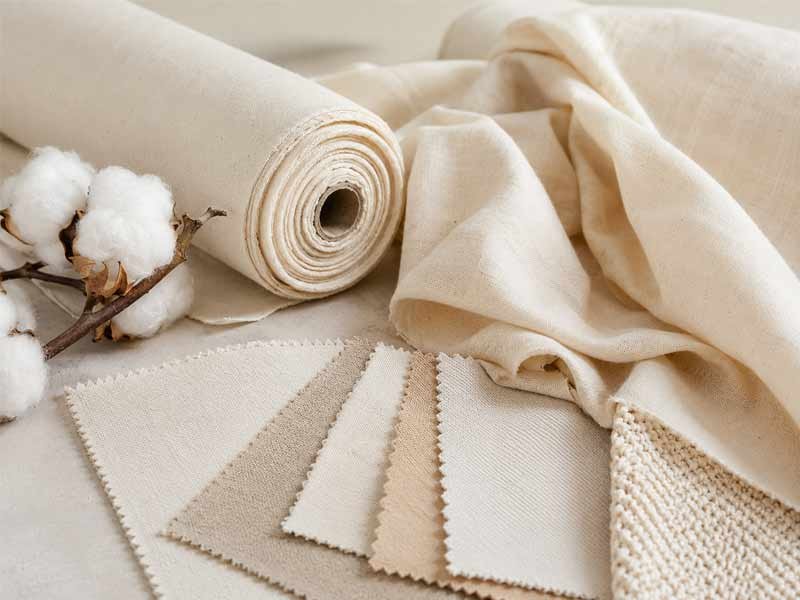
Muslin is a broad family of plain-woven fabrics traditionally made from cotton. It may be lightweight and sheer, soft and wearable, or firm enough for pattern testing. Its performance depends on fiber content, yarn quality, weave density, weight, and finishing. In fashion, “a muslin” can also mean a prototype garment rather than the final fabric.
What Muslin Is Made Of
Traditional muslin is most commonly made from cotton because cotton yarns provide a familiar combination of breathability, absorbency, dyeability, and comfort. Still, the name does not guarantee a 100% cotton composition. Commercial ranges may include cotton-polyester, cotton-viscose, recycled blends, or other fiber combinations chosen to influence price, shrinkage, drying time, crease recovery, or hand feel. A cotton-rich fabric normally feels more natural and may soften attractively after washing, while a blended version can hold dimensions more consistently. Neither choice is automatically better. The correct composition depends on the garment, care expectations, target price, and the visual character the brand wants to maintain.
For development and bulk production, the fiber statement should be confirmed rather than assumed from the fabric name. A workable specification records the exact composition, GSM, usable width, color, finish, shrinkage in both directions, and intended care method. When the cloth will be worn close to the skin, teams may also review softness, absorbency, residual chemical requirements, and market-specific testing needs. These details matter because a sample made from cotton muslin and a bulk lot supplied in a blended construction can respond differently to pressing, washing, dyeing, and sewing. The phrase “cotton muslin” is a useful starting point, but it is not a complete production standard.
Plain-Weave Construction
Muslin is usually woven in a plain structure, where each weft yarn alternates over and under each warp yarn. The construction is simple, but the finished result can vary dramatically. Fine yarns and controlled density can create a clean, light, refined fabric. Coarser yarns and a looser structure may produce a rustic surface with more visible irregularity. Density affects airflow, opacity, tearing resistance, seam stability, and the way the fabric hangs. An open weave can feel cool and soft, yet it may distort around necklines, armholes, or bias edges. A tighter weave usually cuts and sews more predictably, although it may feel firmer and allow less air to pass through.
Finishing adds another layer of variation. Sizing can make newly delivered cloth feel crisp, while washing may remove that stiffness and reveal a much softer hand. Bleaching changes color and can affect strength. Mechanical softening can improve comfort, and preshrinking can reduce later dimensional movement. These treatments explain why a small unwashed swatch may not represent the retail garment accurately. For important developments, a full-width cutting should be washed, pressed, and sewn into a representative panel. A side seam, gathered section, narrow hem, or lined bodice will show whether the fabric puckers, frays, loses body, or becomes more transparent after normal processing.
Muslin and Cotton
Cotton and muslin are related terms, but they describe different things. Cotton identifies the fiber. Muslin usually identifies a fabric family and construction. Cotton fibers can be woven or knitted into poplin, voile, denim, twill, canvas, jersey, sateen, gauze, corduroy, and many other materials. Each behaves differently because of its yarns, structure, weight, finish, and density. Asking for “cotton fabric” does not tell a supplier whether the intended product should be crisp, fluid, sheer, textured, stretchable, or structured. Asking for muslin narrows the field, but significant decisions still remain.
The overlap between market names can make sourcing confusing. Fine apparel muslin can resemble voile. Soft two-layer cloth may be marketed as double muslin or double gauze. Heavy natural muslin may look almost identical to calico. Regional usage also differs, so experienced teams avoid treating the trade name as a technical guarantee. They compare actual composition, GSM, weave regularity, hand, opacity, shrinkage, surface appearance, and sewing results. When those measurements and samples are aligned, the exact label matters less. What protects the product is a sealed fabric standard that can be referenced during sampling, inspection, production, and repeat orders.
Origins and Modern Meaning
Muslin has a long history associated with South Asian textile production, particularly the exceptionally fine cotton cloth once woven in Bengal. Historical muslins were admired for delicacy, lightness, and skilled hand production, and some represented luxury rather than inexpensive utility. Modern commercial use of the word is much broader. It can refer to baby textiles, dress fabric, lining cloth, craft material, filtration fabric, photography backdrops, stage scenery, or firm pattern-making cloth. This broad meaning is the reason one person may expect an airy, elegant textile while another expects a stiff cream fabric used only in the sample room.
Fashion adds a second definition. In many design studios, “a muslin” means a temporary test garment, often called a toile or mock-up in other regions. It may be made from natural cotton muslin, calico, or another inexpensive material chosen to expose pattern and construction issues. The purpose is to answer questions about balance, proportions, seam position, volume, and preliminary fit before expensive fabric is cut. Understanding that distinction prevents the wrong product from being ordered. Finished apparel muslin must meet expectations for comfort, appearance, care, and repeatability, while sampling muslin mainly needs to provide stable and honest information during development.

What Are Muslin’s Key Properties?
Muslin is usually breathable, absorbent, easy to dye, and available in many weights. It can be soft or firm, sheer or opaque, depending on construction and finishing. Cotton muslin commonly wrinkles and may shrink when untreated. Its drape, strength, comfort, and sewing performance should always be evaluated in the chosen grade rather than assumed from the name.
Softness and Breathability
Muslin is often associated with warm-weather comfort because cotton fibers absorb moisture and a moderately open plain weave allows air to move through the cloth. Fine garment-grade muslin can feel dry, soft, and light against the skin, which suits relaxed dresses, summer blouses, resort pieces, sleepwear, and layered casual styles. However, softness is not guaranteed. Natural pattern cloth may contain sizing and feel firm when delivered, while coarse yarns can create a slightly rough surface. Washing frequently softens cotton muslin, but it may also reduce crispness, increase texture, or change dimensions. For that reason, the approved hand should be judged after the intended finishing and care process.
Breathability also belongs to the whole garment, not only to the shell. A light cotton outer fabric can feel much warmer when paired with a dense polyester lining, several gathered layers, heavy embroidery backing, or a fused internal structure. Conversely, a carefully selected cotton or lightweight stretch lining can preserve more of the shell’s comfort. Product teams should evaluate a complete sample in conditions similar to actual use, including movement, body heat, and sunlight. This is especially important for maxi dresses, lined white garments, and fitted styles where multiple layers may be required for coverage. A breathable fabric can still become an uncomfortable garment when the construction ignores airflow.
Opacity and Drape
Muslin may be transparent, semi-sheer, or reasonably opaque. Weight is important, but yarn thickness, thread density, color, finish, and tension across the body all influence coverage. A pale fabric can look acceptable when folded on a cutting table and become noticeably transparent when stretched over the bust, hips, or seat. Strong daylight and photography lighting often reveal more than ordinary indoor light. Opacity should therefore be checked as a garment condition rather than a swatch condition. One layer, two layers, shell with lining, and areas under body tension should all be reviewed before a dress is approved.
Drape varies just as widely. Fine, softly finished muslin may fall into gentle folds and support tiered, gathered, or loose silhouettes. Firmer grades hold shape and can work for crisp day dresses, structured sleeves, fuller skirts, or pattern trials. Problems arise when a fabric is selected because it feels pleasant in the hand but lacks the behavior the pattern requires. A very soft muslin can collapse around a shaped bodice, while a heavy version may make gathered waist seams bulky. The right fabric should be viewed on the intended grain, at garment scale, and with the same lining or internal layers planned for production.
| Property | What changes it | Garment effect |
| Softness | Fiber quality, yarn size, washing, finishing | Skin comfort and perceived quality |
| Breathability | Weave openness, layer count, lining | Warm-weather comfort and heat release |
| Opacity | GSM, density, color, body tension | Lining needs and coverage confidence |
| Drape | Weight, yarn structure, softening | Silhouette, movement, and gathering behavior |
| Stability | Thread density, finish, grain control | Cutting accuracy and seam quality |
| Durability | Tear strength, seam type, garment ease | Wear life at stress points |
Shrinkage and Wrinkling
Cotton muslin can shrink because water, heat, and mechanical action allow fibers and yarns to relax. Untreated grades may sometimes show dimensional change around 3% to 10%, but this broad industry range is only a warning, not a substitute for testing. Movement can differ in the warp and weft directions, so a fabric may lose more length than width. That difference affects finished measurements, marker allowances, seam matching, and hem balance. Skew may also appear after washing, leading to twisted side seams or panels that no longer hang straight. The actual lot should be tested using the proposed care method before bulk patterns and cutting plans are finalized.
Wrinkling is a natural feature of many cotton-rich muslins. In a softly washed vacation dress, the relaxed surface can look intentional and appealing. In a polished office or occasion style, the same creasing may make the product appear unfinished. Blended fibers and finishing treatments can improve crease recovery, although they may change breathability, hand, strength, or labeling. The most reliable review is performed after washing and drying the fabric exactly as the customer is expected to care for it. Teams should record dimensional change, twisting, surface texture, color, softness, and wrinkle appearance, then decide whether the pattern, finish, or care instructions need adjustment.
Strength and Quality
Muslin is not automatically weak. A dense, well-woven grade can tolerate repeated wear and washing, while a very open lightweight version may snag, tear, or open at seams when placed under stress. Garment design determines how much strength is needed. Loose silhouettes spread load across the fabric, but fitted dresses, narrow straps, zipper ends, waist seams, pocket openings, and close armholes create concentrated tension. Seam slippage can become more important than basic fabric strength because the yarns may move apart beside the stitching even when they do not break. Reinforcement, seam width, stitch density, and pattern ease all contribute to durability.
Visible quality begins before sewing. Irregular yarns, holes, oil marks, stains, uneven bleaching, bowing, skew, and width variation can increase cutting waste or produce defects that remain obvious in the finished garment. Natural slubs may be acceptable when deliberately approved, but uncontrolled faults should not be mistaken for character. Bulk consistency matters as much as the original sample. Variations in GSM, shade, shrinkage, or finish can cause panels from different rolls to hang differently or appear mismatched. A reliable muslin is one that looks appropriate, sews consistently, survives the intended care process, and can be repeated within an agreed tolerance.

Which Types of Muslin Are Available?
Muslin is sold in lightweight, medium, and heavy constructions, along with bleached, unbleached, dyed, printed, softened, and blended forms. Fine grades can be used for clothing, while firmer grades are common for pattern testing. Some suppliers also use “muslin” for double gauze, making layer count, GSM, finish, and end use essential sourcing details.
Weight Categories
Fabric weight is commonly expressed in grams per square meter, and GSM is more useful than vague descriptions such as light, standard, or heavy. Lightweight muslin often feels airy and may be sheer, making it suitable for layering, loose silhouettes, gathered panels, and soft blouses. Medium weights provide greater stability and coverage and are more practical for casual dresses, skirts, and some linings. Heavy muslin offers stronger body and is frequently used for structured prototypes, draping, displays, or utility purposes. Weight affects fabric consumption, shipping weight, seam bulk, opacity, movement, and the amount of support a garment may require.
A higher GSM does not automatically indicate better quality. A fine 80 GSM construction made with consistent yarns can be smoother and stronger than a coarse 130 GSM cloth. Density, fiber quality, finishing, and yarn regularity must be considered alongside weight. Bulk orders should include an agreed GSM tolerance because even moderate variation can alter gathering volume, opacity, and drape across different production lots. The most practical approval combines a measured weight with an actual hand standard and a sewn sample. This approach keeps numbers from replacing judgment while still giving the factory a measurable target for inspection and repeat production.
Garment-Grade Muslin
Muslin intended for finished clothing should be evaluated for softness, surface cleanliness, consistent color, controlled shrinkage, seam performance, and appearance after washing. Fine yarns usually create a smoother face, and a regular weave improves coverage and sewing stability. Softening can make the cloth more comfortable, but excessive treatment may remove the body needed for a collar, waistband, or shaped bodice. Garment-grade fabric may be bleached, dyed, printed, washed, preshrunk, or blended depending on the intended look and care requirements. The fabric should feel appropriate for the brand’s price level rather than merely acceptable as raw material.
Silhouette changes the specification. A tiered maxi dress can use a softer, lighter construction because gathering and lining help create volume and coverage. A shirt dress may need enough body to hold a collar, placket, and cuff without looking rigid. A fitted mini dress places greater pressure on opacity, seam stability, stretch, and recovery. Pale shades often need denser construction or lining, while prints may provide visual coverage but introduce colorfastness, registration, and placement requirements. Approval should include a representative sewn area such as a gathered waist, zipper, narrow hem, or lined bodice. These details reveal problems that a hand swatch cannot show.
| Approximate weight | Typical character | Common apparel or development use |
| 50-80 GSM | Very light, airy, usually sheer | Layered tops, cover-ups, soft gathered details |
| 80-110 GSM | Light, breathable, moderate drape | Summer dresses, blouses, light linings |
| 110-150 GSM | Medium body and better coverage | Day dresses, skirts, casual sets |
| 150-200 GSM | Firm, stable, fuller hand | Structured samples, crisp casual garments |
| 200+ GSM | Dense and substantial | Prototypes, utility cloth, displays |
Sampling Muslin
Sampling muslin is chosen to test a pattern before expensive or limited fabric is cut. It is usually affordable, easy to mark, and stable enough to show volume, seam position, balance, and broad fitting issues. A good test cloth should have a reasonably straight grain, consistent width, and enough body to represent the intended shape. Severe skew, looseness, or stretch can create false fitting information. The lowest-priced fabric is not economical when the technical team spends extra rounds correcting problems caused by the prototype material rather than by the pattern itself.
The test fabric should resemble the final material where that similarity matters. Standard muslin can represent a stable woven cotton reasonably well, but it cannot reproduce the stretch recovery of jersey, the fluidity and bias growth of satin, the elasticity of mesh, or the weight of dense embellishment. Complex products may require several stages: ordinary muslin for early shape, a closer substitute for advanced fitting, and the actual or fully approved material for final fit and pre-production confirmation. Sampling muslin is valuable because it answers specific questions efficiently. It becomes misleading when it is expected to predict performance that depends on a completely different fabric structure.
Bleached, Unbleached, and Double Gauze
Unbleached muslin usually retains a natural cream or beige tone and may include small seed flecks or subtle shade variation. It often feels firmer before washing and is widely used for prototypes, natural-looking products, crafts, and utility applications. Bleached muslin has been processed to achieve a whiter, cleaner appearance and may be selected for linings, white garments, printing, dyeing, or presentations where markings must remain easy to see. Bleaching does not automatically make the material better. It can influence strength, hand, and dimensional stability, so finished apparel versions still need washing and performance tests.
Double gauze is normally made from two lightweight gauze layers connected at regular points. Some markets call it double muslin, but it behaves differently from ordinary single-layer cloth. The construction creates loft, softness, and a lightly crinkled surface that suits relaxed dresses, tops, baby products, and casual sets. It can also shift during cutting, stretch along edges, and create thicker seams. Product teams should confirm the number of layers, connection method, GSM, shrinkage, and washed appearance instead of relying on the name. A flat single-layer muslin and a soft double gauze may share cotton content, yet they require different patterns, sewing controls, and finishing decisions.

How Is Muslin Used in Fashion?
Muslin is used both as a finished apparel fabric and as a development material. Wearable grades appear in dresses, tops, skirts, linings, cover-ups, and relaxed sets. In sample rooms, muslin is made into prototypes that help teams examine silhouette, balance, seam position, construction, and preliminary fit before the final material is cut.
Finished Garments
Garment-grade muslin works best in products that benefit from breathability, softness, and a natural surface. Common applications include loose summer dresses, tiered maxi dresses, blouses, tunics, skirts, resort cover-ups, lightweight trousers, sleepwear, children’s clothing, and casual matching sets. The fabric pairs well with gathers, pintucks, soft ruffles, embroidery, loose sleeves, and layered construction. These details add shape and visual interest without requiring a glossy or highly structured surface. The most successful styles work with muslin’s character instead of trying to force it to behave like satin, compact poplin, stretch jersey, or corsetry fabric.
Construction has a major influence on the finished quality. Fine muslin can show bulky turnbacks, stretched hems, puckered seams, or visible needle damage when sewing settings are too heavy. Narrow hems, enclosed seams, binding, controlled overlocking, and appropriately fine needles may create a cleaner result. Washing and softening also change the product. A sample approved in a crisp mill finish may become looser, more textured, and slightly smaller after the customer washes it. Development samples should therefore represent the condition in which the garment will actually be sold and worn. When fabric, finish, seam method, and silhouette support one another, muslin can look purposeful rather than basic.
Dress Suitability
Muslin can be an excellent dress fabric, but suitability depends on the specific construction and silhouette. Loose summer dresses, tiered maxis, babydoll shapes, and relaxed midis often make good use of its airflow and soft movement. Shirt dresses may require enough body to support collars and plackets. Fitted minis, slip dresses, and occasion styles need closer evaluation because ordinary woven muslin usually has limited stretch and recovery. It can crease across the waist and hips, become transparent under tension, or lack the luster and fluidity expected from more formal materials.
Occasionwear places especially high demands on surface quality, internal support, drape, and photography. Standard muslin may not deliver the shine of satin, the shape retention of bonded fabric, the stretch of power mesh, or the visual impact of sequins and velvet. It can still be useful as an underlayer, lining, internal support, or prototype cloth. The final decision should consider pattern ease, color, opacity, seam stress, lining, wash finish, and market positioning together. A soft swatch may be attractive, but the garment succeeds only when the fabric remains comfortable, secure, and visually convincing after sewing, movement, lighting, and care.
| Dress direction | General suitability | Main development checks |
| Loose summer dress | High | Softness, shrinkage, opacity |
| Tiered maxi dress | High | Gathering bulk, lining, hem weight |
| Babydoll dress | High | Bodice coverage and seam stability |
| Casual midi or shirt dress | Medium to high | Drape, wrinkle appearance, collar support |
| Fitted mini dress | Conditional | Stretch, seam slippage, transparency |
| Slip dress | Conditional | Surface smoothness, bias growth, lining |
| Corset or structured dress | Limited as main shell | Support, reinforcement, shape retention |
| Occasion dress | Design-dependent | Finish level, drape, internal construction |
Muslin Prototypes
In fashion development, a muslin prototype allows a team to examine a pattern before using the final material. It can reveal whether a neckline sits away from the body, a waist seam tilts, a side seam swings forward, a sleeve restricts movement, or a skirt lacks the intended volume. Pattern makers can pin, cut, draw, and write directly on the cloth during a fitting. This is especially useful for corset-inspired bodices, asymmetric necklines, cutouts, shaped waist seams, dramatic sleeves, and panelled skirts, where a flat pattern does not communicate the complete three-dimensional result.
A practical sequence may move from an early muslin to a corrected pattern, then to a sample in a closer substitute, and finally to the intended bulk fabric. The number of rounds depends on complexity, fabric behavior, and the quality of the original measurements and technical information. Documentation is essential. Photographs, marked-up patterns, fit comments, seam changes, and approved measurements should be recorded before the test garment is altered or dismantled. A muslin saves time when it creates clear decisions. It wastes time when comments are vague, the wrong test material is used, or the next sample team cannot trace what was changed and why.
Lining and Support
Lining can improve opacity, hide internal construction, reduce friction, and help a muslin garment hold a cleaner shape. It can also add weight, restrict airflow, or make a soft dress feel stiffer than intended. A light cotton lining supports a natural, breathable direction, while a smooth synthetic lining can help the garment slide over the body. Stretch lining may be needed in close-fitting products. Color is equally important. A bright white lining beneath natural muslin can show through, while a carefully matched or skin-toned option may produce more even coverage.
Support materials may include interfacing, stay tape, elastic, cups, boning, underlining, or reinforcement patches. These components are often required around necklines, straps, zipper ends, button areas, waistbands, and fitted bodices. Too little support can cause stretching or collapse; too much can overpower the fabric and create rigid transitions. The complete layer system should be built into the approval sample because a shell-only fitting cannot prove how the final garment will hang. Sewing, pressing, washing, wearing, and packaging all influence the interaction between layers. A successful muslin dress is developed as a whole construction, not as an outer fabric with internal decisions added later.

How Should You Choose and Test Muslin?
Choose muslin by verified composition, GSM, usable width, density, hand, opacity, shrinkage, color, and finishing rather than by name alone. Compare it with similar fabrics, then test it in the intended seam construction, lining system, and care method. A sewn, washed, and measured sample provides more reliable evidence than an online image or untested hand swatch.
Muslin vs Similar Fabrics
Muslin overlaps with gauze, calico, and voile, but these materials are not always interchangeable. Gauze is usually more open and textured, with a soft, airy character that can stretch at edges and shift during sewing. Calico often refers to unbleached, minimally processed plain-woven cotton with a firmer and more rustic hand, although regional terminology varies. Voile is generally finer, smoother, and more polished, making it useful for sheer blouses and layered dresses. Fine muslin can resemble voile, heavy natural muslin can resemble calico, and soft double muslin may be sold as double gauze.
Side-by-side testing is more useful than debating names. Swatches should be washed together, sewn with the same seam, gathered at the same ratio, placed over the same lining, and reviewed under the same lighting. These simple comparisons reveal differences in drape, transparency, shrinkage, fraying, seam bulk, and surface texture. The closest substitute is not always the one with the most similar label. A firm calico may be suitable for early structure testing, while a fine voile may better represent the drape of a lightweight finished garment. The comparison should be chosen according to the decision the sample needs to support.
Key Specifications
A professional muslin specification should allow design, sourcing, technical, costing, production, and quality teams to work from the same standard. Fiber composition, GSM and tolerance, usable width, color reference, weave description, shrinkage in both directions, hand-feel standard, opacity requirement, finishing, care method, and defect limits should be recorded. For repeat production, the supplier article number, approved swatch, lot information, and test reports should remain traceable. This prevents a reorder from relying on a vague memory of “soft natural muslin” and makes it easier to identify whether a later delivery has changed.
Application-specific requirements are equally important. A gathered dress may need a target gathering ratio and a maximum acceptable seam thickness. A pale lined dress may require an approved shell-and-lining opacity standard. A printed fabric may need strike-off approval, colorfastness criteria, repeat dimensions, and placement instructions. A prototype cloth may need a straight grain and controlled stability rather than a luxury hand. Measurable specifications do not replace touch and visual judgment, but they make approvals repeatable. The strongest standard combines numbers, a sealed reference sample, and evidence from a representative sewn and washed garment.
| Test or check | What it shows | Main risk controlled |
| Fiber composition | Actual fiber percentages | Incorrect labeling and unexpected care behavior |
| Fabric weight | GSM consistency across lots | Changes in drape, cost, and opacity |
| Dimensional stability | Shrinkage after the intended care cycle | Garments becoming too small or short |
| Skew and bow | Distortion of warp and weft alignment | Twisted seams and uneven hems |
| Colorfastness | Color change, staining, and rubbing transfer | Fading or color transfer during wear and washing |
| Seam slippage | Yarn movement beside stitching | Open seams in fitted or high-stress areas |
| Tear strength | Resistance to continued tearing | Failure at straps, openings, or sharp stress points |
| Appearance after washing | Wrinkles, texture, pilling, and deformation | Poor retail appearance and customer complaints |
| Opacity review | Coverage under light and body tension | Transparency problems in pale or fitted garments |
| Shade continuity | Roll-to-roll visual matching | Mixed panels and visible shade bands |
Pre-Production Tests
Testing should reflect fiber content, color, construction, garment design, target market, and care label. At minimum, teams should understand composition, GSM, dimensional stability, skew, shade continuity, colorfastness, seam behavior, and appearance after washing. Fitted styles or fabrics with an open weave may require seam-slippage testing, while light colors need realistic opacity checks under body tension and strong light. Decorative prints, embroidery, or trims introduce additional risks that should be tested as part of the complete garment. Not every style needs the same laboratory package, but every style needs a test plan connected to its actual failure points.
Timing matters as much as the test list. Results should be available early enough to change the pattern, finish, lining, care instructions, or fabric choice. Discovering unacceptable shrinkage after bulk cutting leaves few practical options. The pre-production sample should use approved bulk fabric, lining, trims, thread, construction, and finishing so it can expose the conditions that will exist on the line. When a substitute is used during approval, the team should document which risks remain unproven. Testing is most valuable when it supports a decision before the cost of change becomes high.
Care and Bulk Control
Cotton muslin is often washable, but the correct care method should come from testing rather than assumption. Water temperature, detergent, agitation, drying, and ironing can all change dimensions, texture, softness, color, and wrinkles. A gentle process may protect the fabric, yet the care label must remain realistic for the customer and product category. A casual summer dress that depends on specialist care may create avoidable dissatisfaction. The sample should be washed more than once when repeated home laundering is expected, because some changes become clearer after several cycles rather than after the first wash alone.
Bulk control begins before cutting. Rolls should be checked for shade, usable width, GSM, defects, hand variation, and visible skew. Fabric may need time to relax after tight rolling, and any approved preshrinking or garment-wash process must be applied consistently. Panels from different shade groups should not be mixed in the same garment. Rolls with unusual shrinkage, finish, or surface texture should be isolated for review. Production records should connect each fabric lot with inspection, cutting, and test information. Muslin may look uncomplicated, but stable results depend on disciplined control from incoming fabric through final pressing and packing.
Choosing muslin well is less about finding a universally “best” fabric and more about matching measurable fabric behavior to the garment’s purpose. A breathable summer dress, a structured development toile, and a lined white midi need different weights, finishes, and approval methods even when all three begin with the same fabric name. When composition, GSM, opacity, shrinkage, sewing behavior, and bulk consistency are checked early, muslin becomes a dependable material rather than a source of surprises.
Duolan Apparel supports fashion teams with dress-focused fabric development, pattern and fit work, sampling, workmanship control, and coordinated production. For a muslin dress, cotton collection, or prototype-led project, send the design reference, tech pack, measurements, fabric direction, expected quantity, and market requirements to duolan apparel. The team will review material suitability and key construction risks before preparing a quotation.