Skip to content
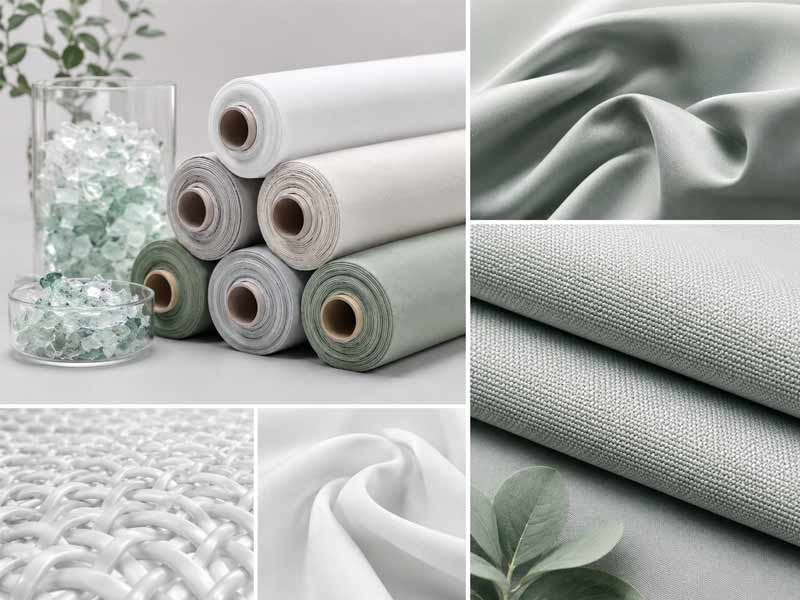
Polyester is often reduced to a single label: synthetic. That label is accurate, but it is not useful enough for choosing a dress fabric. A lightweight chiffon overlay, a glossy satin slip dress, a supportive bodycon knit, and a crisp taffeta skirt can all be made from polyester, yet they behave very differently in cutting, sewing, fitting, washing, photography, and daily wear. The result depends on far more than fibre content. Filament size, yarn texture, fabric construction, weight, stretch, heat setting, dyeing, and finishing determine whether a material feels fluid and refined or stiff, shiny, unstable, and difficult to control.
Polyester fabric is a man-made textile produced mainly from polyethylene terephthalate, or PET. The polymer is melted, spun into fibres, formed into yarn, and then woven or knitted. Polyester is valued for durability, quick drying, colour stability, and versatility, while its softness, breathability, stretch, pilling, and environmental performance depend on the exact yarn, construction, finish, and garment design.
That difference becomes obvious when a beautiful swatch reaches the sample room. One version may fall cleanly around the body and hold its colour through repeated wear. Another may turn transparent over the hip, pucker beside the zipper, grow longer after steaming, or reflect light so strongly that the dress looks cheaper in campaign photography. Understanding polyester at fabric and garment level helps prevent those surprises before a collection reaches bulk production.
What Is Polyester Fabric?
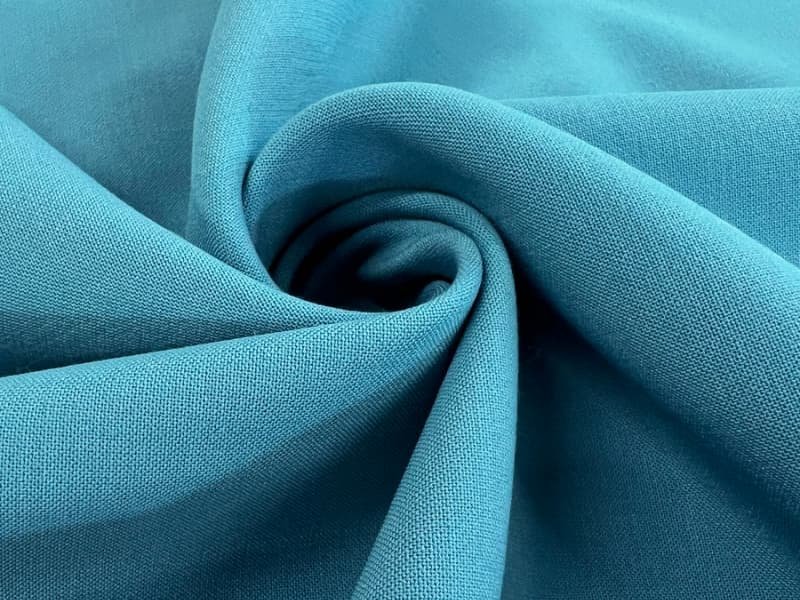
Polyester fabric is a synthetic textile made mainly from polyethylene terephthalate, or PET. The polymer is melted, spun into fine fibres, formed into yarn, and woven or knitted into fabric. Its finished appearance and performance depend on filament size, yarn structure, construction, weight, dyeing, heat setting, and surface finishing rather than fibre content alone.
What Polyester Is Made From
Most clothing-grade polyester begins with purified terephthalic acid and ethylene glycol. Through polymerisation, these raw materials form polyethylene terephthalate, a thermoplastic polymer that can be melted and reshaped. The molten polymer is filtered and pushed through spinnerets containing many microscopic openings. Once the fine streams cool, the filaments are drawn to align the molecules, improve strength, and create the physical base for textile yarn.
This process explains how fabrics with the same fibre label can feel unrelated. A producer can alter filament thickness, filament count, cross-section, crimp, lustre, texture, and yarn twist. Fine flat filaments can create a smooth, bright satin surface, while textured filaments can add bulk, softness, and a drier hand. Staple fibres can be spun to resemble cotton-like yarn, and engineered cross-sections can change capillary movement or visual sheen.
A label reading 100% polyester therefore confirms composition but does not describe quality, comfort, or suitability. Product teams still need the fabric article number, yarn form, weight, width, construction, stretch, recovery, opacity, finish, colour standard, and care performance. These specifications are especially important for fitted dresses and occasionwear, where small differences in surface shine, stability, or drape can materially change the finished silhouette.
How Polyester Becomes Fabric
After spinning, continuous filaments may remain smooth, be textured to create crimp and volume, or be cut into staple lengths for conventional spinning. The resulting yarn is woven or knitted according to the required appearance and movement. Woven polyester appears in satin, chiffon, crepe, georgette, organza, taffeta, and lining fabrics. Knitted polyester appears in jersey, mesh, interlock, rib, scuba, and many stretch constructions.
Polyester absorbs very little water, so it is commonly coloured with disperse dyes at elevated temperature and, in many systems, under pressure. Stable processing can produce deep shades and strong colour retention, yet careless dyeing still causes uneven shade, migration, staining, or differences between laboratory approval and bulk fabric. Pale colours, bright reds, dark blacks, and contrast combinations may need separate controls because each presents a different colour-management risk.
Heat setting stabilises the yarn and fabric before cutting, pressing, and laundering. When this step is incomplete or inconsistent, the material may twist, shrink, grow, curl, or change texture after steaming. Finishing can then adjust softness, lustre, antistatic behaviour, moisture transport, pilling resistance, or surface character. Every stage changes the garment result, which is why a production fabric must be approved through measured performance and a sewn sample rather than appearance alone.
How Polyester Production Changes Fabric Performance
| Production stage | What happens | Effect on apparel performance |
| Polymerisation | PET polymer is formed and filtered. | Establishes the base polymer quality and consistency. |
| Melt spinning | Molten PET passes through spinnerets. | Creates filaments with controlled fineness and cross-section. |
| Drawing | Filaments are stretched and aligned. | Improves strength and dimensional stability. |
| Texturing or cutting | Filaments gain crimp or become staple fibres. | Changes softness, volume, stretch, and surface character. |
| Yarn formation | Fibres are twisted, combined, or air-textured. | Influences drape, pilling, strength, and lustre. |
| Weaving or knitting | Yarn is organised into a fabric structure. | Controls stretch, airflow, opacity, movement, and stability. |
| Dyeing and heat setting | Colour is fixed and the structure is stabilised. | Affects shade, shrinkage, twist, and later pressing behaviour. |
| Finishing and inspection | Surface treatments and quality checks are completed. | Refines hand feel and reduces roll-to-roll production risk. |
Is Polyester a Plastic?
Polyester used in apparel belongs to the same broad polymer family as some PET packaging, so the description plastic-based is chemically reasonable. The physical result, however, is completely different from a rigid container. Textile PET is converted into extremely fine fibres, gathered into yarn, and organised into flexible structures that bend, drape, stretch, and recover according to their construction.
The flexibility of a dress fabric comes from fibre diameter, yarn movement, weave or knit geometry, and finishing rather than from a different chemical identity. Thousands of filaments may be combined in a single yarn. Fine filaments usually create a smoother surface, while textured yarns add loft and reduce a hard synthetic feel. Coarser yarns can provide body, although poorly controlled versions may look overly shiny or feel rough against the skin.
Recycled polyester follows the same principle. Suitable PET waste can be collected, cleaned, sorted, processed, melted, filtered, and respun. A recycled claim alone does not confirm traceability, chemical compliance, strength, colour consistency, or future recyclability. Those points require valid documentation and physical testing, particularly when the fabric will be blended with elastane or combined with coatings, sequins, cups, adhesives, or other components.
Natural and Synthetic Differences
Polyester is synthetic because its fibre is manufactured through controlled chemical and mechanical processes. Cotton grows around seeds, linen comes from flax stems, wool is an animal fibre, and silk is produced by silkworms. Natural and regenerated cellulosic fibres generally interact with moisture differently from polyester, which helps explain their different drying speed, thermal feel, wrinkle behaviour, and response to humidity.
Controlled manufacture gives polyester producers considerable freedom to engineer fineness, strength, cross-section, lustre, texture, and stretch. That flexibility is one reason the fibre can imitate the visual language of chiffon, satin, crepe, velvet, or cotton-like jersey. The trade-off is an environmental profile linked to fossil feedstocks, manufacturing energy, chemical processing, microfiber release, and limited biodegradability. A fair assessment should consider verified recycled content, durability, care frequency, product life, and realistic end-of-life options rather than treating any single material as automatically good or bad.

Which Properties Define Polyester?
Polyester is generally durable, quick-drying, dimensionally stable, colourfast, and resistant to many wrinkles. Its comfort and appearance are less predictable: breathability, softness, stretch, recovery, pilling, static, odour retention, and heat response vary with yarn type, fabric density, weight, finishing, lining, and garment construction. Physical testing is more reliable than judging fibre content alone.
Strength and Stability
Polyester fibres usually provide good tensile strength and abrasion resistance. Their low moisture absorption also helps the fabric maintain dimensions under changing humidity. These characteristics make polyester useful for garments that need frequent washing, stable colour, clean pleats, or reliable shape. Strength is especially valuable in fitted styles, where side seams, waist joins, zipper areas, armholes, and slit openings experience repeated tension during dressing and movement.
Physical strength does not guarantee that the surface will remain attractive. A delicate chiffon can contain strong fibres yet snag because its fine yarns are exposed. A staple-polyester knit may remain intact while developing pills at the underarm or hip. Satin may keep its tensile strength but show pulled yarns, needle damage, seam puckering, or permanent pressure marks. Durability must therefore include appearance retention, not only break resistance.
Dimensional stability should be checked before patterns and size specifications are locked. Many apparel programs work toward wash-related dimensional change within approximately three percent, although the acceptable limit depends on the test method, care route, brand standard, and fabric type. Knits, brushed surfaces, loose structures, and fabrics with mechanical stretch may require different tolerances. Pattern allowances should follow the tested production lot rather than a generic polyester assumption.
Breathability and Moisture
Polyester has low moisture regain, commonly around 0.4 percent under standard textile-conditioning conditions. Cotton is often closer to eight percent, while viscose is generally higher. These reference values explain why polyester takes little moisture into the fibre and usually dries quickly. They do not prove that every polyester dress will feel hot, because comfort also depends on air permeability, thickness, surface area, garment ease, and the surrounding climate.
A lightweight open mesh can allow considerable airflow, while a tightly woven satin with a dense lining may trap heat. Moisture-wicking polyester is designed to move liquid along fibre surfaces and through spaces in the fabric by capillary action. Wicking differs from absorption: it spreads moisture so it can evaporate, but the system still needs airflow and exposed surface area. Dense, fully lined, close-fitting garments may limit that benefit.
Dress comfort should be evaluated as a complete construction. A sheer chiffon shell may feel light, yet a heavy lining can change temperature and movement. A stretch party dress may need opacity and support, but excessive density can create a clammy feel. Wear trials should include the intended lining, fit, sleeve coverage, and climate. Marketing claims based only on the outer fabric can be misleading when the finished garment behaves differently.
Useful Polyester Performance Checks for Fashion Garments
| Performance area | Common working reference | What the result helps control |
| Moisture regain | About 0.4% under standard conditions | Explains low absorption and relatively fast drying. |
| Wash dimensional change | Often targeted within +/-3% | Protects fit, length, and size consistency after care. |
| Pilling | Frequently grade 3-4 or higher | Reduces early fuzzing and visible surface deterioration. |
| Colourfastness to washing | Often grade 4 or higher | Limits fading and staining of adjacent materials. |
| Colourfastness to rubbing | Commonly grade 3-4 dry; wet may be lower | Important for dark shades, linings, and pale accessories. |
| Stretch and recovery | Set by silhouette and measured in both directions | Prevents bagging, seam grin, and poor body contour. |
| Seam slippage or extension | Method and limit set by product type | Reduces seam opening in satin, chiffon, and fitted styles. |
| Heat response | Verified through pressing and care trials | Prevents glazing, distortion, migration, or permanent marks. |
These figures are practical industry references, not universal pass-or-fail standards. Test method, colour, fabric construction, garment category, care route, and market requirements must be stated in the specification.
Stretch and Recovery
Pure polyester is not highly elastic in the same way as elastane. Stretch may come from a knitted loop structure, textured yarn, mechanical stretch weave, crimp, or an elastane blend. The amount of stretch is only one part of the decision. Recovery matters just as much because a fabric that extends easily but does not return can bag at the waist, seat, neckline, elbows, or skirt panels after a few hours of wear.
For fitted dresses, development teams should measure width and length stretch separately, then repeat the test after several extension cycles. They should also examine fabric growth, opacity under tension, seam appearance, edge curling, zipper distortion, and the stability of necklines and waist seams. A material with generous stretch can still be unsuitable if it turns transparent, creates seam grin, or loses its original dimensions after repeated movement.
Polyester-elastane knits may offer roughly twenty to sixty percent stretch depending on construction, yarn, and blend ratio, but those figures are not universal standards. A sculpted corset dress may require lower stretch and stronger recovery, while a dance or club dress may need greater movement. The pattern, negative ease, seam type, and lining must be developed around measured fabric behaviour rather than a supplier description such as stretch jersey.
Wrinkles, Pilling, Heat and Odour
Polyester generally resists wrinkling because the fibre has strong shape memory and absorbs little moisture. Correct heat setting also supports dimensional stability. Excessive heat can still glaze, flatten, distort, or permanently crease the surface. Although PET melts at a much higher temperature, visible damage may occur well below the melting range during pressing, heat transfer, bonding, pleating, or household ironing. The safe setting must be confirmed on the finished fabric.
Pilling develops when loose fibres move to the surface, tangle through friction, and remain attached. Polyester pills can persist because the fibres are strong. Staple yarns, brushed fabrics, blends, and high-friction zones deserve particular attention. Fashion programs commonly request a pilling result around grade three to four or above after an agreed test cycle, but the method, cycle count, and acceptance level must be defined rather than quoted without context.
Polyester also attracts oily substances, so body oils, cosmetics, and food residues may remain after incomplete washing and contribute to odour. Static becomes more noticeable in dry conditions because the fibre holds little moisture. Antistatic finishes, fibre blends, breathable construction, suitable linings, and realistic care instructions can reduce these problems. Performance should be checked after repeated laundering because a finish that works on the first sample may become less effective over time.

Which Types of Polyester Are Used in Clothing?
Clothing uses virgin and recycled PET, continuous filament, staple fibre, microfiber, textured yarn, woven structures, knitted structures, and fibre blends. These forms are not interchangeable. Each creates a different balance of softness, lustre, drape, strength, stretch, pilling resistance, opacity, dyeing behaviour, and price, so the intended garment must guide the selection.
Virgin and Recycled Polyester
Virgin polyester is made from newly produced petrochemical feedstock. It remains common because mills can control polymer purity, colour, strength, and availability across large production runs. Stable feedstock can simplify pale colours, clean whites, high-lustre satin, and repeat print programs. That consistency does not remove the need for testing, but it can make shade matching and repeat orders easier when the entire supply chain is controlled.
Recycled polyester is commonly produced from recovered PET packaging, industrial waste, or textile feedstock. Mechanical recycling sorts, cleans, shreds, melts, filters, and respins the material. Chemical recycling breaks the polymer down more extensively before rebuilding it, although availability and cost differ by region. Recycled content can reduce demand for virgin material, but it does not eliminate dyeing impacts, microfiber release, manufacturing energy, or end-of-life limitations.
Brands making recycled-content claims should verify the percentage by weight, feedstock source, certification scope, chain-of-custody documentation, colour consistency, strength, shrinkage, pilling, and chemical compliance. A recycled fabric should pass the same physical and appearance standards as a virgin fabric. Sustainability documentation is valuable, but it cannot compensate for poor recovery, unstable colour, weak seams, or a material that cannot be supplied again when a successful style is reordered.
Filament, Staple, and Microfiber
Continuous filament polyester consists of long, uninterrupted fibres. It often produces a smooth surface, clean colour, strong yarn, and controlled drape. Flat filaments may create brightness and sheen, while textured filaments introduce crimp, bulk, and a less glassy hand. Filament yarn is widely used in satin, chiffon, georgette, organza, lining, fine mesh, and many stretch knits used for fitted fashion products.
Staple polyester is cut into short lengths and spun in a similar way to cotton. It can create a softer, hairier, more natural-looking surface and is widely used in casual knits, brushed fabrics, fleece, and blends. The exposed fibre ends may increase fuzzing or pilling when fibre length, yarn twist, density, or finishing is poorly controlled. Staple constructions therefore need wear testing that reflects real friction zones.
Microfiber describes very fine synthetic fibres rather than one specific fabric. Fine filaments can create soft hand feel, dense construction, smooth drape, and a refined surface. The term alone does not guarantee quality. Filament count, uniformity, yarn preparation, fabric density, dyeing, finishing, and sewing performance still determine the result. Extremely fine fabrics may also show needle damage or seam puckering if production settings are not adjusted.
Woven and Knitted Polyester
Woven polyester is formed by interlacing warp and weft yarns. It often provides controlled dimensions, clean shaping, and a broad range of surfaces. Satin, chiffon, crepe, georgette, organza, and taffeta are common woven options for dresses. Their risks differ: satin may pucker, chiffon can fray or slip at seams, and organza may retain needle holes or pressing marks.
Knitted polyester is created from interlocking loops and usually offers more mechanical stretch and body movement. Jersey, mesh, rib, interlock, scuba, and ponte-style fabrics are common in fitted and casual dresses. Knits can curl at cut edges, grow during wear, become transparent under tension, or twist after care. Stretch direction and recovery must be measured before the pattern is finalised.
A pattern developed for stable woven crepe cannot simply be reused for stretch jersey. Ease, seam allowance, neckline support, zipper selection, lining, hem method, reinforcement, and grading all need adjustment. The construction also changes how the fabric behaves during spreading and cutting. Wovens may require grain control, while knits often need relaxation before cutting so that panels do not change dimensions after assembly.
Common Dress Constructions
Weight is a useful starting point for comparing dress fabrics, but it should never be the only approval criterion. Two materials with the same grams per square metre can have different thickness, bulk, opacity, stretch, and drape because their yarns and structures differ. A lightweight fabric can be crisp, while a heavier fabric can remain fluid. Width and usable cutting width also affect consumption and cost.
The most practical selection method is to connect weight with the intended silhouette and then test the complete garment. Chiffon and georgette support layered movement, satin supports smooth draping, crepe offers controlled flow, organza and taffeta create volume, and jersey or scuba supports fitted shapes. Colour can change the visual result: white and pastel shades often reveal more transparency, while dark satin may show stronger surface marks and rubbing transfer.
Common Polyester Dress Fabrics and Approximate Working Ranges
| Polyester fabric | Approximate weight | Main behaviour | Frequent dress applications |
| Chiffon | 50-90 GSM | Sheer, light, fluid, usually layered | Maxi dresses, sleeves, overlays, occasion styles |
| Georgette | 70-130 GSM | Grainy surface with more body than chiffon | Wrap dresses, ruffles, printed dresses |
| Satin | 90-220 GSM | Smooth face, visible lustre, variable drape | Slip dresses, party dresses, occasionwear |
| Crepe | 110-220 GSM | Textured surface and controlled drape | Midi dresses, workwear, structured styles |
| Organza | 30-80 GSM | Sheer, crisp, and voluminous | Puff sleeves, overlays, statement silhouettes |
| Taffeta | 100-220 GSM | Crisp, structured, sometimes lustrous | Formal dresses, sculpted skirts, bows |
| Jersey | 140-260 GSM | Soft, stretchable, body-following | Ruched, casual, fitted, and bodycon dresses |
| Mesh | 40-140 GSM | Open or sheer with variable stretch | Panels, sleeves, overlays, layered dresses |
| Scuba knit | 220-350 GSM | Dense, smooth, structured stretch | Fitted dresses, skater shapes, clean silhouettes |
| Velvet | 180-350 GSM | Pile surface, rich depth, directional nap | Winter, party, and occasion dresses |
Weight ranges are approximate. Width, yarn size, density, stretch, recovery, opacity, finishing, and colour can change performance substantially even within the same category.

How Does Polyester Compare With Other Fabrics?
Polyester usually dries faster, wrinkles less, and retains colour and dimensions more consistently than many natural or regenerated fibres. Cotton and viscose generally absorb more moisture, silk offers a distinctive natural hand and lustre, and nylon often provides excellent abrasion resistance. The better material depends on comfort, appearance, care, durability, construction, price, and intended use.
Polyester and Cotton
Cotton usually absorbs more moisture and often feels familiar and comfortable against the skin. Polyester dries faster, wrinkles less, and normally maintains dimensions more consistently. Cotton may shrink when pretreatment or care is inadequate, while dense polyester can feel warm when airflow is limited. Neither fibre is automatically more breathable because a loose polyester mesh can pass more air than a heavy cotton canvas.
Polyester-cotton blends are used to balance these characteristics. Ratios such as sixty-five percent polyester and thirty-five percent cotton, or equal blends, are common in the wider apparel market. Polyester contributes strength, colour retention, and wrinkle control, while cotton adds absorbency and a less synthetic surface. The blend still needs testing because spinning method, weight, density, and finishing can change pilling, shrinkage, and hand feel.
For dresses, cotton is well suited to poplin, voile, eyelet, and casual jersey where a dry natural touch is part of the design. Polyester is often preferred for fluid drape, bright prints, easy care, sheen, stable pleats, or repeat colour. The decision should begin with the garment experience. A travel dress may value crease resistance, while an unlined summer dress may place greater weight on moisture comfort and airflow.
Polyester and Viscose
Viscose is a regenerated cellulosic fibre known for softness, moisture absorption, and fluid movement. It often feels cooler and less synthetic than standard polyester, but it may wrinkle more easily, lose strength when wet, or change dimensions when processing and care are not controlled. Polyester generally provides faster drying, better shape retention, and strong colour stability across repeated production.
A polyester-viscose blend can combine a softer hand and fluid drape with improved strength and wrinkle control. The result depends on blend percentage and yarn construction. A high-viscose fabric may still behave much like viscose, while a polyester-dominant blend may feel drier and more stable. Test results should include wash shrinkage, seam slippage, pilling, skew, recovery, and appearance after pressing.
Viscose works well for flowing dresses, soft gathers, and styles that depend on natural movement. Polyester may be more practical when the program needs repeatable colour, reduced wrinkling, or easier care. The commercial choice often involves a compromise between hand feel and stability. Sampling both options in the intended silhouette is more reliable than comparing loose swatches, because seam weight and garment length can change the way each fabric falls.
Polyester and Nylon
Polyester and nylon are both synthetic fibres, yet their performance is not identical. Nylon often provides excellent abrasion resistance, smoothness, and softness in fine constructions. Polyester generally offers lower moisture absorption, strong sunlight resistance, and stable colour. Nylon is common in hosiery, lingerie, swimwear, and fine stretch mesh, while polyester is widespread in printed dresses, satin, chiffon, crepe, and easy-care jersey.
For fitted mesh dresses, nylon-elastane can deliver soft stretch and comfortable recovery. Polyester-elastane mesh may support stronger colour stability or specific print methods. The final choice depends on filament quality, knit density, elastane percentage, surface treatment, and end use. A mesh that looks similar on a hanger may feel different after several hours against the skin or react differently around seams and embellishments.
Nylon can absorb more moisture than polyester and may yellow or weaken more readily after prolonged ultraviolet exposure. Polyester can feel drier but may retain oily odour. Both fibres are heat-sensitive and require controlled pressing. A practical comparison should include colourfastness, stretch recovery, abrasion, snagging, hand feel, and laundering rather than relying on a general statement that one fibre is stronger or softer.
Polyester Satin and Silk Satin
Satin is a weave structure, not a fibre. It can be produced from polyester, silk, acetate, viscose, or other materials. Polyester satin and silk satin may share a smooth face and visible lustre, but their cost, care, thermal feel, abrasion response, and drape are different. Silk has a natural protein structure and subtle lustre, while polyester can be engineered across a wider range of weights and shine levels.
Silk satin offers a distinctive hand, moisture interaction, and elegant movement, but it is expensive and sensitive to water spotting, abrasion, perspiration, and care conditions. Polyester satin is more accessible, widely available, colour-stable, and easier to maintain. Poor polyester satin may appear overly reflective, feel stiff, or show every seam defect. Better versions use fine filaments, controlled density, suitable finishing, and careful sewing settings.
A premium-looking polyester satin dress depends on more than the face fabric. Bias stability, lining, interfacing, zipper weight, needle size, thread tension, seam pressing, and hem method influence the result. Photography trials are valuable because direct light can exaggerate shine, seam impressions, and surface irregularities. A fabric that looks elegant under showroom lighting may read differently under flash, video, or outdoor sunlight.
Broad Fibre Comparison for Dress Development
| Fibre | Approximate moisture regain | Useful strengths | Common limitations |
| Polyester | About 0.4% | Quick drying, durable, wrinkle resistant, colour stable | Low absorption, static, oily odour retention, heat sensitivity |
| Cotton | About 8% | Absorbent, familiar hand, comfortable in open structures | Wrinkling, slower drying, possible shrinkage |
| Viscose | About 11-13% | Soft, absorbent, fluid drape | Wet weakness, wrinkling, dimensional change |
| Nylon | About 4% | Strong, abrasion resistant, smooth in fine yarns | UV sensitivity, possible yellowing, heat sensitivity |
| Silk | About 11% | Natural lustre, soft hand, moisture comfort | High cost, delicate care, abrasion and water sensitivity |
Values vary with conditioning method, fibre modification, finishing, and blend composition. They explain broad tendencies but do not predict the behaviour of a complete garment.

How Do Brands Choose Polyester for Dresses?
Polyester should be chosen by silhouette, drape, support, stretch, recovery, opacity, surface, lining, care, testing, and repeatability. A visually attractive swatch can fail in a dress if it puckers, grows, turns transparent under tension, shifts shade, or cannot be repeated in bulk. Fabric approval must connect design intent with actual garment and production behaviour.
Match Fabric to Silhouette
Fabric selection should begin with the silhouette rather than the fibre name. A flowing maxi dress needs movement, controlled weight, and clean falling lines. A corset or bustier dress needs support, seam stability, and compatibility with boning, cups, lining, and closures. A bodycon dress needs stretch, recovery, opacity, and resistance to seam grin. The same polyester article will not meet all of these requirements equally well.
Chiffon and georgette work well for ruffles, layered skirts, sleeves, and fluid movement. Satin supports slip dresses, draped necklines, and occasionwear, but it can expose sewing defects and tension imbalance. Crepe offers a quieter surface and often gives better control for midi dresses, tailored shapes, or garments that need drape without strong shine. Organza and taffeta are selected when volume and shape matter more than softness.
Jersey, stretch mesh, and scuba support fitted silhouettes, yet their behaviour must be measured in both directions. A fabric may stretch adequately across the body but lack vertical stability, making the garment longer during wear. High recovery can support contour, while excessive compression may make dressing difficult or distort seams. The target fit, intended size range, and placement of closures all affect the best stretch profile.
Design details change the fabric requirement. A high slit increases stress at one seam point, ruching adds local bulk, cut-outs need edge stability, and a low back may require hidden support. Heavy beading or sequins can pull a lightweight base fabric out of shape. Selection becomes more reliable when the outer fabric, lining, trims, structure, and embellishment are tested together in the actual dress rather than approved as separate components.
Evaluate Drape, Weight, and Opacity
Drape describes how fabric hangs and moves under its own weight. It is influenced by fibre, filament size, yarn twist, weave or knit geometry, density, weight, finishing, and surface friction. A heavier fabric is not always stiffer, and a lighter fabric is not always more fluid. One hundred and fifty GSM crepe may fall more softly than a lighter but highly crisp taffeta.
The material should be viewed hanging vertically, curved over a dress form, gathered, pleated, stretched across the body, placed over the intended lining, and photographed under direct and diffuse light. Washing or steaming the sample is also important because finishing can relax and alter hand feel. These simple trials reveal issues that flat swatches hide, including excessive shine, unstable bias, hem flare, cling, and uneven transparency.
Opacity must be checked under tension. A knit that looks solid on a table may become transparent at the bust, hip, or seat. White, pastel, and bright colours often reveal more than dark shades in the same construction. Lining can solve transparency but may also change heat comfort, stretch, and drape. A rigid woven lining inside a stretch dress can restrict movement, while an overly slippery lining may shift or roll during wear.
Test Before Bulk Production
A visual swatch approval is not enough for bulk production. The material should be checked for weight, width, usable width, shade, hand feel, shrinkage, colourfastness, pilling, snagging, seam behaviour, stretch, recovery, opacity, and appearance after the proposed care process. The test plan should reflect the garment rather than follow the same checklist for every fabric.
Satin dresses need attention to seam puckering, snagging, pressing marks, and colour migration. Bodycon styles require stretch recovery, opacity under tension, seam extension, and growth testing. Chiffon and georgette need seam slippage, fraying, snagging, and hem stability checks. Dark outer fabrics with light linings or accessories require rubbing and migration testing because colour transfer can create costly complaints even when the main fabric passes washing tests.
Pre-production control begins with an approved fabric standard, colour standard, and complete specification. Bulk rolls should be compared for shade and inspected for defects. Fabric may need relaxation before cutting, especially for knits or materials under residual tension. Cut panels should be grouped when shade variation is visible. A pilot sewing run can confirm the correct needle, thread, stitch density, pressing conditions, and handling method before the full line starts.
Many garment defects begin before sewing. Mixed dye lots create panel-to-panel shade difference. Uneven relaxation changes dimensions. The wrong needle damages fine filaments. Excessive heat glazes satin or causes print migration. Weak seam engineering opens chiffon or fitted knits. Written checkpoints turn these risks into measurable controls and make it easier to reproduce the approved sample across several lines, factories, or repeat orders.
From Fabric Brief to Production
A production-ready fabric brief should identify the silhouette, target hand feel, surface, drape, stretch direction, recovery, opacity, weight range, colour standard, care route, compliance needs, and price position. It should also describe what the material must not do, such as shine excessively, turn transparent under tension, pill after limited wear, or distort around a zipper. Clear negative criteria often prevent more misunderstanding than a mood image alone.
The approved sample then needs a sealed record of the exact fabric code, supplier, composition, construction, weight and width tolerance, stretch range, shrinkage allowance, lining, trims, needle and thread requirements, pressing temperature, critical measurements, seam appearance, care wording, and inspection criteria. Repeat orders should be compared with that standard because the same article name does not guarantee that raw material, dyeing, finishing, or machine settings have remained unchanged.
Duolan Apparel supports fashion dress development from fabric sourcing and alternative-material review through pattern work, sampling, fit correction, pre-production approval, and scalable manufacturing. The team focuses on fashion dresses, occasion styles, party dresses, fitted silhouettes, satin, mesh, jersey, and other materials where fabric behaviour directly affects the final look. Brands with a defined collection plan can share a tech pack, reference sample, fabric target, or development brief to receive a practical project review.
A strong polyester dress begins with the correct material, but it succeeds only when fabric, pattern, structure, workmanship, testing, and bulk control work together. To discuss a new collection or improve an existing style, contact Duolan Apparel with your design files, target quantity, launch schedule, destination market, and expected quality level.