Skip to content
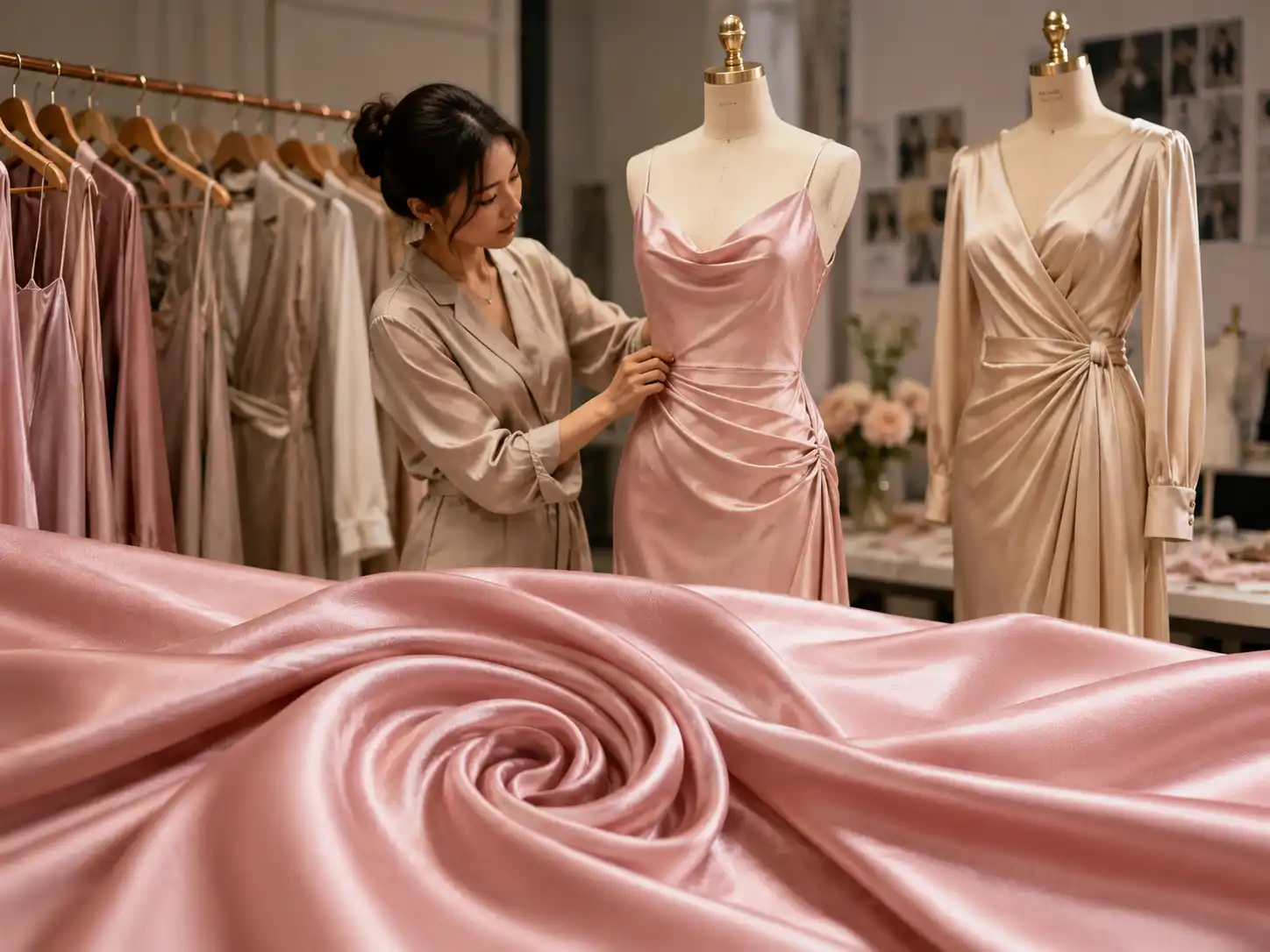
Silk is often introduced with words such as luxurious, smooth, delicate, and expensive. Those descriptions may be accurate, but they are not enough to help someone select fabric for a real garment. Two materials labeled “100% silk” can produce completely different results. One may fall softly around the body, another may hold a sculpted sleeve, while a third may stretch on the bias, slip at the seams, or reveal every mark left by sewing and pressing.
Silk fabric is a textile made from natural protein filaments produced by silkworms or certain other insects. Commercial silk is usually reeled from cocoons, formed into yarn, and woven into fabrics such as charmeuse, chiffon, crepe, organza, habotai, and taffeta. Its appearance and performance depend on fiber origin, yarn structure, weave, weight, dyeing, finishing, and garment construction.
The fiber name alone cannot predict whether a fabric is suitable for a slip dress, structured mini dress, formal gown, blouse, lining, or transparent overlay. Imagine approving a beautiful swatch under showroom lighting, only to discover during sampling that it becomes transparent in daylight, grows several centimeters after hanging, or puckers beside the zipper. Silk can produce exceptional clothing, but only when its behavior is understood before bulk cutting begins.
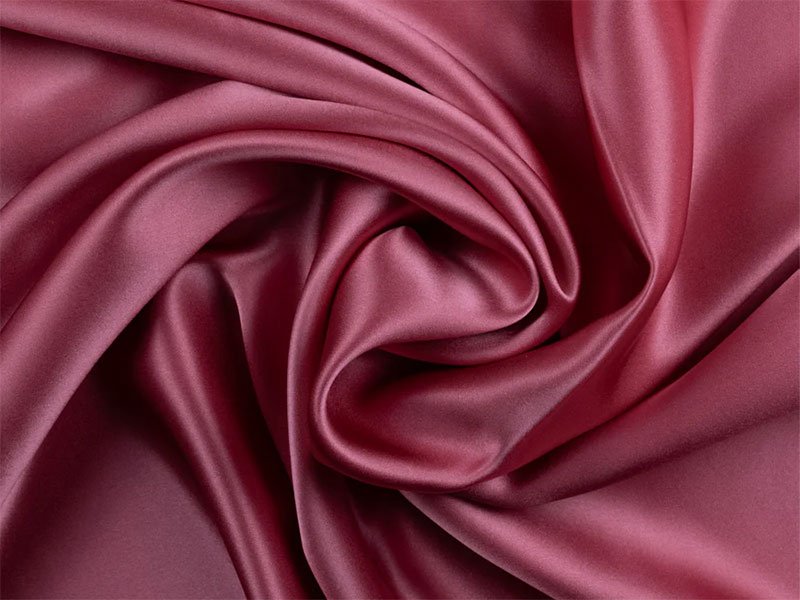
What Is Silk Fabric?
Silk fabric is made from fine natural protein fibers, most commonly obtained from silkworm cocoons. It can be woven into smooth, glossy, matte, crisp, sheer, textured, or structured materials. Silk is the fiber rather than one fixed fabric style, so its final character depends on the silk source, filament quality, yarn preparation, weave, weight, color, finishing treatment, and garment construction.
Silk Fiber Basics
Silk is composed mainly of fibroin, a structural protein produced by silkworms. During cocoon formation, the silk filament is covered with sericin, a natural gum that helps bind the cocoon together. In most commercial processing, much of the sericin is removed through degumming. This process reveals a smoother and softer filament and allows the characteristic luster of silk to become more visible.
The most widely used commercial silk comes from the mulberry silkworm, Bombyx mori. Mulberry silkworms are commonly raised under controlled conditions and fed mulberry leaves, helping producers obtain relatively fine, uniform, and pale-colored filaments. Other silk sources, including tussar, eri, and muga, may have more natural color variation, irregular texture, or a less polished surface.
A single silk filament is extremely fine, so several filaments are normally combined during reeling to create a usable strand. The yarn may then be twisted, doubled, textured, or spun according to the required fabric. Low-twist filament yarns generally create smooth and lustrous surfaces, while highly twisted yarns contribute to the dry, pebbled texture associated with crepe, chiffon, and georgette.
Silk can also be produced from shorter fibers that cannot be continuously reeled. These fibers are cleaned, aligned, and spun into yarn, creating what is commonly called spun silk. It remains genuine silk, but it usually has a softer, warmer, slightly fuzzier appearance and less obvious shine than fabric made from continuous filaments.
Silk and Satin
Silk and satin are often treated as interchangeable words, but they describe different things. Silk identifies a fiber, while satin identifies a weave structure. Satin can be made from silk, polyester, nylon, acetate, viscose, or blended yarns. A silk satin combines natural silk fiber with a satin weave, while a polyester satin uses synthetic filament yarns to create a similar smooth surface.
Satin weaves place longer yarn floats across the face of the fabric. These floats reflect light and produce the glossy surface commonly associated with evening dresses, lingerie, skirts, and formal blouses. The reverse side is usually duller because the yarn interlacing is arranged differently. The length of the floats also affects snagging, abrasion resistance, and surface durability.
Charmeuse is another term that frequently causes confusion. It normally refers to a lightweight satin-weave fabric with a glossy face, soft drape, and duller reverse. Charmeuse can be made from silk or synthetic fibers, so its name does not confirm composition. Fiber content should always be checked separately when sourcing or labeling a garment.
Descriptions such as “silky,” “silk-touch,” and “silk-feel” refer only to appearance or handle. A silky blouse may contain no natural silk. These terms are commonly used for polyester, viscose, acetate, nylon, and blended fabrics that imitate some qualities of silk. They may offer easier care or a lower cost, but their moisture behavior, static, heat response, drape, and customer perception can differ considerably.
| Term | What It Describes | Practical Meaning |
| Silk | Fiber content | Natural protein fiber obtained from insects |
| Satin | Weave construction | Smooth face created by longer yarn floats |
| Charmeuse | Lightweight satin fabric | Fluid fabric with a glossy face and dull reverse |
| Spun silk | Yarn structure | Short silk fibers spun into yarn |
| Silk blend | Fiber mixture | Silk combined with another natural or synthetic fiber |
| Silky | Handle or marketing term | May contain no silk |
| Momme | Traditional silk weight unit | One momme is approximately 4.34 g/m² |
Natural Luster
Silk is known for its soft and changing luster rather than a flat surface shine. The filament has a smooth exterior and an irregular triangular cross-section with rounded edges. Light is reflected and refracted from several surfaces, creating depth that changes as the fabric moves. This optical effect helps explain why genuine silk can look different under daylight, indoor lighting, photography lights, and flash.
The weave structure can either strengthen or soften this luster. Satin weaves expose longer yarn sections and reflect more light, producing a polished appearance. Crepe weaves use highly twisted yarns and a textured surface that scatters light, creating a more matte finish. Organza is transparent and crisp, while silk twill often shows a controlled shine together with a subtle diagonal pattern.
Color also influences the visual effect. Dark shades can look rich and dimensional but may reveal abrasion, creasing, or pressing marks more easily. Pale shades can appear luminous, yet they may become transparent under strong lighting or show internal seam allowances. Bright or saturated colors may make shade differences between dye lots more noticeable when garment panels are placed next to one another.
Finishing treatments can alter the surface considerably. Sandwashed silk has a softer, muted, slightly peach-like appearance. Washed silk feels more relaxed and less formal. Calendered silk has a smoother and more polished surface. Softeners, coatings, and weighting treatments can add body or modify hand feel, but they may also influence durability, sewing performance, colorfastness, and care requirements.
Quality Factors
Silk quality cannot be judged by softness, shine, or price alone. A small showroom swatch may feel impressive but still create difficulties during production. Experienced garment teams examine the material as a combination of fiber, yarn, construction, finish, performance, and supply consistency rather than relying on one sensory impression.
Fiber composition should be verified first, especially when the fabric is described as silk satin, silk blend, or silk-like. Weight, usable width, weave density, shrinkage, colorfastness, seam slippage, snagging, abrasion, shade consistency, and pressing response should also be reviewed according to the intended garment.
A heavier fabric is not automatically better than a lighter one. A 22-momme charmeuse may provide greater body and opacity than a 12-momme quality, but it may feel too heavy for a softly gathered blouse. A light chiffon may work beautifully for layered sleeves while being unsuitable for a close-fitting dress without lining.
Consistency matters just as much as the first sample. Fabric from different rolls or dye lots may vary in shade, luster, width, surface texture, and shrinkage. If a style uses large panels, matched seams, or multiple garment components, even small differences can become visible. Bulk approval should therefore include clear shade grouping, roll inspection, and cutting controls.

How Is Silk Fabric Made?
Silk fabric is made by producing and collecting cocoons, grading and conditioning them, finding and reeling the continuous filaments, preparing the yarn, weaving or knitting the material, and applying degumming, dyeing, printing, washing, or other finishing treatments. Every stage influences the finished fabric’s weight, softness, texture, color, strength, stability, sewability, and garment performance.
Cocoon Formation
Silkworms produce silk as part of their natural life cycle. After feeding and growing, the larva releases liquid proteins through specialized glands. The material passes through the spinneret, solidifies when it contacts air, and is laid around the body through repeated movements until a cocoon is formed.
A cocoon may contain several hundred meters of continuous filament, although the usable length depends on the silkworm species, cocoon quality, handling, and reeling method. The filament is too fine to use individually, so several filaments are combined to create one practical raw-silk strand.
Commercial cocoon grading normally considers shape, shell weight, cleanliness, color, damage, staining, filament continuity, and reeling performance. Uniform, intact cocoons are generally easier to reel into continuous yarn. Damaged or pierced cocoons are more difficult to reel and are often processed into shorter fibers for spun silk instead.
The harvesting method also affects the technical and ethical profile of the material. Conventional reeling usually takes place before the moth emerges because emergence breaks the continuous filament. Alternative systems may allow the moth to leave first and then process the shorter fibers. Terms such as peace silk should be supported by clear supply-chain information because methods, traceability, output, and claim standards can vary.
Reeling and Yarn Preparation
Before reeling, cocoons are commonly softened in warm or hot water to loosen the sericin binding the filament layers together. The filament ends are located and combined from several cocoons. The number of combined filaments affects yarn thickness, evenness, strength, and the weight of the eventual fabric.
Raw silk still contains sericin, which gives it a firmer and less lustrous character. The yarn may be twisted, doubled, thrown, or textured before weaving. Low-twist yarns often create smooth surfaces, while high-twist yarns introduce torque, resilience, and texture. When opposing twists are balanced in the fabric, they can produce the distinctive surface of crepe or georgette.
Dupioni often uses irregular yarns associated with double cocoons, helping create visible slubs and a crisp handle. Spun silk is made from shorter fibers and prepared more like other staple-fiber yarns. It usually has a softer, slightly fuzzy surface and reduced shine compared with continuous-filament silk.
Yarn consistency has a direct effect on later quality. Irregular yarns may create streaks, thick places, bars, uneven dyeing, or weak sections. In some fabrics, variation is intentional and forms part of the visual character. In others, it is a fault. An approved bulk standard should distinguish natural texture from unacceptable defects before production begins.
Weaving and Degumming
Silk yarn can be woven in plain, satin, twill, crepe, jacquard, leno, and many other constructions. The weave determines how warp and weft yarns interlace, directly influencing drape, opacity, luster, strength, stability, snagging, and seam performance.
Plain-weave silk uses a simple over-and-under structure. Habotai and organza are both associated with plain weave, yet they behave differently because of yarn twist, density, weight, and finishing. Satin weaves expose longer floats, producing a smoother and more reflective surface. Twill weaves create a diagonal pattern and often offer a balanced combination of drape, body, and wrinkle resistance.
Degumming removes part or most of the sericin from the silk. The process softens the fabric and reveals more luster, but it also reduces weight. Uneven degumming may cause inconsistent softness, patchy dyeing, or differences between rolls. The selected degree of sericin removal should suit the intended handle and visual effect.
Historically, some silk was weighted after degumming to replace lost weight and add body. Excessive weighting could create a rich hand initially but weaken the material over time. A fabric that feels unusually heavy should therefore be assessed for construction and durability instead of being judged as high quality only because of its weight.
| Production Stage | Main Control Point | Common Garment Risk |
| Cocoon grading | Cleanliness and uniformity | Fiber or color variation |
| Reeling | Filament continuity and evenness | Weak yarns or visible streaks |
| Twisting | Torque and twist balance | Skewing or unstable texture |
| Weaving | Density and yarn alignment | Bowing, loose floats, or uneven structure |
| Degumming | Controlled sericin removal | Weight loss or uneven softness |
| Dyeing | Shade and penetration | Lot variation or poor colorfastness |
| Finishing | Surface and dimensional stability | Shrinkage or abrasion changes |
| Roll inspection | Defect and shade grading | Faults entering the cutting room |
Dyeing and Finishing
Silk accepts many dyes and can produce clear, rich, and dimensional colors. A small laboratory dip, however, does not show everything that will happen in production. The final shade can change with fabric weight, weave construction, finishing method, lighting, viewing angle, and dye-lot conditions.
Color approval should compare samples under several relevant light sources. This helps reveal metamerism, where two samples match under one light but appear different under another. Dark silk should be checked for rubbing, perspiration, water marking, and surface abrasion. Pale silk needs additional review for opacity, yellowing, and differences between outer fabric and lining.
Printed silk may use screen, rotary, or digital methods. Digital printing is often useful for detailed artwork, multiple colors, and shorter development quantities, but approval should include print penetration, registration, repeat alignment, color accuracy, hand feel, reverse-side appearance, and batch consistency.
Finishing can change the identity of the fabric. Sandwashing softens the surface and reduces shine. Prewashing creates a more relaxed appearance and may reveal shrinkage before garment production. Calendering increases smoothness and surface polish. Softening can improve handle but may change friction, colorfastness, or sewing stability.
A larger trial cutting provides more useful information than a small hand swatch. The fabric should be folded, hung, steamed, pressed, sewn, cleaned according to the intended care method, and viewed under realistic lighting. Many important silk behaviors appear only after the fabric is handled in the same way as a finished garment.

Which Types of Silk Are Used in Clothing?
Clothing uses several silk sources and many fabric constructions. Mulberry silk is the most common refined commercial silk, while tussar, eri, and muga provide different textures and natural colors. In garment development, construction names such as charmeuse, chiffon, crepe, organza, habotai, dupioni, shantung, and taffeta usually reveal more about drape, surface, and use than fiber origin alone.
Common Silk Sources
Mulberry silk is the most widely used commercial silk for refined fashion fabrics. Its filaments are generally fine, smooth, pale, and relatively uniform. It is commonly used in charmeuse, chiffon, crepe de chine, organza, habotai, georgette, satin, twill, and premium lining fabrics.
Tussar silk has a more textured and naturally colored appearance. It is often seen in beige, tan, honey, or golden shades and can create a more organic or artisanal surface. Its fibers may be less uniform than cultivated mulberry silk, making it suitable when visible natural character is part of the design.
Eri silk is commonly spun because its cocoon structure is less suited to the continuous reeling method used for mulberry silk. It often has a warmer, softer, more cotton-like touch with less obvious shine. It can be suitable for garments where comfort and natural texture are more important than a polished surface.
Muga silk is associated with a naturally golden color and limited regional production. It can produce distinctive garments, but supply volume, shade continuity, cost, and future availability should be reviewed before it is selected for a repeat commercial program.
The source of the silk does not automatically determine whether it is suitable for a garment. A stable mulberry silk may be easier to reorder across several seasons, while a naturally irregular wild silk may work better for limited collections in which variation is accepted as part of the product.
Charmeuse, Chiffon, and Crepe
Silk charmeuse is one of the most familiar dress fabrics. It has a glossy face, dull reverse, and fluid drape that follows the shape of the body. It is commonly used for slip dresses, bias skirts, blouses, camisoles, lingerie, and eveningwear.
Charmeuse can be difficult to handle during production. Its smooth surface reveals seam puckering, needle marks, pressing mistakes, tension imbalance, and uneven hems. Bias-cut pieces may lengthen after hanging, while pale colors can become transparent under strong retail lighting or flash photography. Fitted designs may require lining, reinforcement, or silk-elastane fabric.
Silk chiffon is light, sheer, and slightly textured. It is widely used for transparent sleeves, layered skirts, gathers, ruffles, overlays, scarves, and occasion dresses. Its movement is attractive, but its low weight makes it sensitive to grain distortion, shifting during cutting, seam twisting, and inconsistent sewing tension.
Silk crepe includes several related fabrics, such as crepe de chine, georgette, and crepe satin. Highly twisted yarns create a subtle pebbled surface and more controlled luster. Crepe de chine is soft and fluid, while georgette is normally drier, more textured, and slightly more stable. These fabrics are often practical for dresses because they provide movement without the intense surface shine of charmeuse.
Organza, Taffeta, and Dupioni
Silk organza is transparent, crisp, and lightweight. It holds shape and is often used for puff sleeves, bows, overskirts, sculptural details, layered volume, and internal support. Because it is sheer, the quality of seam allowances, interfacing, boning, and internal finishing remains visible through the garment.
Needle choice is especially important with organza. Large, blunt, or damaged needles can leave permanent holes. Pressing also requires care because excessive temperature or pressure may flatten the crisp surface, create shine, or leave visible seam impressions.
Silk taffeta is denser and more opaque than organza. It has a smooth face, crisp body, and characteristic rustling sound. It works well for structured skirts, fitted bodices, pleats, formal dresses, and silhouettes that require shape rather than fluid collapse.
Dupioni and shantung are known for slubs and natural surface irregularity. Dupioni is often crisp, textured, and lustrous, while shantung can be smoother depending on the yarn and weave. These fabrics are frequently used for occasion dresses, skirts, jackets, and decorative panels.
The acceptable surface standard must be agreed before production. Slubs may be part of the intended character, but oil marks, broken yarns, weaving gaps, concentrated bars, or severe irregularities can still be faults. The approved sample should clearly represent the natural variation that will be accepted in bulk.
Weight and Use
Silk weight is frequently expressed in momme. One momme is approximately 4.34 grams per square meter, although this conversion remains a general reference because weave construction, finishing, and yarn structure also influence the final hand and behavior.
| Silk Fabric | Indicative Weight | Typical Character | Common Garment Uses |
| Chiffon | 6–10 momme | Sheer, floating, lightweight | Sleeves, overlays, layered skirts |
| Organza | 5–12 momme | Crisp, transparent, structured | Bows, volume, overskirts |
| Habotai | 8–16 momme | Smooth, light, plain weave | Linings, blouses, light dresses |
| Charmeuse | 12–22 momme | Glossy, fluid, close drape | Slip dresses and bias skirts |
| Crepe de Chine | 12–18 momme | Soft, lightly textured | Blouses, wrap dresses, fluid skirts |
| Taffeta | 14–24 momme | Crisp, smooth, shape-retaining | Formal and structured dresses |
| Dupioni | 18–30 momme | Slubbed, firm, lustrous | Occasionwear, jackets, skirts |
These ranges are practical references rather than universal purchasing standards. Two fabrics with the same momme can behave differently because of yarn thickness, density, finishing, width, and fiber quality.
Usable width has a direct effect on garment consumption. Narrow silk may require more meterage, additional seams, or a less efficient cutting marker. Consumption can rise further when the design includes full skirts, bias panels, large sleeves, directional prints, matched motifs, one-way luster, or large size ranges.
The best fabric decision considers weight together with opacity, drape, width, construction, surface, shrinkage, and silhouette. A specification card helps narrow the options, but a garment sample is still required to understand how the material actually performs.

What Are Silk’s Key Properties?
Silk combines low weight with natural strength, softness, moisture absorption, temperature adaptability, strong dye affinity, and distinctive luster. It can produce excellent comfort and drape, but its limitations include snagging, abrasion, water marking, sunlight sensitivity, restricted natural stretch, seam slippage, and careful sewing and maintenance requirements. These properties vary considerably between different silk constructions and weights.
Comfort and Moisture
Silk can absorb moisture vapor and release it into the surrounding air, helping it feel comfortable against the skin. Its standard moisture regain is often reported at approximately 11%, although actual comfort depends on weave, weight, finishing, garment fit, lining, temperature, humidity, and the wearer’s activity.
A lightweight silk blouse may feel breathable in warm conditions, but not every silk garment is cool. Dense satin, heavy lining, multiple layers, dark colors, and close-fitting silhouettes can retain more heat than a lightweight crepe or chiffon garment. Breathability should therefore be assessed at garment level rather than assumed from fiber content.
Silk has relatively low thermal conductivity. It can feel cool at first touch while still providing useful insulation in cooler conditions. This combination allows silk to be used for summer dresses, scarves, lingerie, lightweight blouses, thermal base layers, and fine linings.
Surface character affects comfort as well. Charmeuse feels smooth and moves easily over the skin, but it may shift around narrow straps, necklines, or side seams. Georgette offers more grip and stability, although its dry texture can feel less smooth. Sandwashed silk has a softer, more relaxed touch but may respond differently to abrasion, water, and cleaning.
Wear trials should include walking, sitting, bending, raising the arms, and exposure to warm indoor lighting. These practical checks can reveal perspiration marking, lining friction, strap movement, clinging, transparency, and restricted movement that may not appear during a static fitting.
Strength and Durability
Silk is strong relative to its fine diameter, particularly when used as a continuous filament. However, the durability of a finished garment depends on fabric weight, yarn twist, weave density, finishing, seam construction, fit, surface protection, and care.
A dense silk twill can tolerate regular wear more effectively than a very light chiffon. A loosely constructed satin may suffer seam slippage even when the silk yarn itself is strong. High-risk areas include fitted hips, armholes, narrow straps, center-back zippers, waist seams, and close-fitting sleeves.
Seam slippage occurs when the fabric yarns move away from the stitching line under stress. The sewing thread may remain unbroken while a visible opening forms beside the seam. The risk can be reduced with suitable seam allowance, stitch density, reinforcement tape, lining, stabilizing, or additional wearing ease.
Silk also has limited resistance to rough abrasion. Jewelry, handbags, rough seating, damaged hangers, dirty cutting surfaces, and unsuitable packing can pull, scratch, or dull the surface. Dark charmeuse often shows this damage more clearly than textured crepe.
Prolonged sunlight can weaken silk and fade certain colors. Garments should not be displayed or stored for long periods in direct sunlight. Durability should therefore be treated as the combined result of fiber, fabric, construction, packing, transportation, customer use, and maintenance.
Stretch and Shape
Most woven silk fabrics have limited natural mechanical stretch unless elastane is added or the construction allows yarn movement. A woven silk may have a small amount of crosswise give, but it does not recover in the same way as a knitted or elastic fabric.
Bias cutting creates a different effect. When pattern pieces are placed diagonally across the grain, the yarns can shift and allow the fabric to mold around the body. This produces the fluid appearance associated with many slip dresses and bias skirts.
Bias movement is not the same as elastic recovery. Fabric may lengthen while hanging, steaming, fitting, or wearing. Hems can become uneven if they are finished before the garment has relaxed. Bias-cut styles are therefore often allowed to hang before final hem leveling, with the required time depending on fabric weight, construction, and garment length.
Silk-elastane blends can provide more dependable movement in fitted dresses. The development team should still confirm stretch percentage, stretch direction, recovery, growth, heat sensitivity, shrinkage, seam elasticity, and needle response.
The lining must also be compatible. A stretch outer fabric combined with a rigid lining may restrict movement, create pulling, or distort the silhouette. The entire garment structure should be assessed as one system rather than treating the outer fabric separately.
Benefits and Limits
Silk offers visual depth, natural luster, fluidity, low bulk, rich color, and strong premium perception. It can make a simple silhouette look refined and can bring movement to gathered, draped, layered, or bias-cut designs.
The same sensitivity that gives silk its appeal can make it unforgiving. Small pattern imbalances become visible in smooth fabrics. Uneven feeding creates puckered seams. Water droplets may leave marks. Steam may alter the surface. Removed stitches can leave permanent holes. Pale colors may reveal internal construction, while dark shades may show pressing shine.
| Property | Practical Benefit | Main Limitation |
| Natural luster | Rich and dimensional appearance | Press shine and surface variation |
| Fluid drape | Graceful movement and body contouring | Bias growth and visible fit problems |
| Moisture absorption | Comfortable against the skin | Water marking and care sensitivity |
| Fine filament strength | Low weight with useful strength | Delicate constructions remain vulnerable |
| Dye affinity | Deep and clear color | Shade and fastness variation |
| Smooth surface | Premium touch | Snagging and abrasion |
| Low bulk | Elegant layering | Transparency and limited structure |
| Heat response | Can be shaped through pressing | Glazing, scorching, or distortion |
Silk performs best when its appearance and movement are central to the garment. It is less suitable when it is chosen only because a reference image looks expensive. Some designs may perform more consistently in silk blends, cupro, acetate, viscose, or high-quality polyester, particularly when easy care, cost control, color continuity, or repeatability is more important than natural fiber content.

How Do You Choose Silk for Clothing?
Choose silk by matching its fiber source, construction, weight, width, opacity, drape, texture, stretch, finish, care method, and supply consistency to the intended garment. The exact fabric should be reviewed through sample yardage, sewing trials, testing, fitting, pressing, hanging, and pre-production approval. A suitable silk must support the silhouette, target cost, customer use, production schedule, and repeat-order plan.
Match the Silhouette
The fabric should create the movement and structure required by the design. A bias-cut slip dress needs different behavior from a corset dress, puff-sleeve mini dress, pleated gown, or tailored jacket.
Charmeuse is well suited to fluid silhouettes because it follows the body and creates continuous movement. It works for slip dresses, bias skirts, camisoles, lingerie, and soft blouses. Its close drape can also expose body contours, seam allowances, uneven tension, and fit imbalance, making lining and pattern control important.
Crepe de chine is useful for wrap dresses, blouses, midi dresses, relaxed skirts, and styles requiring softness without intense shine. Georgette provides more grip and texture for gathers, ruffles, tiered dresses, and flowing sleeves.
Chiffon is most effective in layers. It creates movement and transparency but generally needs lining or multiple layers for coverage. Organza supports volume, bows, sculptural details, and dramatic sleeves. Taffeta works well for crisp pleats, fitted bodices, formal skirts, and structured shapes.
Dupioni and shantung suit garments where visible texture supports the design concept. They are less appropriate when the customer expects a perfectly smooth and uniform surface.
A useful material brief describes the required behavior in practical terms. “Fluid matte crepe with low transparency, moderate body, and controlled bias growth” gives a supplier a clearer target than broad words such as soft, elegant, or luxurious.
Check Weight and Width
Fabric weight influences drape, opacity, warmth, durability, sewing method, and cost. Lightweight silk is not always weak, and heavy silk is not always superior. The weave, yarn, and finishing method still play a major role.
Width directly affects consumption. Narrow silk may require more meterage, additional seams, or a less efficient marker. This becomes especially important for full skirts, large sleeves, long dresses, bias-cut panels, large sizes, one-way prints, and fabrics with directional luster.
Opacity should be checked under realistic conditions. Pale silk may look acceptable on a table but become transparent in daylight, fitting-room lighting, studio photography, or flash. The fabric should be viewed over representative skin tones and with the proposed lining.
Lining selection should consider color, weight, stretch, surface friction, breathability, and cleaning method. A heavy lining can destroy the movement of a light silk. A rough lining can catch against the outer shell, while a rigid lining can restrict a stretch-silk garment.
Shrinkage and growth should be checked before the pattern is finalized. Silk may change after steaming, washing, dry cleaning, relaxing, or hanging on the bias. Finished measurements and hem length should reflect tested behavior rather than a general assumption about silk.
Test the Fabric
No single laboratory result proves that a silk fabric is suitable for a particular garment. Testing should reflect the style, fit, construction, color, care method, destination market, and expected customer use.
A practical evaluation may include fiber composition, weight, usable width, dimensional stability, colorfastness to rubbing, colorfastness to perspiration, water resistance, lightfastness where relevant, seam slippage, tensile strength, tear strength, snagging, abrasion, pressing response, opacity, and shade consistency.
Laboratory tests should be combined with sewing trials. A fabric may meet composition and color requirements but still pucker around a zipper. Another may have acceptable tensile strength but open at a fitted hip seam because the weave allows yarn movement.
The actual production color should be tested where possible. Dark, saturated, pale, and printed colors can behave differently even when they use the same base fabric. Dyeing and finishing may alter shrinkage, hand, friction, and seam performance.
A finished sample should be worn, pressed, hung, packed, unpacked, and cleaned according to the proposed care label. These steps can reveal hem growth, water marks, crease retention, lining show-through, surface abrasion, strap movement, and packing damage before bulk production begins.
Plan Production and Care
Silk garment development is most reliable when fabric, pattern, construction, care, quality control, and production planning are treated as one connected process.
The project should begin with a clear design brief, technical pack, size range, target price, expected quantity, and delivery plan. Fabric options should then be reviewed for composition, weight, width, drape, opacity, finish, color, and supply stability.
The first sample should be made in the intended fabric or a technically comparable quality. Fit review should include seam behavior, bias growth, lining compatibility, reinforcement, pressing, hem balance, and movement. Once the material and construction are approved, the final pattern, workmanship, measurements, trims, and care method should be sealed for production.
Early bulk output should be checked before the full quantity progresses. Shade, measurements, seams, surface condition, pressing, labels, and packing all need attention. Approved records should be retained for repeat orders and future colorways because small changes in silk weight, finish, stretch, or dye lot can alter garment performance.
Care instructions should be based on the tested garment rather than general tradition. Some silk products may tolerate controlled hand washing, while others need professional dry cleaning because of color, structure, embellishment, interlining, or finishing. Mild detergent, limited friction, controlled water temperature, shade drying, low-temperature pressing, and breathable storage are common precautions, but the final label should reflect actual test results.
Packing is equally important. Silk can develop fold lines, crushing, abrasion, moisture damage, and hanger marks during transport. Tissue, clean protective bags, smooth hangers, controlled folding, and dry packing conditions help preserve the approved surface.
A successful silk garment does not come from selecting the most expensive fabric. It comes from matching the material to the design, understanding how it behaves, and controlling every step from fabric approval to final packing. Fashion brands developing silk dresses, silk-blend styles, chiffon occasionwear, crepe dresses, satin silhouettes, or silk-look collections can contact Duolan Apparel with sketches, tech packs, reference garments, fabric preferences, target quantities, size ranges, and delivery requirements. The development team can review fabric suitability, sample construction, fit, workmanship, testing, and production planning before a bulk order is confirmed.