Skip to content
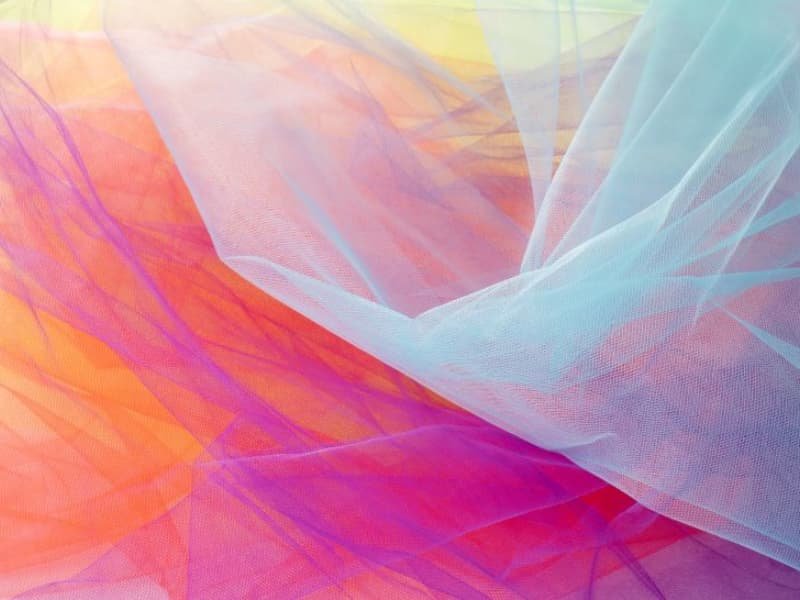
Tulle is often described as a light net fabric, but that simple definition does not explain why one tulle dress looks refined and weightless while another feels stiff, scratchy, or costume-like. A small change in yarn, mesh density, finishing, stretch, lining, or layer count can alter the entire garment. For dress developers, the material name is only the starting point; the real question is how the fabric behaves once it is gathered, tensioned, decorated, sewn, photographed, packed, and worn.
Tulle is a lightweight, transparent net textile made from fine yarns such as nylon, polyester, silk, rayon, or blended fibers. It is used to create soft overlays, controlled volume, fitted transparent panels, illusion necklines, ruffles, and embellished surfaces. Its performance depends on fiber, weight, mesh size, finish, stretch, recovery, layer count, lining, and garment construction.
A useful tulle guide therefore has to move beyond a dictionary definition. Imagine approving a delicate swatch for a layered party dress, then discovering that six production layers turn the waist seam bulky, deepen the color, and pull the zipper out of shape. The design did not suddenly become wrong; the material system was never tested as a complete garment. The sections below explain how to avoid that gap between a beautiful swatch and a commercially reliable dress.
What Is Tulle Fabric?
Tulle is a lightweight open-net textile with fine, regularly spaced mesh cells. It may be soft, crisp, stretchy, or nearly invisible, depending on its yarn and finish. Fashion designers use it for layered skirts, sleeves, overlays, illusion panels, ruffles, embroidery grounds, and internal support. Its appearance and comfort are shaped by weight, mesh density, stiffness, stretch, lining, and layer count.
Appearance and Hand
Tulle is recognized by its open-net surface rather than a continuous sheet of fabric. Fine qualities can look like a translucent haze from a normal viewing distance, while coarser nets retain a clearly visible geometric texture. That difference matters in ecommerce photography, where studio lighting and image sharpening can make the mesh more obvious than it appears in a showroom. A fabric that looks almost invisible on a swatch card may become a strong surface feature when used across a full bodice or sleeve.
The hand varies just as widely. Soft nylon tulle can feel light and pliable, while a polyester tulle with a firm finish may feel dry, springy, or rough. Black tulle can appear denser than ivory at the same physical weight because dark yarn creates stronger visual contrast. Pale shades may seem discreet indoors but become unexpectedly transparent under daylight or flash. For that reason, touch, color, and opacity should always be reviewed on the intended lining rather than judged in isolation.
A practical assessment uses more than fingertips. Hang a full-width length to observe drape, gather at least 50 centimeters into a smaller section to check fullness, fold several layers to examine color build-up, and rub the edge against the neck or inner arm to judge comfort. These simple checks often reveal problems that a flat ten-centimeter cutting hides, especially when the final style contains long skirts, gathered seams, or direct skin contact.
| Property | Common Commercial Reference | Development Meaning |
| Plain tulle weight | About 10-60 gsm | Lower weights often look finer; higher weights may provide more body. |
| Standard width | About 140-160 cm | Common for sleeves, overlays, panels, and fashion skirts. |
| Extra-wide width | About 280-300 cm | Can reduce joining seams in wide skirts when handling is practical. |
| Stable tulle stretch | Often 0-20% | Measure in both directions; diagonal movement may still occur. |
| Stretch tulle extension | Often 30-80% | Recovery and power matter as much as maximum extension. |
| Typical fashion layers | About 1-8 layers | More layers increase opacity, color depth, weight, and seam bulk. |
Structure and Origins
Tulle belongs to the broader family of net and mesh textiles. Its yarns are formed into an open structure with small cells, leaving much less surface area than a woven fabric such as satin, chiffon, or organza. The term is historically associated with the French town of Tulle and the long European tradition of lace and net making, but modern fashion tulle is produced worldwide from synthetic, regenerated, and natural fibers.
The structure explains many of its strengths and limitations. Open cells create transparency and low visual weight, but they also provide fewer yarn intersections for stitches to grip. Curved edges can grow during sewing, large mesh can allow stitches to fall into openings, and fine net can distort when pulled aggressively through a machine. Even a non-stretch tulle may extend on the diagonal because the cells change shape under tension.
Commercial naming is not standardized enough to replace physical approval. One mill may call a 15 gsm nylon net soft tulle, while another uses the same name for a 35 gsm polyester quality with a softened finish. Reliable sourcing therefore records composition, finished width, weight, mesh appearance, stretch by direction, recovery, finish, shade, and approved swatch reference. Those details make repeat production more dependable than a description such as premium tulle or bridal-quality net.
Dress Applications
Tulle is used across party dresses, prom styles, occasionwear, bridesmaid dresses, eveningwear, dancewear, clubwear, and fashion-led separates. Soft versions create tiered skirts, floating overlays, gathered sleeves, fabric flowers, bows, ruffles, and draped panels. Firmer versions support short sculptural skirts, peplums, puff sleeves, underskirts, and exaggerated flounces. Stretch versions appear in fitted sleeves, bodycon overlays, ruched sections, and transparent panels that must move with the body.
Fine illusion tulle serves a quieter purpose. It can connect a plunging neckline, hold appliques across an open back, stabilize a shoulder line, or provide coverage around cut-outs without adding the visual weight of an opaque fabric. The result depends on skin-tone matching, controlled seam tension, and clean edge finishing. A poorly matched nude can look grey or pink under flash, while a well-selected shade almost disappears in normal viewing.
Tulle also carries decoration. Embroidery, sequins, beads, pearls, flocking, prints, and appliques can appear suspended over the lining or skin. The ground fabric must still support the added weight. Dense motifs can pull a delicate net out of shape, and decoration near underarms or necklines can become abrasive. Before sampling begins, the product team should define whether the tulle is providing transparency, movement, volume, support, stretch, decoration, or several of these functions at once.
Garment Behavior
Tulle behaves differently once it is gathered and layered. A 1.5:1 gathering ratio creates light fullness, while 2.5:1 or 3:1 can produce a much stronger silhouette. The correct ratio depends on stiffness, skirt length, layer count, and waist construction. Applying a dramatic ratio to a firm tulle can make the seam unmanageably thick, whereas the same ratio on a fine soft tulle may be necessary to achieve visible volume.
Layering changes more than opacity. It deepens color, increases weight, alters movement, and creates bulk where the layers join. Six layers of 25 gsm tulle represent about 150 grams of fabric per square meter before lining and decoration are added. They do not behave exactly like one 150 gsm cloth, but the calculation explains why a supposedly light skirt can place significant pressure on a waist seam, zipper, or fitted bodice.
Comfort must be checked during motion rather than from a desk. A net that feels acceptable when touched briefly may scratch the underarm, neck, waist, or thigh after repeated movement. Firmer support layers should normally be separated from the skin, and decorated backs may need lining or soft backing. Packing also matters: stiff layers can crease, soft layers can cling through static, and heavy embellishment can stretch the ground during transport. A reliable sample review includes wearing, movement, photography, steaming, and packing recovery.
What Is Tulle Made Of?
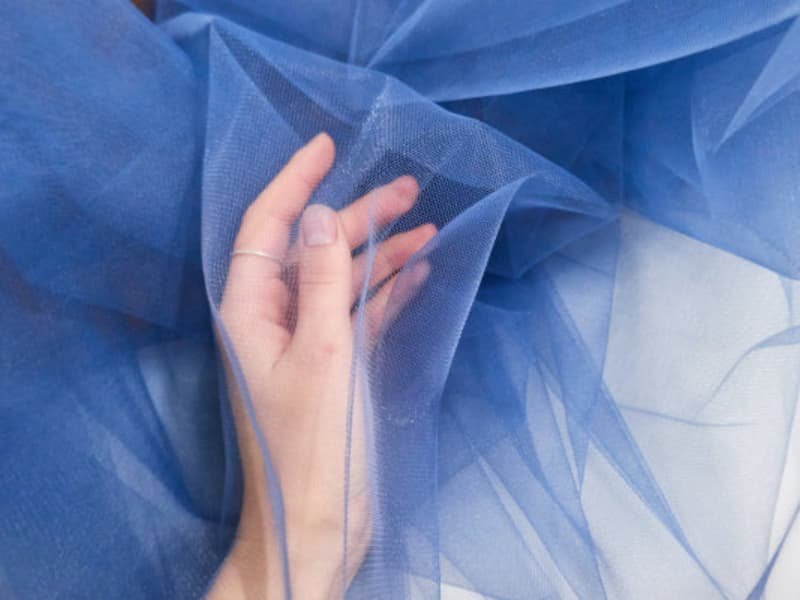
Tulle can be made from nylon, polyester, silk, rayon, cotton, or blended yarns. Nylon and polyester are the most common commercial choices because they offer broad availability and repeatable production. Fiber affects softness, resilience, luster, heat response, dye behavior, and care, but the final result also depends on yarn fineness, mesh density, fabric weight, finishing, stretch, and recovery.
Fiber Choices
Nylon tulle is widely used because it can combine fine appearance, low weight, resilience, and a relatively soft hand. It performs well in overlays, sleeves, layered skirts, and illusion effects. Its limitations include sensitivity to heat, possible snagging, and variation in hand after dyeing or finishing. Polyester is equally common and is available in a broad range of colors, widths, weights, and stiffness levels. It can be soft enough for overlays or firm enough to support a party skirt.
Silk tulle has a refined surface and low visual weight, but it is more expensive and usually less practical for high-volume, fast-moving collections. Supply continuity, shade matching, and handling requirements need closer attention. Rayon or regenerated-cellulose tulle can feel soft and fluid, although dimensional stability under moisture, steaming, or cleaning should be tested. Cotton tulle has a dry natural character but is less common in mainstream fashion production and may offer fewer consistent program options.
Stretch tulle normally uses nylon or polyester with elastane, although some extension may come from the mesh construction itself. Composition percentages do not reveal actual performance. Two fabrics containing the same elastane percentage may differ sharply in stretch power, recovery, surface smoothness, and resistance to growth. The most reliable selection process compares physical swatches on the intended pattern and lining instead of treating the fiber label as a complete quality description.
| Fiber | Typical Character | Useful Applications | Main Checks |
| Nylon | Fine, resilient, often soft | Overlays, sleeves, illusion panels | Heat response, snagging, shade consistency |
| Polyester | Stable, widely available, soft to crisp | Party skirts, ruffles, support layers | Harshness, static, finishing consistency |
| Silk | Refined, delicate, low visual weight | Premium overlays and special pieces | Cost, handling, supply continuity |
| Rayon | Soft and fluid | Draped details and softer overlays | Wet stability, shrinkage, distortion |
| Cotton | Dry, natural-looking, less common | Vintage-inspired and specialty garments | Availability, regularity, recovery |
| Stretch blend | Flexible and body-following | Fitted sleeves, panels, ruched sections | Directional stretch, recovery, decoration load |
Production and Finishing
Tulle production starts with fine yarns formed into an open mesh, followed by stabilization, dyeing, washing, softening or stiffening, inspection, and rolling. The finishing stage can change the material more than many development teams expect. A softener can turn a springy net into a fluid overlay, while a resin or stiffening finish can help a lightweight structure hold a full skirt. Heat setting improves stability but also makes later temperature control important during pressing and steaming.
Color processing can affect touch and recovery. Dark shades may feel slightly different from pale versions because of dye concentration and processing conditions. White, ivory, nude, red, and black qualities from the same base program should therefore be handled as related materials, not assumed to be identical. Shade approval should include the final finish because softening, coating, glitter, flocking, or heat treatment can change both color appearance and hand.
Additional processes such as embroidery, sequins, beads, flocking, foil, glitter, printing, and applique add weight and local stiffness. A plain 20 gsm base tulle may become a 150 gsm or heavier decorated material after finishing. Bulk approval should compare the fully finished fabric with the approved sample, not only the unfinished base net. Otherwise, a production roll can match in color and mesh but still create a noticeably different drape, fit, or skirt balance.
Weight and Mesh
Fabric weight is a useful reference, but it cannot be read on its own. A 20 gsm tulle may be soft and fluid or crisp and springy depending on filament size and finish. A 45 gsm tulle may feel smoother and more comfortable if it uses finer yarns and a dense, flexible mesh. Weight should therefore be reviewed alongside mesh visibility, stiffness, transparency, width, and the number of layers planned for the garment.
Mesh size changes the visual character. Fine mesh blends more smoothly over skin and lining, making it suitable for illusion panels and refined overlays. Medium mesh creates stronger surface texture, while coarse net becomes an obvious design element. Larger openings may also provide fewer support points for embroidery and sewing, increasing the need for backing, adapted stitch density, or reinforcement around seams and closures.
Width affects cost and construction. Standard fashion tulle is often supplied around 140 to 160 centimeters wide, while extra-wide qualities may reach approximately 280 to 300 centimeters. Wider fabric can reduce joining seams in full skirts, but only when marker efficiency and handling remain practical. Before ordering, teams should calculate the real consumption using layer count, gathering ratio, skirt circumference, motif placement, and usable width rather than relying on a simple price-per-meter comparison.
Stretch and Recovery
Stretch should always be measured by direction. A tulle may extend 40 percent across the width, 10 percent along the length, and much further on the diagonal. Another may reach 60 percent but recover poorly, leaving permanent growth after wear. For a quick development check, mark a 10-centimeter section, extend it under controlled tension, release it, and measure again. Repeating the cycle gives a more realistic picture than one strong pull.
Recovery is especially important in fitted sleeves, bodycon overlays, high necks, transparent backs, ruched panels, and bodices attached to heavier skirts. Poor recovery can create loose elbows, wavy necklines, dropped shoulders, distorted armholes, or sagging at the waist and hip. Embroidery and sequins may reduce stretch locally, so the decorated fabric must be tested rather than assuming it behaves like the plain ground.
Patternmakers need measured data, not descriptions such as slightly stretchy or four-way stretch. Negative ease, seam stabilization, elastic application, and grading depend on stretch power as well as percentage. Bulk fabric should be checked before cutting because even a modest change from the approved sample can affect measurements across the size range. When a replacement tulle is proposed, fit should be revalidated instead of approving it only because the color and mesh look similar.
Which Types of Tulle Are Used in Fashion?
Fashion tulle is commonly grouped as soft, stiff, stretch, illusion, embroidered, sequin, or beaded tulle. Soft qualities create movement, stiff qualities build volume, stretch tulle follows the body, illusion tulle provides discreet coverage, and decorated tulle carries visual detail. Because mills use these names differently, the final choice should be confirmed through a full swatch, measured specifications, and garment testing.

Soft and Stiff Tulle
Soft tulle is used when the garment needs movement, gentle volume, or delicate layering. It works well for tiered skirts, gathered overlays, long sleeves, ruffles, bows, rosettes, and draped panels. A good soft quality should gather evenly, fall without hard angular folds, and maintain its hand after steaming. Very light versions can collapse in long skirts, so designers sometimes place one or two firmer support layers beneath the soft outer surface.
Stiff tulle is chosen for structure. It can create a short party skirt, sculptural peplum, dramatic sleeve, internal petticoat, or sharply defined flounce with fewer layers. The risk is that uncontrolled stiffness looks inexpensive and feels uncomfortable. Firm layers should be positioned away from the skin, and seam allowances may need grading because several crisp nets can become bulky around the waist, zipper, or armhole.
Many successful silhouettes combine both types. Soft outer layers create a refined surface, firmer middle layers establish volume, and lining protects the wearer while controlling transparency. This layered approach is often more effective than forcing one fabric to provide softness, shape, opacity, and comfort at the same time. During sampling, each layer should be identified on the bill of materials so that bulk production does not replace a hidden support quality with the visually similar outer tulle.
Stretch and Illusion Tulle
Stretch tulle is intended for areas that follow the body, including fitted sleeves, high necks, side panels, bodycon overlays, ruched sections, and transparent inserts around structured bodices. Maximum extension is less important than usable recovery. A very soft low-power net can provide visual coverage but little support, so it should not be expected to replace power mesh, elastic, boning, cups, or a stable lining in a fitted dress.
Illusion tulle is finer and chosen to blend with skin. It can stabilize a low neckline, connect appliques across an open back, support shoulder placement, or create a covered cut-out. Shade selection is critical because one generic nude rarely works across different complexions. Beige may appear yellow on one wearer, grey on another, and much more visible under flash than under normal indoor lighting.
Both materials require careful seam control. Stretch tulle can grow around necklines and armholes if it is pulled while sewing. Illusion tulle can ripple when the seam is too tight or sag when the edge lacks support. Testing should include movement, photography, and at least one fitting on a person or appropriate dress form. A visually discreet panel often performs an important structural role, so the pattern, stitch type, reinforcement, and shade should be approved together.
Embroidered and Sequin Tulle
Decorated tulle uses the net as a ground for embroidery, sequins, beads, pearls, flocking, appliques, or mixed surface techniques. It is popular in party and occasion dresses because motifs can appear to float over the lining or skin. The same openness that creates this effect also makes weight distribution critical. A delicate net may stretch, tear, or distort when the decorative density becomes too high.
Motif placement affects both appearance and cost. Large flowers or geometric repeats may fall across darts, princess seams, zippers, narrow straps, or side panels. Matching motifs across seams increases fabric consumption and sewing time, while border designs reduce marker flexibility. The cutting plan should be reviewed before the fabric price is treated as the final material cost, especially for fitted bodices and asymmetrical dresses.
The reverse side deserves equal attention. Embroidery threads, sequin stitches, bead knots, and adhesive can scratch the skin. Underarm, neckline, waist, and inner sleeve areas need particular review because friction is repeated throughout wear. Lining, facing, soft backing, or selective decoration removal may be required. Attachment security should be checked through rubbing, flexing, folding, light pulling, and the intended cleaning method, since a small percentage of loose sequins can still create a visible quality problem on a heavily embellished garment.
| Tulle Type | Broad Weight Range* | Main Use | Primary Risk |
| Fine soft tulle | About 10-30 gsm | Overlays, sleeves, soft tiers | Snagging, shifting, insufficient volume |
| Medium soft tulle | About 25-50 gsm | Gathered skirts and ruffles | Bulk where multiple layers join |
| Stiff tulle | About 20-60 gsm | Petticoats and sculptural details | Harsh touch and difficult seams |
| Stretch tulle | About 35-100 gsm | Fitted sleeves and body panels | Growth and weak recovery |
| Illusion tulle | About 15-45 gsm | Necklines, backs, cut-outs | Shade mismatch and seam rippling |
| Embroidered tulle | About 60-250+ gsm | Bodices, overlays, statement skirts | Distortion and cutting loss |
| Sequin or beaded tulle | About 100-400+ gsm | Party and occasion dresses | Weight, shedding, skin irritation |
*Weight ranges are broad commercial references. Actual values vary with yarn, mesh density, finish, width, and decoration.
Choosing by Function
The most dependable way to select a tulle is to define its job before choosing its name. A floating maxi overlay needs drape, low weight, and controlled static. A short party skirt requires volume, packing recovery, and comfortable edges. A fitted sleeve needs directional stretch, recovery, and stable seams. An illusion neckline needs fine mesh, the right skin tone, and enough stability to support the pattern without obvious tension.
A corset-inspired dress may use several nets that look similar in a photograph but perform different tasks. Stable tulle can carry embroidery on the bodice, stretch tulle can follow fitted side sections, illusion tulle can bridge a neckline, and firmer net can sit inside the skirt for lift. Recording those functions prevents substitutions that preserve the appearance of a swatch but change the finished garment.
Costing should include width, layer count, gathering ratio, motif placement, cutting loss, handling time, lining, backing, and defect risk. A cheaper fabric may require more layers or slower sewing, while a higher-priced wider quality may reduce seams and improve efficiency. The best option is not automatically the softest, finest, or least expensive. It is the material that delivers the approved silhouette, comfort, durability, and repeatability at the intended retail position.
How Does Tulle Compare With Other Fabrics?
Tulle is a fine open net, while mesh is a broad category covering many open structures. Organza is a crisp sheer woven fabric, and chiffon is a fluid sheer woven fabric. Tulle usually creates airy, diffused volume; organza forms sharper folds and clearer shapes; chiffon produces softer drape. The right choice depends on silhouette, stretch, transparency, surface texture, construction, and care.

Tulle, Mesh, and Netting
Tulle is a type of mesh, but mesh is a much wider category. Power mesh, sports mesh, lingerie mesh, spacer mesh, and fashion mesh all have open structures, yet they serve different purposes. Power mesh is denser and offers shaping or support. Athletic mesh prioritizes ventilation and durability. Fashion mesh may have more stretch, larger openings, or a smoother technical appearance than traditional dress tulle.
Netting is another broad term and often describes materials with larger, more visible openings. Coarse net can create a bold geometric effect, while fine tulle appears softer and more atmospheric. Supplier catalogs frequently overlap these terms, which makes physical review essential. A product called mesh by one mill may be sold as stretch tulle by another, even when the constructions are very similar.
The practical difference is easiest to see in a garment and photograph. Fine tulle can blend into the background, while coarse net remains visible from a distance and becomes stronger over contrast lining. For embroidery, larger openings may require backing or adjusted stitch density. For fitted panels, stable tulle may not provide enough movement, while stretch fashion mesh can perform better. Selection should follow measured properties and end use rather than the catalog name.
Tulle and Organza
Tulle and organza can both create volume, but their structure produces different results. Organza is a sheer woven fabric with a continuous surface. It forms crisp folds, reflects light more evenly, and creates clean architectural shapes. Tulle builds fullness through open mesh, gathering, and layering, producing a softer, cloud-like appearance even when the material itself is firm.
A gathered organza skirt generally shows clearer planes and stronger color coverage. A gathered tulle skirt reveals more of the lining and creates diffused depth between layers. Organza can produce a dramatic sleeve with fewer layers, while tulle may deliver similar scale with less visual weight. The decision is therefore not only about stiffness; it is also about whether the design needs a smooth surface or an open, airy texture.
Construction differs as well. Organza can fray and normally requires controlled edge finishing, such as a narrow hem, binding, enclosed seam, or suitable heat-cut method. Tulle may be left raw in selected designs because its cells do not unravel in the same way, but raw edges can still feel harsh or distort. Tulle suits diffused volume and transparent layering, while organza is stronger when the design depends on defined folds, sharp ruffles, and clearer structural lines.
Tulle and Chiffon
Chiffon is usually more fluid than tulle. It hangs in soft folds, moves in waves, and creates a continuous veil of transparent color. Tulle retains an open-net surface and tends to float slightly away from the body, even when it is soft. A chiffon overlay follows the lining beneath it, while tulle creates more visible separation between layers.
This difference is important when translating reference images. Replacing chiffon with tulle can make a skirt too buoyant, expose more lining, or create a stronger mesh texture. Replacing tulle with chiffon can remove the intended volume and make a layered design collapse. The fabrics may appear similarly sheer in a small cutting, but their movement and color coverage are not interchangeable.
Chiffon normally frays and requires careful edge finishing. It can also shift and grow on the bias. Tulle does not fray in the same manner, but it can snag and distort diagonally. Chiffon is often the better choice for draped necklines, flutter sleeves, bias skirts, and flowing overlays. Tulle is more suitable for transparent support, layered fullness, illusion panels, and decoration that needs to appear suspended above the body or lining.
| Fabric | Construction | Drape | Volume | Typical Dress Use |
| Soft tulle | Fine open net | Medium to high | Medium through layers | Tiers, overlays, sleeves |
| Stiff tulle | Firm open net | Low | Very high | Petticoats and sculptural skirts |
| Fashion mesh | Open knitted structure | Medium | Low | Fitted panels and bodycon styles |
| Power mesh | Dense elastic mesh | Low to medium | Low | Support and shaping panels |
| Organza | Sheer woven surface | Low to medium | High and crisp | Structured sleeves and ruffles |
| Chiffon | Sheer woven surface | Very high | Low | Draped skirts and fluid overlays |
Choosing the Right Sheer Fabric
Begin with the silhouette. Suspended volume points toward tulle or organza, while fluid movement points toward chiffon or a very soft net. A fitted transparent section often requires stretch mesh rather than traditional stable tulle. Surface appearance should be considered at the same time: organza creates a smooth reflective plane, chiffon forms a soft veil, tulle shows fine open cells, and larger fashion mesh creates a stronger modern texture.
The lining changes the result. Tonal lining makes the layers appear more integrated, while contrast lining emphasizes mesh and transparency. Nude lining can warm, mute, or intensify a colored tulle. Sample panels should be reviewed under daylight, store lighting, and flash because a combination that looks balanced indoors may reveal seams, underwear lines, or unexpected color contrast in campaign photography.
Commercial decisions should include total garment cost. A low-priced tulle may need five layers, while a higher-priced organza may achieve the required structure with two. Chiffon can require narrow hemming and slower handling. Decorated net may create high cutting loss when motifs must be centered and matched. No sheer fabric is automatically superior; the right one is the option that satisfies appearance, fit, comfort, construction, care, and target price together.
How Do You Choose Tulle for Dresses?
Choose tulle by matching its weight, stiffness, stretch, recovery, mesh size, color, skin feel, and decoration capacity to the intended dress silhouette. Then test it with the real lining, layer count, pattern, seam, and care method. The correct tulle is not simply attractive as a swatch; it must reproduce the approved fit, comfort, and appearance consistently from sample through bulk production.

Match the Silhouette
Start by stating what the fabric must accomplish. A tiered maxi dress needs movement and manageable seam weight. A short party skirt may need immediate volume and recovery after packing. A fitted bodycon overlay requires measured stretch and stable return. An illusion neckline needs fine mesh, appropriate skin-tone options, and enough edge stability to support the neckline without visible rippling.
Longer test pieces are more informative than small swatches. A 20-centimeter cutting cannot show how a 120-centimeter skirt will hang, twist, cling, or move. Gather a realistic width at the proposed ratio, attach it to the intended lining, and review the result on a dress form. For short structured styles, pack and release the sample to see whether the volume returns or retains hard creases.
Decoration must be tested at production density. Embroidery can make a soft tulle behave like a structured fabric, while sequins can reduce stretch and add downward pull. A plain-base trial cannot predict the final fit of a decorated bodice or skirt. Pattern, fabric, lining, support, and decoration should be evaluated as one system before the cost and delivery plan are locked.
Layers and Lining
Layer count affects volume, opacity, color depth, weight, static, and sewing complexity. One layer may create a transparent haze, while four or more can provide stronger color and partial coverage. The result depends on mesh density, shade, lighting, lining color, and gathering. A useful development trial compares one layer, the expected production count, and one additional layer in case the approved opacity proves insufficient.
Lining should support the outer fabric rather than fight it. A stiff lining under soft tulle can restrict movement, while a very slippery lining may allow the outer layers to rotate during wear. Static-prone combinations can make the layers cling together and lose volume. Tonal lining creates a unified appearance; contrast lining highlights the mesh and can make internal seams more visible.
Skin comfort determines where lining is required. Firm internal tulle should normally be separated from the body, and decorated sections may need backing to cover threads or sequin stitches. Coverage should be reviewed under backlighting and flash, not only in a fitting room. Layering decisions must be fixed before bulk costing because every additional layer changes consumption, cutting time, seam bulk, zipper handling, and production efficiency.
Cutting and Sewing
Tulle should be relaxed before cutting so that tension from rolling and packing can settle. Cutting tables must be clean because rough surfaces, damaged mats, jewelry, and hook-and-loop fasteners can snag fine mesh. Pattern weights are often safer than excessive pinning, while fine sharp pins should be kept within seam allowances where possible. Bulk spreading should use controlled tension and a conservative lay height to reduce distortion.
For lightweight plain tulle, needle sizes around 60/8 or 70/10 are common starting points, while decorated or heavier nets may require a different setup. A stitch length around 2.0 to 2.5 millimeters is frequently tested first, but the final choice depends on mesh size, thread, seam type, and stress. The needle must form secure stitches without cutting yarns or repeatedly dropping into large openings.
Seam allowances around 8 to 12 millimeters are often workable in fine fashion construction, although the product and factory method determine the final value. Multiple gathered layers may need separate attachment and graded seam allowances to control bulk. Curved necklines, shoulders, and armholes often need stay tape, elastic, binding, or another stabilizer. Pressing should use low heat and a protective cloth because synthetic tulle can shrink, harden, shine, or melt when handled too aggressively.
Testing and Care
Testing should reflect the garment rather than rely on one generic fabric checklist. A plain overlay needs shade, snag, seam, and dimensional checks. A fitted sleeve requires stretch recovery and seam-extension review. A decorated party dress needs attachment security, abrasion, colorfastness, comfort, and packing tests. Standards vary by brand and market, so acceptance levels should be agreed before production instead of applied after defects appear.
Many commercial programs target dimensional change around plus or minus three percent for the approved care method, but this is a working reference rather than a universal rule. Stretch recovery should show minimal permanent growth after repeated extension. Representative seams should be flexed and pulled to reveal skipped stitches, yarn damage, or opening. Layer opacity should be checked on the body or dress form under daylight and flash, while skin comfort should be assessed at the neck, armhole, waist, and thigh.
Care instructions must reflect the complete garment. Plain synthetic tulle may tolerate gentle washing, while beads, sequins, bonding, corsetry, delicate lining, or complex embroidery may require hand washing or professional cleaning. High heat is generally unsuitable. Heavy decorated garments should not hang for long periods from narrow shoulders because the weight can stretch the bodice or mesh. For repeat orders, retaining the approved fabric cutting, shade reference, stretch record, construction sample, and care result makes later production much easier to control.
Selecting tulle successfully is less about finding a fabric with the right name and more about building the right relationship between mesh, silhouette, lining, pattern, decoration, and production method. A thoughtful development process tests realistic lengths, actual layer counts, intended gathering ratios, skin contact, camera visibility, seam stability, and care performance before bulk fabric is committed. That work protects the design as it moves from an attractive reference image to a dress that can be fitted, photographed, packed, sold, reordered, and worn with confidence.
For fashion brands developing tulle party dresses, occasion dresses, fitted mesh styles, embroidered overlays, or multi-layer collections, Duolan Apparel can support fabric and trim sourcing, pattern engineering, sample development, embellishment coordination, fit correction, quality control, and scalable production. Share your tech pack, reference sample, target fabric, size specification, expected quantity, and launch date with the team to begin a practical review of your next custom dress program.