Skip to content
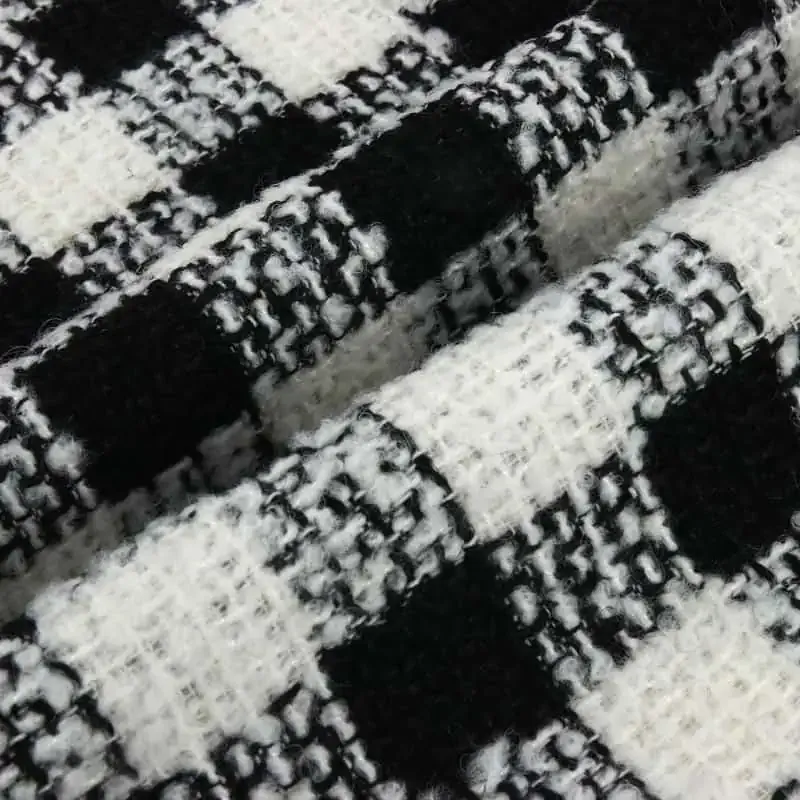
Tweed is one of those fabrics that can look familiar while still being surprisingly difficult to define. A traditional country jacket, a polished office skirt, and a bright cropped party set may all be described as tweed, even though their fibers, weight, softness, weave, and production risks are completely different. That range is what makes tweed commercially useful, but it is also why fabric selection cannot stop at color and surface texture. A swatch that looks beautiful on a hanger may become bulky at a waist seam, scratch the neckline, distort around an invisible zipper, or lose its character after pressing. For designers, product teams, and curious shoppers, understanding tweed means looking at how the cloth is built and how that construction affects the finished garment.
Tweed is a textured woven fabric traditionally made from wool, although modern versions may also contain cotton, polyester, acrylic, viscose, silk, metallic yarns, or elastane. It is valued for visible yarn character, dimensional color, structure, warmth, and durability. The right tweed depends on garment shape, season, comfort, care method, performance requirements, and production repeatability.
One development team may reject an impressive swatch because its loops pull apart during sewing, while another team may turn a modest-looking wool blend into a sharp, expensive-looking dress through the right lining, interfacing, pattern placement, and pressing method. The difference is not luck. It comes from reading the fabric before cutting it. This guide follows that practical route, moving from composition and weaving to comfort, garment engineering, quality testing, and bulk-production decisions, so the material becomes easier to understand and far easier to use well.
What Is Tweed Fabric?
Tweed is a textured woven fabric recognized by visible yarns, blended color effects, and a structured hand. Traditional tweed is usually wool, while contemporary versions may use natural, synthetic, or blended fibers. The name covers a broad fabric family rather than one fixed composition, weave, weight, softness level, or quality standard.
What Is Tweed Made From?
Traditional tweed developed around wool because wool gives the cloth insulation, resilience, body, and rich color depth. Many classic yarns are not one flat shade. Fibers dyed in related colors may be blended before spinning, so a yarn that appears grey from a distance can contain black, cream, blue, and brown when viewed closely. That layered color is one reason authentic-looking tweed often feels deeper and less uniform than a printed imitation.
Modern fashion tweeds use a much wider material palette. Wool may be blended with polyester for strength and dimensional control, acrylic for bulk and softness, viscose for a more fluid hand, or cotton for a cooler and drier feel. Decorative articles may also include ribbon yarn, metallic filament, chenille, slub yarn, sequins, or looped yarns. These additions can create a strong visual identity, but they also change seam thickness, snagging risk, pressing temperature, care instructions, and the ability to reproduce the same surface in later orders.
The word tweed therefore describes a fabric family, not a guaranteed fiber formula. A useful fabric specification should state the exact composition, finished weight, usable width, weave or construction, stretch direction, finishing process, pattern repeat, and intended care method. Those details matter more than a marketing name because they explain how the cloth will behave around the bust, waist, hip, zipper, hem, and lining during sampling and production.
Which Weaves Create Tweed?
Tweed can be produced in plain weave, twill, herringbone, basket-like constructions, checks, broken twills, or complex novelty structures. Plain weave uses a straightforward over-and-under interlacing and can feel balanced and firm, although an open version may fray quickly. Twill creates diagonal lines and often bends more easily. Herringbone reverses the twill direction at regular intervals, forming the familiar repeated V pattern that is often mistaken for a fiber type.
Checked and windowpane tweeds are usually built by arranging colored warp and weft yarns rather than printing a pattern onto the surface. This gives the cloth visual depth and better color integration, but it creates cutting decisions. Large repeats may need to align at the center front, waist seam, patch pockets, major princess seams, and across a coordinated jacket-and-skirt set. The larger the repeat and the more fitted the garment, the more fabric may be needed to place the pattern cleanly.
Novelty tweeds can combine thick and thin yarns, loops, slubs, ribbons, and metallic strands in one construction. They may look luxurious while remaining relatively light, yet their open spaces can reduce seam security. Wider seam allowances, stay stitching, binding, underlining, or local reinforcement may be necessary. The weave should always be judged together with yarn strength and density because two fabrics with a similar check can react very differently during cutting, sewing, pressing, and wear.
How Does Tweed Look and Feel?
Most tweeds have a visible, tactile surface rather than the smooth finish associated with satin, poplin, or fine suiting. They may appear flecked, marled, checked, striped, speckled, looped, slightly hairy, or deliberately irregular. Traditional color stories often use charcoal, moss, rust, brown, cream, and muted blue, while modern fashion versions can combine ivory, pastel pink, black, neon accents, pearl yarns, or metallic highlights for a sharper seasonal effect.
Hand feel varies just as widely as appearance. A heavy wool tweed can feel dry, substantial, and slightly coarse. A finer wool article may feel much smoother, while cotton-viscose blends can feel cooler and more flexible. Acrylic-rich tweed may be soft and bulky but more vulnerable to pilling or heat damage. Fabric weight alone does not explain the result; a dense 300 GSM cloth can feel firmer than an open 350 GSM cloth made with thick, airy yarns.
A practical assessment should go beyond rubbing a small swatch between the fingers. The fabric should be hung in a larger piece to judge drape and pattern scale, folded into several layers to check seam bulk, lightly stretched to observe recovery, and pressed on a test area to see whether the texture flattens or shines. The reverse side also matters because rough metallic ends, open gaps, or loose floats can affect skin comfort and lining decisions.
Is Tweed Always a Winter Fabric?
Tweed is strongly associated with autumn and winter because traditional wool versions are dense, warm, and suitable for outerwear. Modern tweed, however, is not limited to cold-weather clothing. Lightweight constructions made with cotton, viscose, polyester, fine wool, or open novelty yarns can work in spring collections, especially for sleeveless dresses, mini skirts, short jackets, and coordinated sets that provide visual structure without heavy insulation.
Seasonality depends on more than the fabric name. Fiber composition, weave density, garment coverage, lining, color, and climate all change the wearing experience. A medium-weight tweed may feel too warm in a long-sleeved, fully lined midi dress but comfortable in a sleeveless mini style. Pale cream, light blue, mint, and soft pink can also make the same texture feel more suitable for spring than dark brown, burgundy, charcoal, or forest green.
Product teams should define the intended climate and occasion before approving the cloth. A lightweight fashion tweed around 180-280 GSM can be a useful starting range for spring dresses and sets, while medium weights around 280-420 GSM often suit structured dresses, skirts, and jackets. Heavier articles above roughly 420 GSM are more commonly used for coats and substantial tailoring, although density and yarn bulk can make fabrics at the same weight behave differently.
| Common Composition | Typical Character | Common Applications | Main Production Concern |
| 100% wool | Warm, resilient, naturally textured | Coats, jackets, premium tailoring | Shrinkage, skin sensitivity, care |
| Wool-polyester blend | Stable, durable, cost-balanced | Dresses, skirts, commercial tailoring | Heat response and blend consistency |
| Cotton blend | Cooler, drier, less bulky | Spring dresses, cropped jackets, sets | Wrinkling and reduced recovery |
| Acrylic-rich blend | Soft, bulky, highly colorable | Trend-led jackets and mini dresses | Pilling and heat sensitivity |
| Viscose blend | Softer with improved drape | Dresses, skirts, lightweight tailoring | Growth and dimensional change |
| Metallic novelty tweed | Decorative and high-impact | Partywear, occasion pieces, trims | Snagging and skin irritation |
| Stretch tweed | Closer fit and added comfort | Fitted dresses, skirts, trousers | Recovery, seam extension, growth |
Common tweed compositions and the development questions they raise.
How Is Tweed Fabric Made?
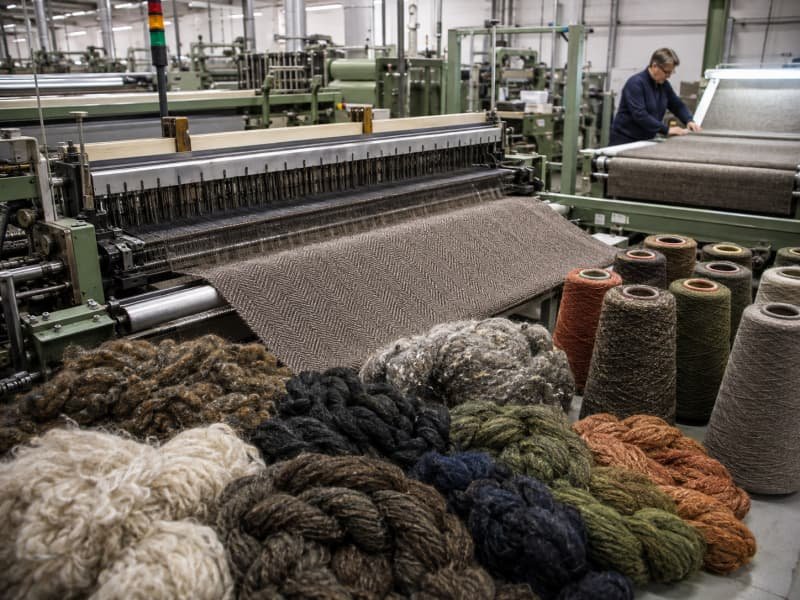
Tweed is made by preparing fibers, spinning or selecting yarns, planning color combinations, weaving the chosen structure, and applying finishing processes. Every stage changes the final cloth. Fiber quality affects comfort, yarn twist affects strength, weave density affects stability, and finishing affects shrinkage, softness, surface height, pressing response, and garment fit.
Fiber and Yarn Preparation
Wool tweed production begins by selecting fibers according to fineness, length, strength, color, and the intended surface character. The fibers are cleaned, opened, and carded before spinning. Carding separates and organizes them while making it possible to blend several dyed shades into one yarn. This early color blending creates the subtle depth found in many traditional tweeds and helps explain why a grey cloth may reveal blue, cream, brown, and black fibers at close range.
Spinning determines how tightly the fibers are held together. Higher twist generally produces a firmer, cleaner yarn with better resistance to surface disturbance. Lower twist creates more volume and softness but may increase hairiness, abrasion, and yarn movement. Slub yarns deliberately vary in thickness, bouclé yarns contain loops, chenille adds a soft raised effect, and ribbon or metallic yarns introduce flat reflective elements. Each one changes how the fabric should be sewn and pressed.
Before a novelty yarn is approved for clothing, it should be examined for tensile weakness, loop security, surface shedding, and heat sensitivity. A decorative yarn that breaks when lightly pulled may leave visible gaps after sewing, while one that melts or flattens during fusing can change the finished garment. Close inspection of the fabric face, reverse, and cut edge often reveals early risks before the material enters a full sample.
Color and Pattern Development
Tweed color may be created at the fiber, yarn, or finished-fabric stage. Fiber-dyed tweed is colored before spinning and often produces soft mélange effects. Yarn-dyed tweed uses colored yarns to build defined checks, stripes, herringbones, and contrasting warp-and-weft arrangements. Piece-dyed tweed is woven first and colored afterward, producing a more unified shade but usually less layered color than fiber blending.
Pattern scale should be reviewed in a large cutting rather than a small swatch. A narrow check repeat may sit easily across a fitted dress, while a broad windowpane can create awkward lines at the bust, waist, hip, and princess seams. Decorative yarns may also form repeated horizontal bands that are not obvious in a ten-centimeter sample. Reviewing one to two meters helps the team see how the pattern behaves across a complete bodice or skirt panel.
Color approval should cover the ground shade, contrast between yarns, consistency across the fabric width, shade differences between rolls, pattern repeat, and compatibility with trims and lining. For matching sets, all pieces should ideally come from the same approved bulk lot. Small differences that seem acceptable in isolated garments can become obvious when a jacket and skirt are worn together or photographed side by side.
Weaving and Construction
Weaving interlaces lengthwise warp yarns with crosswise weft yarns. The sequence, density, and yarn combination determine strength, stability, flexibility, pattern, and surface texture. Dense tweed generally offers better shape retention and seam security, although it can feel heavy and create thick seam intersections. Open tweed can look softer and more modern, but it may stretch during handling and release yarns quickly from cut edges.
The loom must be set for the behavior of each yarn. Thick novelty yarns may need wider spacing, metallic filaments can break under excessive tension, and looped yarns may catch or flatten. Different shrinkage rates between yarns can produce puckering or uneven surfaces after finishing. A cloth can therefore look attractive directly from the loom but still require careful washing, stabilizing, and inspection before it becomes suitable for garment production.
Finished rolls should be inspected for missing yarns, broken ends, knots, stains, barre, bowing, skew, irregular checks, holes, and width variation. Tweed naturally contains texture, so the approval standard should distinguish desirable irregularity from a true defect. For very open constructions, the garment factory may need lower spreading height, single-ply cutting, edge stabilization, or flat-panel transport to prevent distortion before the first seam is sewn.
Finishing and Stabilization
Finishing gives tweed much of its final hand and appearance. Wool fabrics may be washed or fulled so fibers tighten and interlock, increasing density and warmth. Brushing can soften the surface, cropping can remove excess hairiness, and steaming or pressing can set width and improve consistency. Fashion tweeds may also receive softening, backing, resin treatment, anti-pilling finishes, or light stabilization to make an open construction easier to cut and sew.
Every finish has trade-offs. A backing may improve seam stability but change drape, breathability, skin feel, or wash behavior. Softening can make the cloth more pleasant while reducing body. Heavy pressing can flatten loops or produce shine, particularly where synthetic and metallic yarns are present. The sample material and bulk material should therefore be compared for weight, hand, texture, thickness, shrinkage, and pressing response before bulk cutting begins.
Production standards should record the fabric face and direction, relaxation time before cutting, dimensional-change result, fusing settings, pressing temperature, pressure, dwell time, use of a press cloth, and cooling method. These controls are not administrative details. A bulk roll that is noticeably softer or firmer than the approved sample can change fit even when the paper pattern remains identical, especially in a fitted dress or shaped jacket.
| Production Stage | Main Control Point | Possible Garment Problem |
| Fiber selection | Fineness, length, strength, blend ratio | Itching, pilling, weak yarn or uneven color |
| Spinning | Yarn count, twist and novelty effect | Bulk, hairiness, loop failure or breakage |
| Color preparation | Fiber, yarn or piece-dye method | Shade variation and weak repeatability |
| Weaving | Density, repeat and yarn tension | Fraying, distortion, seam slippage or skew |
| Finishing | Shrinkage, softness and surface level | Fit change, shine or hand-feel variation |
| Final inspection | Width, defects, shade and pattern repeat | Cutting loss and inconsistent garments |
How production controls translate into garment performance.

Which Types of Tweed Are Common?
Common tweeds include Harris, Donegal, Shetland, Saxony, Cheviot, herringbone, checked, bouclé-style, metallic, and stretch fashion tweeds. Some names describe origin or wool tradition, while others describe a weave, pattern, or yarn effect. The distinction matters because appearance alone does not confirm fiber content, provenance, softness, durability, or production method.
Heritage Tweeds
Harris Tweed is one of the most recognized heritage textiles. It is legally protected and connected to the Outer Hebrides of Scotland. The cloth must meet defined requirements concerning pure new wool, local dyeing and spinning, and handweaving by islanders at their homes. Not every wool tweed woven in Scotland qualifies. Brands using the name should verify documentation, trademark use, labels, and supply traceability rather than relying on a similar-looking swatch.
Donegal tweed is associated with Ireland and is known for small contrasting flecks within the yarn or cloth. The effect creates color depth without the alignment demands of a broad check, making it useful for jackets, coats, skirts, dresses, caps, and accessories. Donegal-style fabrics are also produced elsewhere, so origin claims should be separated from appearance. A flecked construction can be commercially useful even when it is not presented as an authenticated regional textile.
Shetland tweed is commonly associated with a softer, lighter, and more open wool character, while Cheviot tweed is often firmer and more robust. Saxony tweed generally uses finer wool and presents a smoother, more refined surface. These descriptions are useful starting points, but physical testing remains essential because mills offer many weights and finishes within each family. Heritage names should never replace measurements of softness, density, strength, shrinkage, and garment suitability.
Herringbone and Checked Tweeds
Herringbone describes a weave in which diagonal lines reverse direction to form repeated V shapes. It is not a fiber type, so herringbone tweed may be wool, a wool blend, cotton blend, or synthetic. Small herringbone can often be treated almost like a solid cloth, while a bold version becomes directional and requires deliberate cutting so the lines run consistently across the garment.
Checks are built through colored warp and weft arrangements. Common visual families include windowpane, gun club check, overcheck, and small balanced checks, while houndstooth uses a broken-check structure with pointed shapes. Large repeats require decisions about which seams must match. The center front, waist seam, patch pockets, major princess seams, collar, and lapel usually receive the greatest attention because misalignment in these areas is easy to notice.
Perfect matching at every seam is not always practical or visually necessary. Curved armholes, shaped darts, and narrow underarm panels may interrupt the repeat even in well-engineered garments. The technical package should define essential matching points before costing. This protects visual quality without creating avoidable material waste or labor. Repeat size, garment size range, fabric width, and number of panels all influence consumption.
Fashion and Bouclé Tweeds
Fashion tweed is developed around color, surface impact, seasonal trend, garment shape, and commercial price. Many versions contain little or no wool. Polyester, acrylic, cotton, viscose, metallic filament, sequins, and novelty yarns may be combined to create a textured cloth suitable for cropped jackets, mini dresses, skirts, shorts, and coordinated sets. These fabrics can look expensive in photographs, but their production behavior depends on how securely the decorative yarns are held.
Bouclé and tweed are often confused because both can have an irregular raised surface. Bouclé refers mainly to yarn with loops or curls, while tweed is a broader woven-fabric family. A tweed can contain bouclé yarn, so some materials reasonably fit both descriptions. Loops may catch on presser feet, flatten under pressing, or pull during wear. Reduced presser-foot pressure, edge stabilization, lining, buttonhole trials, and surface-protective packing may be required.
Metallic fashion tweed needs extra attention around the neckline, armhole, and side seams. Metallic yarn ends can feel rough on the reverse even when the face looks smooth. Heat can dull or distort reflective filaments, and loose strands may break where a seam is repeatedly stressed. Strong design does not mean adding as many effects as possible. The most successful fabrics use texture to support the silhouette and price position while remaining stable enough for the intended wear occasion.
Tweed Types at a Glance
Fabric names are most useful when they communicate what the material actually is. A description such as wool-blend checked tweed or polyester-viscose metallic bouclé tweed tells a product team more than the vague phrase premium tweed. Accurate naming helps the sourcing team choose tests, allows the pattern room to anticipate thickness and stretch, and gives the care-label and compliance teams a clearer basis for their work.
The table below summarizes common categories, but it should be read as a practical comparison rather than a rigid classification system. Mills and fabric suppliers often use overlapping terminology, particularly for fashion tweeds with mixed yarns. A swatch, specification sheet, and test report remain the best combination for confirming whether the fabric meets a particular garment brief.
When an origin-based or protected name is important to the product story, traceability should continue through fabric receiving, cutting, labeling, and finished-garment records. When appearance is the main goal, a well-described style term may be enough. The key is to avoid implying protected provenance, fiber content, or performance that the material cannot support.
| Tweed Type | Recognizable Feature | Typical Garments | Practical Consideration |
| Harris Tweed | Protected origin and handwoven wool | Jackets, coats, premium accessories | Traceability and correct labeling |
| Donegal Tweed | Colored flecks or neps | Jackets, skirts, dresses, caps | Verify origin claims |
| Shetland Tweed | Softer, lighter wool character | Relaxed tailoring and skirts | May need added stabilization |
| Saxony Tweed | Finer and smoother surface | Premium dresses and tailoring | Careful pressing to avoid shine |
| Cheviot Tweed | Firm and robust character | Coats, jackets, structured skirts | Can create bulky seams |
| Herringbone Tweed | Reversing diagonal pattern | Coats, suits, skirts | Directional cutting |
| Checked Tweed | Woven check or windowpane | Jackets, dresses, matching sets | Pattern matching and consumption |
| Bouclé Fashion Tweed | Looped or knotted surface | Cropped jackets and mini dresses | Snagging and seam stability |
| Metallic Tweed | Reflective decorative yarns | Partywear and occasion pieces | Skin comfort and heat sensitivity |
| Stretch Tweed | Elastane or elastic yarn | Fitted dresses and skirts | Recovery and growth testing |
Common tweed types and the practical questions behind each name.

What Are Tweed’s Benefits and Limitations?
Tweed can provide warmth, structure, durability, dimensional color, and a strong visual identity. Its limitations may include bulk, skin irritation, fraying, snagging, pilling, pattern-matching waste, restricted care, and limited stretch. These qualities vary widely, so performance should be judged from fiber content, yarn structure, weave density, finishing, lining, and intended use.
Warmth, Comfort, and Breathability
Wool-rich tweed is generally warm because crimped fibers trap air within the yarn and fabric. Denser weaving and heavier weight usually increase insulation, which is why traditional tweed is common in coats, jackets, and cool-weather tailoring. Breathability is more complex. Wool can absorb and release moisture vapor, but a dense construction combined with a low-breathability lining may still feel hot indoors or during active wear.
Comfort depends on fiber fineness, surface finishing, garment coverage, and internal construction. Coarse fibers can irritate the neck, underarm, waist, and cuff. Metallic yarn ends can create a similar problem even when the fabric face looks smooth. Full lining reduces direct contact, but exposed facing edges or uncovered seam allowances may still scratch. A softer swatch does not automatically guarantee comfort once it is shaped tightly around the body.
A useful wear test lasts longer than a quick fitting. The wearer should sit, walk, raise the arms, and remain in the garment long enough to notice heat buildup, stiffness, scratching, or restricted movement. Comfort can be improved with finer fibers, soft binding, underlining, clean seam coverage, and a lining selected for the climate. These decisions are particularly important for sleeveless dresses, fitted bodices, and short jackets worn over light tops.
Strength, Fraying, and Snagging
Many heritage tweeds are durable because of resilient wool fibers, substantial yarns, and stable weaving. Decorative fashion tweeds can be much more delicate. Fraying occurs when cut yarns are no longer held by the weave, and an open cloth may lose several millimeters of edge during normal handling. This becomes serious around narrow seam allowances, curved necklines, invisible zippers, darts, and small facings.
Snagging occurs when a surface yarn catches and is pulled from its position. Bouclé loops, ribbon yarns, metallic filaments, and loose slubs are especially exposed. Jewelry, hanger clips, hook-and-loop tape, rough worktables, machine edges, and packaging fasteners are common causes. Pilling develops through friction as loose fibers form small balls, often under the arms, at the side body, over the hip, or where a bag rubs the garment.
Production controls may include wider seam allowances, overlocking, binding, stay stitching, underlining, local reinforcement, smooth work surfaces, clean machinery, surface-protective pressing, and snag-safe packaging. The acceptable performance level should reflect the product. A delicate party jacket worn occasionally can have a different standard from a work skirt expected to be worn every week. The trade-off should be understood before the fabric is approved, not discovered through customer complaints.
Stretch, Drape, and Shape Retention
Traditional woven tweed normally has little true stretch. An open weave may provide slight mechanical give, especially on the bias, but that movement is not a substitute for engineered stretch in a fitted garment. Stretch tweed usually contains elastane or elastic synthetic yarns. Even then, stretch percentage is only half of the question. Recovery determines whether the fabric returns to its original dimensions instead of bagging at the seat, waist, elbow, or knee.
Drape and structure must be balanced against the silhouette. A firm tweed can create a clear A-line skirt or boxy jacket but resist close shaping over the bust. A softer tweed may follow the body more naturally while stretching at the neckline, waist seam, or zipper. Useful checks include warp and weft stretch, recovery, hanging growth, seam extension, zipper distortion, and dimensional change after care. The lining should have compatible movement rather than restricting the outer fabric.
Shape retention also depends on internal support. Stay tape, interfacing, underlining, shoulder support, waist reinforcement, and correct grain placement all help preserve the intended line. Thick cloth takes up physical space inside a garment, so a pattern fitted in lightweight sample fabric may feel smaller when produced in bulky tweed. Final fit should be approved in the intended material or a cloth with closely comparable weight, thickness, drape, and stretch.
Care and Sustainability
Care instructions should be based on the complete garment, not the fabric name alone. Wool-rich tailored pieces are often dry-cleaned because washing can cause shrinkage, felting, distortion, and surface change. Some cotton or synthetic fashion tweeds may tolerate gentle washing, but the lining, interfacing, shoulder support, trims, buttons, embellishments, and adhesives must all survive the same process without color transfer, bubbling, warping, or loss of shape.
Tweed is sometimes described as sustainable because wool can be renewable and because a well-made tweed garment can remain wearable for many years. That statement needs context. Positive factors include traceable fibers, recycled content, durable construction, repairability, timeless styling, responsible use of remnants, and realistic care. Concerns include difficult-to-separate blends, synthetic microfiber release, intensive finishing, pattern-matching waste, non-traceable inputs, and fragile novelty surfaces designed for a very short trend cycle.
A more credible sustainability view looks at the entire product: material origin, dyeing and finishing, cutting waste, garment durability, frequency of wear, repair options, care requirements, and end-of-life possibilities. A wool jacket worn for a decade may deliver very different value from a highly blended novelty piece worn twice. The most responsible decision is not always the most natural-looking fabric; it is the material and construction that suit the real use case and can remain in service.

How Do You Choose Tweed for Garments?
Choose tweed by matching composition, weight, weave stability, surface texture, drape, stretch, comfort, pattern scale, care method, and repeat availability to the garment. The best fabric is not automatically the softest or most expensive. It is the one that supports the silhouette, survives production, meets performance expectations, and can be reproduced consistently.
Match Weight to the Garment
Fabric weight is commonly expressed in grams per square meter, or GSM. It is a useful indication of substance, but it does not fully describe thickness, density, warmth, or drape. A compact cloth made from fine yarns may feel firm and relatively thin, while an open tweed made from bulky yarns may feel thick and soft despite offering less seam stability. Weight should therefore be treated as a starting measurement rather than a complete performance description.
For dresses, lightweight and medium-weight tweeds are often easier to engineer than heavy coating fabrics. A light cloth may need underlining to control openness or improve opacity, while a heavy cloth may require reduced seam layers, graded allowances, trimmed corners, and different panel placement. The garment category should lead the decision: a cropped jacket can accept more structure than a close-fitting sleeveless dress, and a winter coat can carry more weight than a spring skirt.
The most reliable selection method is a sewn trial. A team can stitch representative seams, insert a zipper sample, fuse a test area, press a curved panel, and hang a larger fabric piece before committing to the full pattern. These quick trials reveal whether the cloth creates attractive structure or unwanted stiffness, whether four layers become too bulky, and whether the surface returns after handling. They are more useful than choosing from GSM alone.
Evaluate Fit and Structure
Tweed should be evaluated according to the shape it must create. A boxy cropped jacket needs stable body and clean edges. A fitted mini dress needs controlled flexibility around the bust, waist, and hip. A soft A-line skirt needs enough drape to move without collapsing. Important fit areas include bust projection, shoulder balance, armhole comfort, waist position, hip ease, zipper support, skirt fall, hem level, and movement allowance.
Fabric thickness can change fit even when the garment measurements remain the same. Several layers at a waistband, side seam, or facing consume internal room and can push outward. Darts and princess seams that look smooth in lightweight calico may become ridged in bulky tweed. For this reason, final fit approval should use the intended fabric or a close substitute. A visually similar cloth with different density or stretch can produce misleading conclusions.
Pattern placement also affects the way the body is perceived. Broad horizontal lines at the bust, waist, or hip should be positioned deliberately, and large checks can emphasize misalignment. Fitting should include sitting, walking, reaching, and turning because a tweed garment may look excellent while standing still but feel restrictive at the armhole, waist, or hip during movement. Good structure should support the design without making the wearer feel enclosed.
Plan Lining and Internal Support
Many tweed garments benefit from lining because the fabric may be rough, open, transparent between yarns, or unstable at cut edges. Lining helps the garment slide over the body, protects seam allowances, improves opacity, and creates a cleaner interior. Full lining is common in jackets, coats, fitted dresses, and tailored skirts. Partial lining may improve breathability, while underlining can stabilize each outer panel and reduce distortion during sewing.
The lining should match the movement and weight of the outer fabric. A rigid woven lining can restrict a stretch tweed, while a very light lining may tear under a heavy cloth. Shrinkage differences can create pulling, bubbling, or uneven hems. Interfacing may be required at necklines, facings, waistbands, collars, lapels, pocket openings, button stands, zipper areas, and sleeve hems, but the support should not make the garment feel harder than intended.
Fusible interfacing is efficient, yet heat and pressure can flatten texture, create shine, cause adhesive strike-through, or change the hand. Open constructions may not provide enough contact for reliable bonding. Sew-in interfacing or underlining can preserve a softer premium appearance, although they require more labor. A fusing trial should record temperature, time, pressure, cooling, adhesion, surface change, and care durability so bulk production follows a tested method rather than operator guesswork.
Test Before Bulk Production
Tweed should pass through fabric review, sample construction, fit evaluation, testing, and a controlled pre-production stage before bulk cutting. A beautiful prototype is not enough if the cloth has not been checked for shrinkage, shade, pilling, snagging, seam slippage, stretch recovery, or repeatability. The exact test plan depends on garment category, target market, care label, customer standard, and how often the product is expected to be worn.
Bulk material should be compared with the approved sample standard for color, hand, weight, thickness, surface height, yarn placement, usable width, pattern repeat, and dimensional change. The first production units should confirm seam method, edge finish, pattern alignment, zipper installation, lining balance, pressing, measurements, surface protection, and packaging. Patterned fabric should also be reviewed across the size range because panel widths and dart positions can change visual placement.
The most reliable garments are developed by treating fabric, pattern, lining, sewing, pressing, and quality control as one connected system. Before requesting a custom quotation, a brand should prepare the design or technical pack, target silhouette, preferred composition or visual direction, approximate fabric weight, color reference, size range, quantity by style and color, lining and trim expectations, testing requirements, sample deadline, and launch date. Clear inputs make material recommendations and costing far more accurate.
| Garment Direction | Practical Weight Range | Desired Behavior | Main Risk to Check |
| Lightweight spring dress | 180-260 GSM | Flexible with easy movement | Opacity and seam stability |
| Structured mini dress | 240-340 GSM | Clear shape without excessive bulk | Bust seams and zipper area |
| Tailored skirt or set | 280-380 GSM | Stable with controlled drape | Waistband thickness |
| Cropped jacket | 300-450 GSM | Good shape retention | Sleeve and armhole bulk |
| Transitional coat | 380-520 GSM | Moderate warmth and structure | Total garment weight |
| Heavy winter coat | 500 GSM and above | Dense insulation and firm tailoring | Pressing and seam thickness |
Indicative development ranges; construction density and yarn bulk can change how fabrics at the same GSM behave.
Custom Tweed Development With Duolan Apparel
Tweed can create a distinctive, commercially valuable garment, but it is less forgiving than its surface suggests. The fabric must be matched to the silhouette, supported in the right areas, tested against the intended care method, and controlled from sample approval through bulk production. Small differences in yarn security, finishing, lining, or pressing can change fit and appearance, particularly in fitted dresses, structured mini styles, skirts, and cropped jackets.
Duolan Apparel works with fashion brands on dress-focused product development, including fabric sourcing, trim coordination, pattern engineering, sample execution, fit correction, and scalable production planning. For a tweed project, the most useful starting information includes a technical pack or reference sample, target garment type, preferred texture and composition, size range, quantity by color, expected tests, sample deadline, and launch date. A clear brief makes it easier to identify material risks early and build a realistic route from concept to repeatable production.
Send project details to info@duolanapparel.com for a custom review and quotation. The team can assess the proposed tweed, recommend lining and stabilization options, identify pattern-matching or seam risks, and organize a sample plan that reflects the intended fit, price position, and production schedule rather than forcing one fabric solution onto every design.