Skip to content
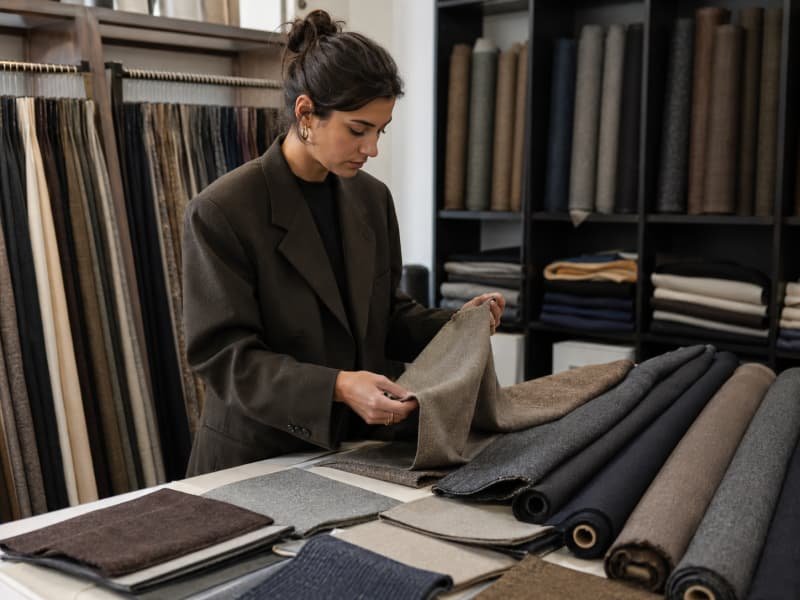
Two garments can both carry a wool label and perform as if they were made from unrelated materials. One may be a light, smooth worsted cloth that keeps a tailored midi dress sharp through a full working day. Another may be a dense, brushed fabric designed to trap air in a winter coat. The difference is not simply good wool versus bad wool. Fibre diameter, staple length, yarn system, fabric construction, weight, finishing, blend composition, lining, and care method all shape the result that reaches the wearer.
Wool fabric is a textile made primarily from natural animal fibres, most commonly sheep fleece. The fibres are cleaned, sorted, spun into yarn, and then woven, knitted, felted, or otherwise consolidated into cloth. Wool is valued for insulation, moisture-vapour management, resilience, shape recovery, and versatility, but those benefits vary substantially with fibre quality, construction, finishing, and garment design.
That variation is the reason a fabric name alone is never enough for serious clothing development. A product team may request soft wool, yet softness cannot be separated from micron range, intended skin contact, surface treatment, lining, durability, and price. A designer may approve a beautiful swatch, only to discover that the material grows after hanging, creates bulky seam intersections, or changes character after cleaning. The useful question is therefore not only what wool is, but which wool has been engineered for the garment in front of you.
What Is Wool Fabric?
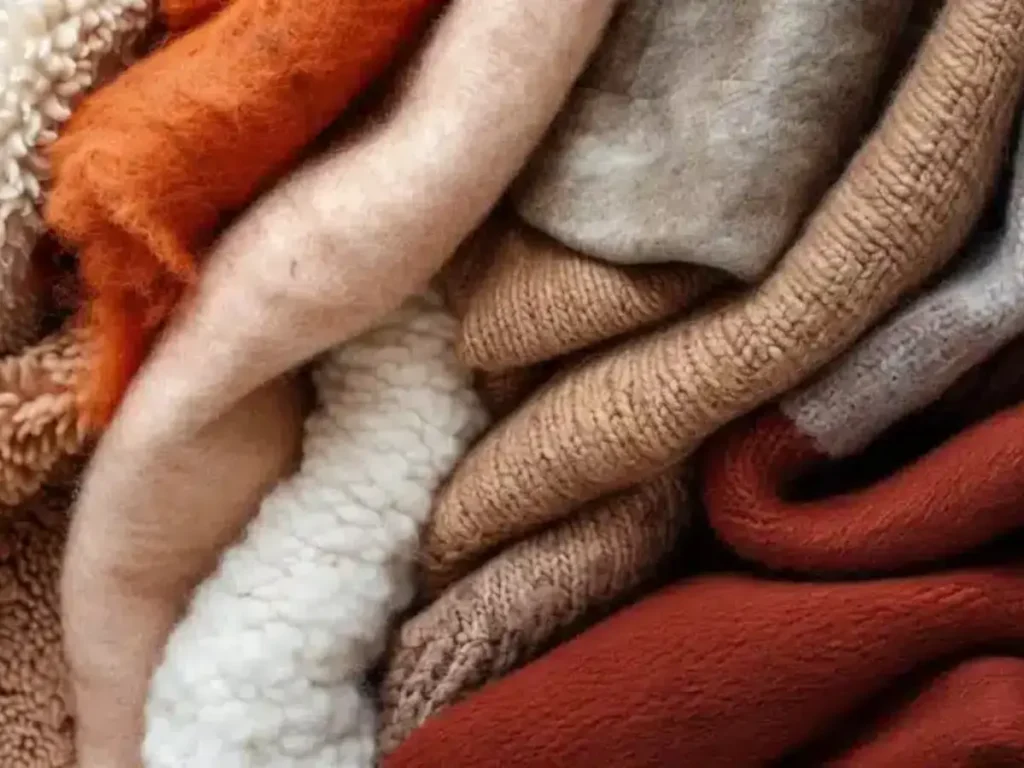
Wool fabric is made from animal fibres that have been cleaned, prepared, spun, and formed into a textile. Sheep wool is the principal source, while cashmere, mohair, alpaca, and angora are related animal fibres. The finished material may be woven, knitted, felted, smooth, brushed, lightweight, or heavy, depending on its fibre, yarn, construction, and finish.
What Is Wool Made From?
Most commercial wool begins with fleece shorn from sheep. The fibre consists mainly of keratin, a family of structural proteins also found in human hair and nails. Wool is not a smooth, uniform filament. It has natural crimp and a surface formed by microscopic overlapping scales. Those characteristics help the fibre trap air, recover after compression, take up moisture vapour, and interlock during felting. They also explain why wool requires more controlled washing and finishing than many synthetic fibres.
Not every fleece produces the same material. Breed, climate, nutrition, animal age, fibre location on the body, and sorting grade can affect diameter, length, strength, colour, crimp, and contamination. Fine Merino fibres are often selected for garments worn near the skin, while stronger or coarser wool may be more appropriate for outerwear, structured fabrics, blankets, or blends. The most useful specification therefore describes measurable fibre and fabric properties rather than relying on the word wool as a complete quality statement.
Is Wool a Natural Fiber?
Wool is a natural animal fibre because it is grown by an animal rather than manufactured from petroleum-based feedstocks or regenerated from dissolved plant cellulose. This places wool in a different category from cotton and linen, which are natural plant fibres, and from polyester, nylon, and acrylic, which are synthetic. The classification is useful, but it does not mean that every commercial wool textile is minimally processed or identical in environmental impact.
Raw fleece must be sorted, scoured, prepared, spun, dyed, finished, and stabilised before it can become apparel fabric. Depending on the target product, it may also be softened, mothproofed, treated for machine washability, coated, brushed, pressed, or blended with another fibre. A meaningful evaluation therefore considers the source of the fibre, the way it was processed, the durability of the garment, and the care required to keep it in use. Natural origin is one fact in the evidence chain, not the entire conclusion.
Wool Fiber and Wool Fabric
Wool fibre is the individual raw material. Wool yarn is the continuous strand produced by spinning many fibres together. Wool fabric is the sheet structure created by weaving, knitting, felting, or bonding those fibres or yarns. A wool garment is the finished product after cutting, sewing, pressing, lining, trimming, labelling, and inspection. These stages should not be treated as interchangeable because each one contributes a different part of the final performance.
The same fibre can produce sharply different fabrics. A compact worsted cloth may have a smooth face and enough stability for tailored dresses. A loose wool jersey may stretch comfortably but need support at shoulders, waist seams, and openings. A brushed woollen fabric may look rich and warm yet create bulk around darts, zippers, pockets, and seam intersections. Reliable development begins when the product brief moves beyond fibre content and defines yarn, construction, finished weight, width, stretch, recovery, surface, care, and intended garment use.
| Material Stage | What It Means | Main Garment Influence |
| Raw wool fibre | Individual animal fibre | Softness, fineness, strength, crimp |
| Wool yarn | Fibres spun into a strand | Hairiness, twist, bulk, durability |
| Wool fabric | Woven, knitted, or felted textile | Drape, stretch, density, stability |
| Finished garment | Cut, sewn, pressed, and lined product | Fit, comfort, appearance, care |
Wool and Fleece
Wool and fleece are often confused because both can feel warm and soft. In retail language, fleece usually refers to a knitted fabric with a raised surface, most commonly made from polyester. Natural wool and polyester fleece differ in fibre chemistry, moisture behaviour, static tendency, heat response, odour retention, hand feel, and care. Polyester fleece can dry quickly and provide light warmth, while wool is often selected for moisture regulation, tailoring, resilience, and a more natural surface.
The word fleece can also describe the coat removed from a sheep before processing, which creates understandable ambiguity. On a product specification, sheep fleece, wool fabric, and polyester fleece should never be used as if they were the same material. The correct choice depends on the garment rather than the familiarity of the name. A casual layer may benefit from easy-care polyester fleece, while a tailored dress, refined knit, or structured winter garment may require the recovery, pressing response, or surface character available from wool.

How Is Wool Fabric Made?
Wool fabric is made through shearing, grading, scouring, carding or combing, spinning, weaving or knitting, dyeing, and finishing. Every stage changes the textile. Fibre preparation affects consistency, yarn structure affects smoothness and strength, fabric construction controls drape and stretch, and finishing determines surface, density, dimensional stability, and care performance.
Cleaning and Sorting
Production normally begins with shearing, after which the fleece is inspected and separated into sections. Fibre taken from different parts of the animal can vary in diameter, length, colour, strength, and contamination. Skilled grading prevents coarse, stained, weak, or heavily contaminated fibres from being mixed indiscriminately with finer material. This early separation is important because later processing can improve cleanliness and uniformity, but it cannot completely erase fundamental differences in the raw fibre.
Raw wool contains natural grease, commonly associated with lanolin, as well as dirt, sweat salts, vegetable matter, and other impurities. Scouring uses controlled washing to remove much of this material. Temperature, chemistry, time, and mechanical action must be managed carefully because wool can felt or weaken when treated too aggressively. Remaining vegetable contamination may require further mechanical or chemical removal, after which the cleaned fibre can be opened and blended to balance colour, softness, strength, cost, or recycled content.
Woollen and Worsted
Carding opens, separates, and mixes the fibres into a more continuous web. In a woollen system, fibres remain relatively random and may include a broader range of lengths. The resulting yarn is often fuller, hairier, and better able to trap air. Woollen yarns are therefore common in flannel, tweed, brushed fabrics, coatings, and relaxed winter garments where loft, warmth, and surface character are more important than a perfectly clean face.
In a worsted system, longer fibres are normally combed so they lie more parallel, while many shorter fibres are removed. The yarn becomes smoother, firmer, and more compact. Worsted fabrics are widely used for suiting, trousers, tailored dresses, uniforms, and refined lightweight wool because they can form sharper seams and cleaner silhouettes with less bulk. Neither system is automatically superior. The choice should follow the desired garment structure, warmth, surface, movement, and price rather than a simple hierarchy of quality.
| Factor | Woollen Direction | Worsted Direction |
| Fibre arrangement | More random | More parallel |
| Typical fibre mix | Can include shorter fibres | Primarily longer, combed fibres |
| Surface | Fuller and fuzzier | Smoother and cleaner |
| Fabric character | Lofty and warm | Compact and refined |
| Common uses | Flannel, tweed, coating | Suiting, dresses, trousers |
| Tailoring response | Soft structure | Sharper structure |
Weaving and Knitting
Wool yarn can be woven into plain weave, twill, gabardine, herringbone, crepe, flannel, tweed, and many other structures. Woven cloth normally provides more dimensional stability than a comparable knit, but the result still depends on yarn twist, fabric density, finishing, fibre blend, and stretch content. A tightly woven worsted fabric may hold a tailored waist and clean hem, while an open textured weave may move more freely and require additional lining or seam support.
Knitted wool includes jersey, rib, interlock, jacquard, compact double knits, and sweater structures. Knits normally provide greater stretch and body movement, making them attractive for soft dresses, fitted knitwear, tops, and relaxed separates. That flexibility also introduces risks such as curling edges, seam stretching, spirality, bagging, and length growth during hanging. Before cutting, knitted and stretch fabrics often need relaxation so that panels are not produced from cloth still carrying tension from rolling, finishing, or transport.
Finishing and Stabilization
Finishing gives wool much of its final commercial identity. Fulling compacts the fabric and can increase density. Raising or brushing pulls fibres toward the surface, creating softness and warmth. Cropping produces a more even face, while pressing and decatising can improve smoothness, lustre, handle, and dimensional stability. Anti-shrink treatments may make selected products easier to wash, and specialised finishes can add water repellency, stain resistance, surface sheen, or a particular visual effect.
A finish that feels impressive on a new swatch does not always remain attractive after sewing, pressing, wear, and cleaning. Heavy softening may fade, a raised surface may mat in high-friction areas, and a glossy pressed face may show seam impressions or shine if production temperatures are too high. The final dyed and finished fabric should therefore be tested in the condition that will enter cutting. A garment sample should also be pressed, cleaned, and assessed using realistic production and care conditions before bulk approval.

What Are the Properties of Wool Fabric?
Wool combines insulation, moisture-vapour absorption, resilience, crease recovery, and relatively favourable flame behaviour. It can also shrink, felt, pill, stretch, or feel itchy when fibre fineness, yarn, construction, finishing, and care are unsuitable. Its real performance should be judged through the finished fabric and garment rather than assumed from fibre content alone.
Warmth and Moisture
Wool feels warm because its crimped fibres create small air spaces within yarn and fabric. Trapped air slows heat transfer, but weight alone does not determine thermal comfort. A compact lightweight worsted fabric and a thick brushed coating may both contain wool while serving entirely different climates and garments. Yarn bulk, fabric thickness, density, surface finish, lining, garment fit, wind exposure, and moisture all influence how warm the wearer actually feels.
Wool can take up moisture vapour within the fibre before the surface feels fully wet, helping to moderate the microclimate between the body and clothing. This is one reason fine wool can remain comfortable across changing indoor and outdoor conditions. Breathability still needs to be considered at garment level. A close fit, full lining, bonded layer, coating, high neckline, or long sleeve can reduce air exchange and turn a moderate fabric into a warm garment. A useful brief therefore identifies climate, use, coverage, lining, and intended layering instead of asking only for winter wool.
Softness and Recovery
Softness is strongly influenced by fibre diameter. Finer fibres bend more readily when they contact the skin, while coarser fibre ends are more likely to feel prickly. Fine Merino used for next-to-skin clothing is often found in the high-teens to low-twenties micron range, although comfort cannot be guaranteed by one number because wearer sensitivity, yarn hairiness, surface finish, garment fit, and seam placement also affect the sensation.
Wool has natural resilience and can recover from bending and compression more effectively than many fibres. This supports crease recovery, tailored structure, and comfortable movement. The fabric construction can strengthen or weaken that advantage. A loose knit may grow under its own weight, a heavy dress may lengthen during hanging, and a high-viscose wool blend may drape beautifully while recovering less effectively than a compact wool-nylon fabric. Stretch should therefore be measured in both relevant directions, and recovery should be assessed after the material has been held under extension rather than pulled once by hand.
Shrinkage, Pilling, and Itch
Wool can shrink through relaxation and felting. Relaxation shrinkage occurs when tensions introduced during spinning, weaving, knitting, or finishing are released. Felting shrinkage occurs when heat, moisture, and mechanical action encourage the surface scales to interlock. Felting can permanently change garment measurements, density, texture, colour depth, seam appearance, and drape, which is why care instructions must be based on testing of the finished garment rather than on the fibre name alone.
Pilling develops when loose fibre ends work toward the surface, tangle, and remain attached as small balls. Fibre length, yarn twist, fabric density, finishing, abrasion, and blend composition all contribute. Strong synthetic fibres may improve durability but can also hold pills on the surface for longer. Itch is usually associated with relatively stiff projecting fibres pressing against the skin. Softening can reduce the sensation temporarily, but it does not change the original fibre diameter. Lining, seam allowance placement, and intended skin contact are practical design controls.
| Risk | Common Cause | Visible Result | Practical Control |
| Relaxation shrinkage | Released production tension | Size change after care | Relax and pre-test fabric |
| Felting | Heat, moisture, agitation | Dense, distorted surface | Validate care conditions |
| Pilling | Loose fibres and abrasion | Surface balls and fuzzing | Test yarn and construction |
| Growth | Loose knit or garment weight | Longer or wider garment | Hanging and recovery tests |
| Itch | Coarse projecting fibres | Skin discomfort | Finer fibre or lining |
| Pressing shine | Excess heat and pressure | Glossy seam or panel areas | Controlled steam and pressure |
Flame, Odor, and Wear
Wool has relatively favourable ignition behaviour compared with many common apparel fibres. It is difficult to ignite, tends to char instead of melting, and may stop burning after the ignition source is removed. Those fibre-level characteristics do not replace finished-product testing where regulations or customer requirements apply. Polyester blends, elastane, linings, coatings, padding, trims, and surface treatments can alter the behaviour of the complete material or garment.
Wool is also associated with lower noticeable odour during ordinary wear than many synthetic textiles because of its moisture interaction and fibre chemistry. The effect should not be presented as an unlimited antibacterial claim. Sweat composition, wear time, temperature, fit, finishing, storage, and cleaning all matter. Durability varies just as widely. A dense worsted cloth can remain polished for years, while a loose, soft knit may show fuzzing quickly at underarms, side seams, seat panels, inner thighs, elbows, and bag-contact points. Commercial quality is the hand and surface that remain appropriate after realistic use.

Which Types of Wool Fabric Are Used in Clothing?
Clothing uses fine Merino, lambswool, cashmere blends, mohair, alpaca, worsted suiting, flannel, tweed, crepe, jersey, boiled wool, felted wool, gabardine, and heavy coating. The correct type depends on silhouette, climate, skin contact, stretch, surface, care, and price. Fabric names should always be supported by composition, weight, construction, finish, and test data.
Fine and Luxury Fibers
Merino is widely used because it can combine softness, moisture management, elasticity, and versatility. Fine Merino appears in lightweight jersey, base layers, sweaters, refined dresses, tailoring, and premium blends. Lambswool usually refers to wool from a young sheep’s first shearing and is often valued for softness and loft, although the term does not guarantee a particular micron count, staple length, or finished performance.
Cashmere comes from goats and offers high warmth relative to weight with a soft hand. Mohair comes from Angora goats and is known for lustre, strength, and resilience. Alpaca can feel smooth, warm, and fluid, but its lower crimp may provide less natural recovery than sheep wool. These fibres should not be selected by prestige alone. A luxurious soft fibre may be unsuitable for a highly fitted, high-abrasion garment, while a compact Merino blend may perform more reliably in repeated wear. The garment objective should lead the fibre decision.
Common Wool Fabrics
Worsted suiting is generally smooth, compact, and suitable for sharp tailoring. Wool crepe has a grainy surface and can balance fluid movement with structure, which makes it useful for dresses, skirts, trousers, and refined occasionwear. Flannel has a softened or raised surface and often appears in autumn and winter dresses, skirts, trousers, and coordinated sets. Tweed is a broad family of textured woven fabrics that can create strong visual character but may need careful pattern matching, seam grading, and lining.
Wool jersey is a knitted construction rather than a single fibre grade. Fine jersey can create soft dresses and tops, while heavier compact jersey can support fitted silhouettes if stretch recovery is sufficient. Gabardine is a firm twill used for tailoring and structured garments. Melton is dense and heavy, with a smooth face suited to coats and winter outerwear. Because these names cover wide ranges of composition, density, finish, and weight, purchase documents should include measurable specifications and an approved physical standard rather than relying on the fabric name alone.
| Fabric | Common Finished Weight | Typical Character | Frequent Apparel Uses |
| Light worsted | 140-220 GSM | Smooth and compact | Tailored dresses, trousers |
| Wool crepe | 180-320 GSM | Grainy, fluid, resilient | Dresses, skirts, occasionwear |
| Wool flannel | 220-380 GSM | Soft, lightly raised | Autumn dresses, trousers |
| Wool jersey | 160-350 GSM | Flexible and comfortable | Knit dresses, tops |
| Tweed | 250-500 GSM | Textured and structured | Jackets, skirts, coat dresses |
| Boiled wool | 300-550 GSM | Dense, compact surface | Jackets, sculptural pieces |
| Melton | 400-750+ GSM | Heavy, dense, smooth | Coats and winter outerwear |
Boiled and Felted Wool
Boiled wool is commonly produced by deliberately exposing a knitted wool fabric to controlled heat, moisture, and agitation. The fibres interlock, reducing dimensions and creating a dense, compact structure. The material can provide warmth, sculptural body, a soft substantial hand, and reduced edge fraying. It is used for jackets, coat-like dresses, overshirts, skirts, and pieces that benefit from a clean cut edge or simplified seam finish.
The degree of compaction must be controlled because it changes weight, width, stretch, recovery, and production yield. Over-processing can make the cloth stiff, while insufficient treatment can allow further shrinkage after garment production. Felted wool is a broader category that may begin as loose fibres, woven cloth, or knitted fabric. These materials can look forgiving, but thick edges, buttonholes, zippers, pockets, and seam intersections still require planning. Surface consistency, cut-edge durability, panel distortion, and pressing response should be checked before the design is finalised.
Wool Blends
Wool is blended to adjust performance, price, and processing. Polyester may improve dimensional stability, drying speed, crease retention, and abrasion resistance. Nylon can strengthen yarns and is frequently used in knitwear that needs durability. Viscose may add fluidity and a smoother hand. Elastane can provide stretch and recovery in fitted garments, while cashmere can increase softness and perceived luxury. A blend is not automatically lower quality when every component serves a clear product purpose.
Blending also creates trade-offs. Strong synthetic fibres can keep pills attached to the surface, viscose can reduce recovery in an open construction, and elastane may be affected by excessive heat or harsh chemical processing. Pure wool may be preferred for natural hand, moisture behaviour, and premium positioning, while a blend may be more practical for easy care, shape retention, price control, or repeated abrasion. The relevant question is not whether pure wool or a blend is universally better, but whether the composition supports the silhouette, wearer, retail price, care expectation, and repeat-production plan.

How Do Brands Choose Wool Fabric?
Brands choose wool by matching measurable fabric properties to silhouette, climate, skin contact, price, care, and production method. A sound decision includes composition verification, weight and width checks, stretch and recovery measurement, shrinkage and pilling tests, sample fitting, seam and pressing trials, care evaluation, and bulk-lot approval. Composition alone cannot predict finished-garment performance.
Match Fabric to Garment
The design establishes what the fabric must do. A tailored sheath dress needs stable width, controlled drape, clean seam formation, opacity, and reliable recovery. A fitted knitted dress needs stretch, recovery, comfort, and resistance to length growth. A coat dress needs density, body, pressing compatibility, and enough strength to support closures, pockets, and lining. Selecting a material only because it feels soft on the hand ignores the pressures it will face after cutting and wear.
Useful starting matches include fine worsted for tailored mini and midi dresses, wool crepe for fluid dresses and refined occasionwear, compact flannel for autumn dresses and coordinated sets, stretch wool jersey for fitted knit dresses, tweed for jackets and structured skirts, boiled wool for sculptural outer layers, and melton for winter coats. These pairings remain provisional until the actual fabric has been sampled because weight, density, finish, and blend can make two fabrics with the same commercial name behave very differently.
Design details raise the performance requirement. Halter necklines concentrate load around the upper bodice. Backless styles need stable edges and carefully engineered support. Corset-inspired dresses may require boning, cups, lining, interfacing, and reduced seam bulk. Checks, herringbone, stripes, and one-way nap can increase consumption because motifs and direction must be controlled. Dark smooth wool can show lint and pressing shine, while pale wool can reveal seam allowances and lining contrast. The design, colour, pattern direction, and material should therefore be reviewed as one system.
Specifications to Check
Words such as soft, premium, fluid, and medium weight are useful in a design conversation, but they are weak production controls. A practical specification records exact fibre percentages, finished fabric weight, usable width, woven or knitted construction, stretch in relevant directions, recovery after extension, surface finish, colour standard, shrinkage limits, pilling requirement, colourfastness, care method, dye-lot control, roll information, material minimums, and the approved physical reference.
Fabric weight should be measured after final dyeing and finishing because fulling, brushing, coating, and anti-shrink treatment can change GSM. Usable width matters more than nominal width when damaged selvedges, bowing, skew, or edge variation reduce the cutting area. A narrow luxury wool can create more waste than a slightly more expensive alternative with a wider usable width. Nap, checks, stripes, and herringbone also affect marker efficiency because pieces may need one-way placement or matching across seams.
Stretch should be recorded as a percentage and considered together with recovery. A fabric that extends easily but does not return can create bagging at the waist, hip, seat, elbow, or knee. Knitted dresses should also be assessed for hanging growth because a garment can maintain its width yet gain noticeable length under its own weight. Bulk fabric should be compared with an approved standard for colour, surface, hand, weight, and construction so that decisions do not depend on memory or subjective descriptions.
- Exact composition and permitted tolerance
- Finished GSM and usable width
- Construction, yarn, or gauge information
- Lengthwise and crosswise stretch with recovery
- Surface finish, hand standard, and colour reference
- Shrinkage, pilling, colourfastness, and seam requirements
- Care method, lot control, roll data, and reorder conditions
Testing Before Bulk
Testing should follow the actual garment, care label, target market, and customer standard. A lightweight close-fitting dress and a heavy coat do not need identical priorities, but common areas include fibre composition, finished weight and width, dimensional stability, pilling, colourfastness to rubbing and perspiration, seam slippage, seam strength, stretch recovery, spirality for knits, abrasion, and appearance after care. Test methods and acceptance levels should be agreed before the result is used to approve or reject a material.
Laboratory data needs to be combined with garment observation. A shrinkage result can fall within an agreed tolerance while the neckline still rolls, the hem ripples, or the side seams twist. A fabric may achieve an acceptable pilling grade but develop fuzzing that is inconsistent with the brand’s intended appearance. A useful development sequence moves from fabric review and risk testing to first sample, fitting, care trial, pattern correction, pre-production confirmation, bulk-fabric approval, and first-piece assessment before full release.
Complex wool garments often require extra trials for interfacing, pressing temperature, lining ease, seam grading, zipper installation, shoulder shaping, and storage. Heavy wool panels can stretch before assembly, and over-pressing can create permanent shine or seam impressions. Testing has commercial value only when it informs a decision. If a material grows excessively, the answer may be a denser construction, stabilised seam, shorter pattern, lighter trim package, or different blend rather than an instruction to accept the risk.
- Review the design, use case, season, and target market.
- Compare candidate fabrics for hand, weight, drape, stretch, opacity, and availability.
- Test the highest-risk characteristics before committing to a full sample route.
- Make, fit, press, and clean the garment under realistic conditions.
- Correct the pattern and workmanship before approving production fabric.
- Confirm the bulk lot and first production pieces against the approved standard.
Care, Traceability, and Production
Care instructions must be established from the complete garment rather than the face fabric alone. A technically washable wool can be combined with a lining, adhesive, shoulder pad, embellishment, zipper, or interfacing that cannot tolerate the same process. General controls include low temperatures, limited agitation, wool-compatible detergent, careful extraction, flat drying for many knits, reduced tumble-drying exposure, and controlled steam. Heavy knitted dresses should also be evaluated for hanger growth, while tailored garments need supportive hangers that do not distort the shoulders.
Traceability becomes important when a brand makes claims about fibre origin, animal welfare, recycled content, or certified processing. Documents should be checked for scope, validity, product coverage, and continuity through the transaction chain. A certificate held by an upstream supplier does not automatically prove that every composition, colour, or garment is covered. Recycled wool can reduce demand for virgin fibre, but mechanical recycling shortens fibres, which is why recycled content is often blended with stronger fibres to restore spinning and wear performance.
Commercial availability is another part of responsible selection. An unusual blend may perform beautifully in sampling but become difficult to reorder. A fabric with a long mill lead time may not support a rapid launch or replenishment programme. Sample-stage availability does not guarantee that the same colour, finish, or quantity can be reproduced economically later. Product teams should confirm minimums, lead times, shade continuity, reorder terms, and substitute options while the garment is still being developed rather than after sales demand appears.
For custom wool dresses, wool-blend sets, tailored fashion garments, and seasonal collections, the strongest results come from treating material, fit, workmanship, care, testing, and repeat production as one connected system. A well-chosen fabric does more than look attractive on a swatch card. It supports the intended silhouette, remains comfortable in its real climate, survives the approved care method, stays consistent across sizes and colours, and can be sourced again when the product succeeds.
Duolan Apparel develops fashion dresses, occasion styles, fitted silhouettes, fashion sets, and refined womenswear through a documented manufacturing structure that includes 16 owned womenswear factories, more than 20 long-term satellite factories, 300 sewing lines, and over 50 flexible quick-response lines. The development system covers fabric and trim sourcing, patternmaking, sample execution, fit correction, process engineering, production coordination, and quality control, with a factory base that has completed a SMETA 2-Pillar audit.
A useful wool-project enquiry includes the design or tech pack, target garment, preferred composition, seasonal weight, stretch and recovery needs, hand and surface reference, colourways, size range, care expectation, testing requirements, estimated quantity, launch date, delivery market, and target price where available. This information allows the development team to identify fabric risks, recommend alternatives where needed, plan the sampling route, and prepare a quotation based on the construction that will actually be produced.