Skip to content
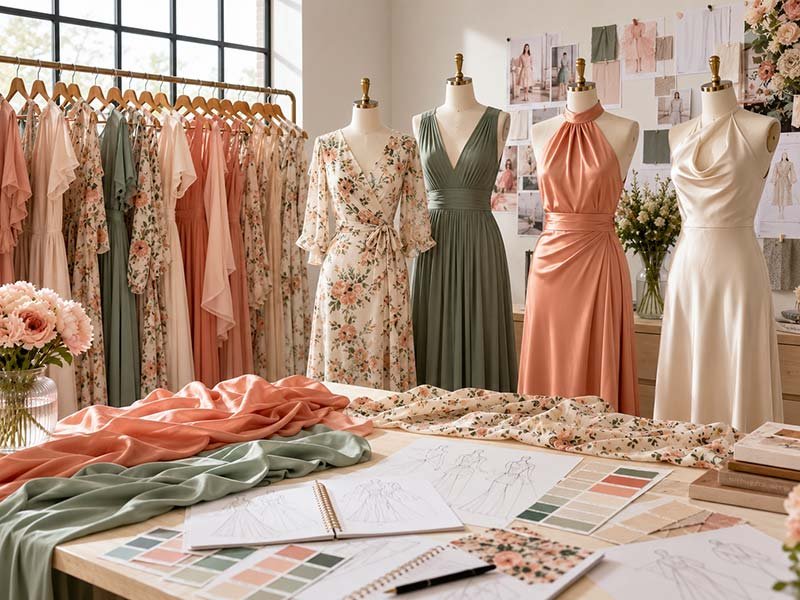
A wedding guest dress has to do far more than look attractive on a product page. It must feel appropriate beside the bridal party, photograph well in several kinds of light, remain comfortable through a ceremony and dinner, and still look polished once the wearer starts moving. That combination is shaping the most useful direction for 2027. The coming season is not defined by one viral neckline or one compulsory color. It is moving toward expressive occasionwear in which familiar silhouettes gain energy through richer color, controlled draping, modern lace, asymmetric construction and more tactile surfaces.
Wedding guest dress trends for 2027 will center on saturated color, modern romantic detail, fluid midi and maxi lengths, asymmetric necklines, halters, lace, soft transparency and purposeful texture. The strongest dresses will combine an immediate visual identity with stable fit, comfortable movement, suitable coverage and enough versatility to be worn again for another celebration rather than becoming a one-event purchase.
Picture a guest arriving in a berry-red halter midi with a softly twisted waist. The color feels current, the neckline is memorable, and the shape works in the first photograph. More importantly, the straps remain comfortable during dinner, the skirt moves naturally on the dance floor, and the dress can return for a birthday or evening event. That is the real opportunity behind 2027 occasionwear: fashion that creates a moment without falling apart once real life begins.
What Will Wedding Guest Dresses Look Like in 2027?
Wedding guest dresses in 2027 will look more expressive, polished and adaptable. Strong color, modern romance, asymmetric construction, fluid draping and tactile surfaces will refresh familiar midi and maxi shapes. The best styles will not depend on novelty alone; they will combine visible fashion value with secure fit, practical coverage, comfortable movement and enough versatility for more than one occasion.
Expressive Simplicity
The move away from strict minimalism does not mean that every 2027 dress needs heavy embellishment. In practice, the most convincing occasionwear will often combine a clean foundation with one memorable idea. A column dress may use an asymmetric neckline. A bias-cut midi may appear in a vivid tomato or cobalt rather than a safe neutral. A fitted maxi may introduce a sculpted hip drape instead of covering the entire surface with crystals. This balance allows the dress to feel new without becoming difficult to understand or style.
Visual clarity matters because wedding guests usually want to look distinctive without appearing overworked. When bright print, large cutouts, dense ruching, oversized flowers and sequins all compete on one garment, the customer has to work harder to imagine where it belongs. The product may also date quickly. A stronger approach is to let one element lead while the others support it. A saturated halter can remain clean through the body; a black column can gain occasion value from tonal lace; a floral midi can use a quiet neckline so the print remains the focus.
Real-world performance should remain part of the aesthetic decision. A dress must still look right when the wearer is seated, photographed from the side, walking on uneven ground or dancing after dinner. Clean design helps expose weak construction, so straps, seams, lining and hems need more attention rather than less. Expressive simplicity succeeds when the garment reads clearly from a distance and continues to feel composed after several hours of wear.
Modern Romance
Romantic details are returning in a more controlled and grown-up form. Tonal lace, narrow ruffles, softly gathered chiffon, sheer sleeves, shaped corsages and floral applique can create emotion without pushing the dress toward bridal territory. The important change is placement. A flower at one shoulder frames the face and photographs well, while the same flower directly at the waist may become uncomfortable when the wearer sits. A narrow ruffle along an asymmetric neckline can introduce movement, whereas repeated ruffles around the bust may create unwanted volume and grading problems.
Color is one of the clearest tools for keeping romantic guestwear distinct from bridal fashion. Burgundy, navy, olive, chocolate, deep blue and black lace retain delicacy while feeling appropriate for a guest. Pale lace can also work when the lining is deeper, the silhouette is clearly modern, or a multicolor print breaks up the surface. Designers should be cautious with full white lace, large ivory flowers and voluminous pale tulle unless the event specifically invites an all-white dress code.
The most durable romantic details also help the silhouette. Diagonal gathering can soften the waist, a lace panel can create useful coverage, and a draped overlay can make a fitted skirt feel less severe. Decorative techniques deserve the same production discipline as structural seams. Applique edges, bead attachment, ruffle balance and lace matching should be checked after pressing, packing and movement. Romance has greater commercial value when it supports fit and proportion rather than acting as decoration placed on top of an unresolved dress.
Trends With Staying Power
A trend has staying power when it survives beyond the campaign image. It should remain flattering in ordinary lighting, be manageable for several hours and work with more than one styling approach. Fluid midis, elongated maxis, halter necklines, asymmetric shoulders, tonal lace and saturated solid colors meet these conditions more reliably than highly specific novelty details. They can be adapted across seasons, markets and price levels without forcing every customer into the same dramatic look.
Repeat wear is becoming a practical part of occasion shopping. Many customers attend several weddings, birthdays and formal dinners within the same year, so a dress that can return with different shoes, jewelry or outerwear carries clearer value. Removable corsages, adjustable straps, restrained shine and adaptable lengths support that behavior. A midi in a strong solid color often has a longer life than a dress whose identity depends on an oversized bow or a complicated trend that only works in one styling context.
A collection still needs statement pieces, but they should be treated differently from its foundation. A dramatic bubble hem, a heavily beaded mini or an extreme cutout can create editorial attention and support a limited drop. It should not automatically receive the same color count or inventory depth as a proven midi with broader occasion relevance. Long-term product value comes from knowing which ideas deserve repetition and which are strongest as controlled moments.
Real-Wear Performance
The difference between an attractive dress and a dependable one often appears after the first thirty minutes. Straps relax, necklines move, linings rise and lightweight skirts behave differently once the wearer starts walking outdoors. These issues rarely show in a front-facing image. Fit review should therefore include sitting, walking, raising the arms, turning the upper body and moving between indoor and outdoor light. A wedding guest dress is an active garment even when its appearance is formal.
Fitted shapes need to be checked for horizontal strain around the waist and hips, while halter styles require enough neck comfort and side coverage. Strapless dresses should receive internal support rather than depending on an excessively tight outer shell. Floor-length styles must be tested on stairs, grass and crowded reception spaces. An ankle-length version can preserve an elongated line while working with a wider range of shoes and venues. High slits should always be reviewed while seated because the opening can change dramatically once the leg bends.
These practical checks do not reduce the fashion value of a dress. They protect it. Customers are more likely to recommend, review and rewear a product when it stays in position and continues to look polished throughout the event. The most credible 2027 designs will make technical control feel invisible, allowing the wearer to enjoy the occasion rather than repeatedly adjusting the garment.
| 2027 Direction | Fashion Impact | Wearability | Production Risk | Likely Collection Role |
| Saturated solid color | High | High | Low to medium | Core seasonal style |
| Halter or one-shoulder neckline | High | Medium to high | Medium | Key fashion silhouette |
| Fluid column or bias midi | Medium to high | High | Medium | Repeatable core shape |
| Tonal lace overlay | High | Medium to high | Medium | Romantic occasion capsule |
| Dimensional floral detail | High | Medium | Medium to high | Statement product |
| Extreme cutouts | High | Low to medium | High | Limited fashion drop |
| Full-surface embellishment | High | Medium | High | Evening or festive capsule |
Which Colors and Prints Will Lead in 2027?
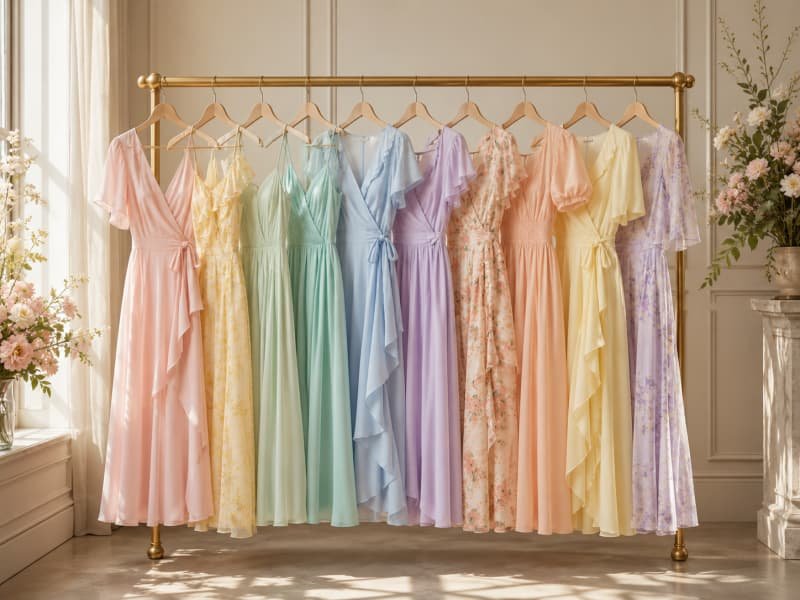
The leading 2027 wedding guest palette will combine saturated brights, romantic deep tones, updated pastels and versatile dark neutrals. Red, berry, cobalt, emerald, plum, butter yellow, powder blue and pistachio will support different seasons. Florals will remain important, but stronger collections will use enlarged botanicals, placement motifs, watercolor effects, polka dots and ombre rather than basic repeated prints.
Bold Color Families
Bold color will be one of the clearest ways to update familiar occasion silhouettes. Red should be treated as a family rather than a single shade. Tomato and poppy work well for spring and summer; berry carries across seasons; wine and garnet suit autumn and winter. Blue provides similar flexibility, moving from pool and sky tones for destination events to cobalt for modern impact and midnight for formal evenings. Green can shift from pistachio and grass to olive and emerald, allowing one color story to serve several venues.
Strong color usually performs best when the construction remains controlled. A cobalt satin halter already has enough visual presence, so dense rhinestones and multiple cutouts may reduce its versatility. A dark green crepe dress, by contrast, may benefit from an asymmetric shoulder or gathered waist so it does not become too conservative. The aim is not to make every product louder; it is to match the level of detail to the strength of the shade.
Color approval must happen in the intended fabric. Satin reflects light and can make a shade appear brighter in photographs. Velvet absorbs light and deepens jewel tones. Chiffon becomes softer when layered, while mesh may change significantly according to the lining beneath it. Physical lab dips should be reviewed in daylight, warm indoor light and camera flash. Wedding products are photographed under all three, and a digital screen cannot reveal how a finished surface will behave.
Updated Pastels
Pastels remain relevant for spring, garden and daytime weddings, but they require clearer separation from white, ivory and pale champagne. Butter yellow, powder blue, pistachio, lilac, peach and dusty pink can all feel current when the silhouette, print or texture gives the garment a distinct identity. A light blue asymmetric midi reads differently from a pale blue corset maxi with a full skirt, even though both start from a similar color family.
Pale fabrics also expose construction problems more readily. Thin satin can reveal seam allowances, pocket bags, lining edges and underwear. Light crepe may become transparent when stretched over the hip, while chiffon may need several layers that increase weight and cost. Every pastel sample should be checked in strong daylight and under flash, not only in a softly lit studio. A color is not commercially useful when customers feel uncertain about opacity or when internal construction becomes visible in photographs.
Depth can be introduced through tonal embroidery, contrast piping, darker underlayers, multicolor florals or controlled ombre. These treatments make a pale shade feel intentional rather than bridal-adjacent. Skin-tone range should also be considered. One extremely pale color may wash out part of the customer base, while two complementary pastels such as powder blue and muted peach can create a broader and more inclusive assortment.
Prints That Feel New
Florals remain central to wedding guest dressing because they communicate romance and seasonality immediately. The 2027 opportunity is to make them more deliberate. Enlarged botanicals, shadow florals, abstract petals, watercolor edges and engineered placements create stronger identity than small flowers repeated evenly across the fabric. Dark-ground florals also extend the category into autumn and evening events, giving the print story more range than a purely spring-focused palette.
Print scale should follow the silhouette. A large flower can look striking on a long column but may overwhelm a fitted mini. Small prints can suit gathered chiffon, yet they may appear casual when the contrast and fabric quality are too low. Medium-scale motifs usually offer the widest flexibility across mini, midi and maxi lengths. Polka dots can also move beyond retro styling when used on fluid halters, asymmetric midis or fitted mesh dresses. Irregular, tonal or mixed-scale dots feel fresher than a perfectly uniform repeat.
Placement prints require more control than random repeats. The artwork needs to align with the neckline, center front, waist and side seams. Grading changes how a motif sits on larger sizes, so a flower that frames the waist correctly on a sample size may move too high or low after grading. Print and pattern teams should therefore work together before bulk cutting rather than treating artwork placement as a late styling decision.
Seasonal Color Planning
Seasonal color planning should connect shade to venue, weather and fabric rather than simply recoloring the same dress. Spring can support pistachio, powder blue, lilac and fresh botanical combinations. Summer favors citrus, cobalt, tomato red, turquoise and saturated pink. Autumn becomes richer through berry, plum, olive, rust and chocolate, while winter benefits from black, midnight blue, emerald, garnet and controlled metallic accents.
Transitional colors are valuable because they extend the selling period. Teal, deep blue, warm pink and berry can move from late summer into autumn, giving a proven silhouette more commercial life than a highly seasonal lemon or holiday metallic. Brands selling across regions should also avoid relying on a single climate calendar. Australian customers may be shopping for outdoor summer weddings while European customers are choosing velvet and longer sleeves.
Organizing collections by occasion can be more practical than dividing everything into four seasons. Garden, destination, cocktail and formal evening edits allow the same color to be used differently according to fabric and styling. Black remains dependable when the silhouette and finish feel celebratory. Red can also work, although cultural expectations and the couple’s preferences should take priority over general fashion rules.
| Color or Print Direction | Best Seasons | Suitable Fabrics | Strongest Silhouettes | Key Development Check |
| Tomato and poppy red | Spring, summer | Satin, crepe, chiffon | Halter midi, column maxi | Shade under flash |
| Berry and wine | Autumn, winter | Velvet, lace, crepe | One-shoulder midi, fitted maxi | Dye-lot consistency |
| Cobalt and pool blue | Spring, destination | Satin, georgette, mesh | Draped midi, slip maxi | Lining color match |
| Emerald and olive | Autumn, formal evening | Crepe, velvet, jacquard | Long column, structured midi | Surface shading |
| Butter yellow and pistachio | Spring, garden | Chiffon, satin, lace | Ruffled midi, soft maxi | Bridal appearance |
| Enlarged botanicals | Spring, summer | Chiffon, crepe, woven satin | Midi and maxi dresses | Motif placement |
| Dark-ground florals | Autumn, evening | Mesh, crepe, velvet-touch woven | Ruched midi, fitted maxi | Print clarity |
| Ombre and watercolor | Destination, event dressing | Chiffon, georgette, satin | Fluid maxi, asymmetric dress | Transition consistency |

Which Silhouettes and Fabrics Will Define the Year?
Fluid columns, bias-cut slips, shaped midis, soft mermaid lines and elongated maxis will form the core of 2027 wedding guest dressing. Halter, strapless and asymmetric necklines will provide the strongest visual updates. Satin, crepe, chiffon, mesh, lace, jersey and velvet will remain important, but selection must be based on drape, support, opacity, recovery and the demands of each silhouette.
Columns and Fluid Shapes
Column dresses and fluid slips remain relevant because they create a clean, lengthened silhouette and can be styled for several levels of formality. Their simplicity, however, requires disciplined development. Plain satin and crepe expose seam puckering, twisting, uneven hems, pressing marks and lining tension. A decorative print may hide some of these problems, but a smooth solid surface will not. The cleaner the design looks, the more accurately its technical details must be controlled.
Bias-cut dresses need particular attention because the fabric can stretch and drop after assembly. The garment should be allowed to relax before the hem is levelled; otherwise, the finished edge may become uneven after hanging or wearing. Side seams must be balanced so the dress does not rotate around the body. These issues are manageable, but they need to be included in the development timeline rather than treated as last-minute finishing problems.
For 2027, fluid shapes can be refreshed through a draped back, asymmetric shoulder, shaped waist panel, controlled godet or gentle flare below the knee. A soft mermaid influence can add movement without creating ceremonial volume. Midi lengths remain versatile for garden, cocktail and city weddings, while maxis carry stronger evening impact. Ankle lengths often offer the best compromise between elegance and practicality because they work with heels, flats and uneven venues.
Necklines and Support
Halter necklines are well placed to become a leading 2027 detail because they frame the shoulders and create a long upper-body line. They work with fitted skirts, fluid columns and draped midis, yet they are not automatically comfortable. Narrow ties can place too much pressure on the neck, while low armholes may expose more of the bust than intended. Commercial halters often need wider straps, shaped lining, hidden elastic or internal cups to balance the visual openness of the design.
One-shoulder and asymmetric necklines create immediate identity in product images, but uneven tension can cause a dress to twist. Strapless styles require internal support such as boning, elastic grip or a structured lining; simply making the outer garment tighter usually creates strain and horizontal wrinkles. Cowl necklines should be tested while the wearer bends and sits, because a front that looks controlled on a dress form may gape during movement.
Grading must preserve coverage and proportion rather than increasing every measurement by the same amount. A neckline that works on a small sample may need a different strap width, cup position or side height in larger sizes. Support decisions also affect cost and comfort, so they should be agreed early. The most successful open necklines feel effortless because the engineering remains hidden from the wearer.
Draping and Fit Control
Draping works best when it solves a visual or fit problem. Diagonal gathering can soften the abdomen, a side drape can balance the hip, and a twisted bodice can add depth to a solid fabric. Draping added without a clear purpose often increases bulk and makes grading more difficult. The designer and pattern team should know whether a fold is shaping the body, creating movement or simply acting as surface decoration.
Structural draping is built into the pattern and changes the fit, while decorative draping sits over a more stable base. The second approach may be easier to reproduce in bulk, while the first can look more natural when engineered correctly. Ruching density must be reviewed across sizes. A gather ratio that appears refined on a small sample can become excessive on a larger size if it is scaled mechanically. The same caution applies to twisted fronts, waterfall panels and draped waist pieces.
Slits and asymmetric hems also need movement tests. A slit that appears moderate while standing can open far higher when the wearer sits or climbs stairs. Overlap, lining attachment and seam reinforcement all affect performance. Asymmetric skirts should be viewed from the front, side and back because soft fabric can settle unevenly. The best draped dresses appear spontaneous, but that ease is usually the result of careful pattern balance and repeated fit review.
Fabric Performance
Fabric selection should begin with the job the silhouette needs to perform. A bias slip requires smooth drape and enough weight to fall cleanly. A corset-inspired midi needs a stable shell or internal structure. A ruched mesh dress needs stretch recovery and a lining that moves with the outer layer. Using a fashionable material name without evaluating its behavior is one of the fastest ways to create a disappointing sample.
Satin can produce beautiful movement but may snag, pucker or show pressing marks. Chiffon creates lightness, yet transparency and seam slippage require attention. Crepe supports cleaner shapes, while stretch mesh and jersey can serve fitted styles when recovery is strong enough to prevent growth during wear. Velvet suits winter events but demands consistent nap direction and careful handling to avoid shading and pressure marks.
The same fiber composition and weight do not guarantee the same result. Two polyester satins can differ in shine, stretch, drape and seam stability. A physical standard should therefore be retained from the approved sample and compared with bulk fabric. Testing should focus on likely risks, including opacity, colorfastness, shrinkage, recovery, snagging, seam slippage and surface change after pressing.
| Fabric | Typical Weight Range | Suitable Uses | Important Performance Checks |
| Charmeuse or light satin | 90-150 gsm | Slips, draped midis, halters | Snagging, seam puckering, shade variation |
| Medium satin | 150-220 gsm | Structured midis, fitted maxis | Press marks, stiffness, seam slippage |
| Chiffon | 50-90 gsm | Sleeves, ruffles, layered skirts | Transparency, fraying, tearing |
| Georgette | 70-130 gsm | Fluid midis, destination maxis | Surface texture, seam stability |
| Crepe | 130-240 gsm | Columns, tailored dresses, asymmetric shapes | Stretch, recovery, surface marking |
| Stretch mesh | 70-140 gsm | Ruched dresses, overlays, sheer sleeves | Recovery, snagging, lining compatibility |
| Stretch jersey | 170-280 gsm | Bodycon and draped silhouettes | Growth, opacity, edge rolling |
| Velvet | 180-320 gsm | Winter midis, evening maxis | Nap direction, pressure marks, shading |
| Lace | Structure dependent | Overlays, panels, sleeves | Repeat matching, tearing, edge finish |

How Should Guests Dress for Each Wedding?
Guests should begin with the stated dress code, then consider venue, time, climate, cultural expectations and the couple’s preferences. Black-tie events generally call for elevated midis or floor-length dresses, while garden and beach weddings allow lighter fabrics and softer construction. White and bridal-adjacent shades are normally safest to avoid; black, red and brighter colors depend on context.
Formal and Black Tie
Black-tie dressing should look deliberate in fabric, proportion and finish. Floor-length dresses remain the clearest choice, although a refined midi can work when the material and construction feel sufficiently formal. Satin, velvet, lace, crepe and controlled embellishment usually communicate the occasion more effectively than thin casual jersey or lightweight daytime fabric. A formal dress does not need a large skirt; a long column, draped halter, asymmetric maxi or soft mermaid line can feel equally appropriate.
Length should be tested with realistic shoes. A hem developed only around a tall fit model in high heels may be impractical for a large share of customers. An ankle-length version creates flexibility, while a full-length style should avoid unnecessary trains that become awkward around chairs and crowded reception spaces. Dark jewel colors, black, midnight blue, berry and emerald provide strong evening options and can return for other formal events.
Construction becomes particularly visible in simple formal styles. Zippers should lie flat, necklines should remain stable, linings should not pull against the shell and hems should hang evenly. Satin and crepe reveal subtle failures that a print might disguise. A black-tie product feels premium when every visible line appears calm, even though the internal support and finishing may be technically complex.
Garden and Daytime Weddings
Garden weddings support florals, romantic color and softer silhouettes, but the outdoor setting should influence the garment. Midi and ankle lengths are generally easier to manage than floor-skimming hems. Chiffon, georgette, lightweight crepe, woven satin and soft jacquard can all work according to temperature and formality. Large botanicals or controlled watercolor motifs tend to create stronger occasion value than very small prints that may read as casual.
Movement and layering deserve attention. Ruffles, pleats and asymmetric hems can look beautiful in light wind, but excessive volume becomes difficult when it repeatedly blows across the body. A garden ceremony may start in direct sun and continue into a cooler evening, so dresses that coordinate with a wrap, tailored blazer or light jacket offer practical flexibility. Breathable lining, adjustable straps and bra-friendly backs also improve comfort through a long day.
Footwear affects the overall proportion. Guests may choose block heels, wedges or flats because narrow stilettos sink into grass. A well-developed garden dress should still look balanced with those shoes. Product photography is more useful when it shows realistic outdoor styling rather than only high heels in a studio, helping customers understand how the length and movement will work at the venue.
Beach and Destination Weddings
Beach wedding dressing needs a balance between polish and ease. Lightweight fabrics, controlled hems and secure necklines are usually more useful than heavy corsetry, long trains or dense embellishment. Chiffon, georgette, fluid crepe and stretch jersey can work well when transparency and cling are properly managed. The ideal dress feels special in the ceremony but remains comfortable during travel, heat and movement across sand or outdoor flooring.
Wind changes how a garment behaves. Loose wrap fronts can open, cowls may shift and very light skirts can lift. Internal fastenings, sufficient overlap and stable straps make a meaningful difference. High slits should be checked in moving air, not only while standing indoors. Halter and one-shoulder styles also need enough security for walking outside. A dress that requires constant adjustment will quickly lose its sense of ease.
Destination travel adds another test. Customers value dresses that pack into limited luggage, release wrinkles without specialist treatment and transition from ceremony to dinner. Heavy sequins, fragile applique and highly structured skirts may create unnecessary complications. Coral, turquoise, cobalt, citrus, strong pink and tropical botanicals suit many destination settings, while very pale shades should be reviewed under bright sunlight to ensure that they do not photograph as white.
Season and Dress Code
Season affects more than the palette. Fabric weight, sleeve coverage, lining, outerwear compatibility and temperature control determine whether a dress is genuinely appropriate. Spring supports lighter layers and fresh color, while autumn needs richer texture and enough substance for changing weather. Winter evening styles should be designed with coats and indoor heating in mind, and summer dresses need breathability without becoming transparent or unstable.
White, ivory and near-white shades are usually safest to avoid unless the invitation specifically requests them. Pale yellow, champagne and light blue can also appear close to white under flash, particularly in reflective satin. Black is widely workable for modern weddings when the shape and styling feel celebratory rather than sombre. Red can be equally suitable, although a very bright shade combined with an extremely revealing silhouette may draw more attention than the wearer intends.
Dress-code language should always be interpreted alongside the venue and culture. A formal hotel event, a countryside ceremony and a coastal destination can use the same word while creating different practical expectations. Customers make better decisions when product descriptions explain length, fabric weight, lining and support rather than relying only on broad labels such as formal or cocktail.
| Wedding Type | Recommended Lengths | Suitable Materials | Useful Design Features | Common Mistake |
| Spring garden | Midi, ankle, soft maxi | Chiffon, crepe, light satin, jacquard | Florals, soft color, light layering | Hem that drags on grass |
| Summer outdoor | Mini, midi, controlled maxi | Georgette, mesh, light woven, satin | Breathability, secure straps, low bulk | Heavy lining or unstable wrap front |
| Autumn estate | Midi, maxi | Crepe, lace, satin, heavier chiffon | Rich color, sleeves, deeper texture | Using a summer fabric in a dark color only |
| Winter evening | Long midi, floor length | Velvet, lined satin, heavier crepe | Coverage, structure, controlled shine | Ignoring coat compatibility |
| Beach destination | Midi, ankle, fluid maxi | Chiffon, jersey, georgette, light crepe | Packability, wind stability, movement | Long trains and dense embellishment |
| City black tie | Long midi, maxi | Satin, velvet, crepe, lace | Refined neckline, stable lining, clean finish | Casual fabric in a formal silhouette |
| Cocktail wedding | Above-knee to midi | Crepe, satin, jacquard, lace | Defined waist, polished proportion | Excessively casual mini styling |
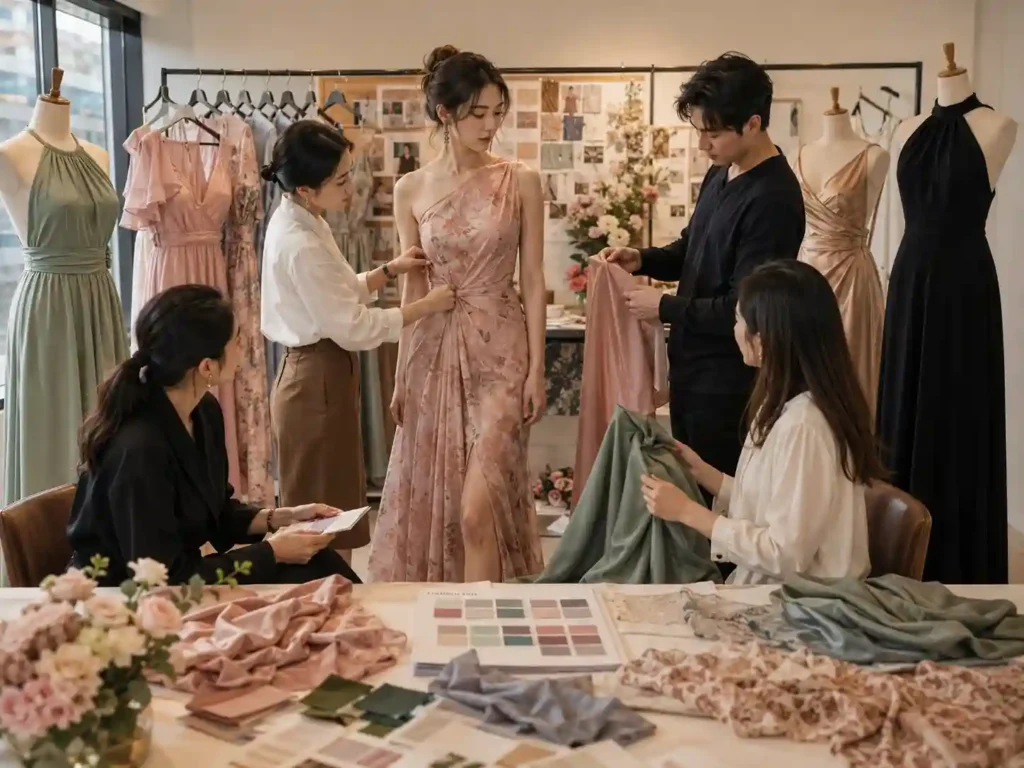
How Can Brands Turn 2027 Trends Into Sellable Dresses?
Brands can turn 2027 trends into sellable products by separating durable commercial directions from short-lived statements, balancing mini, midi and maxi lengths, testing fabric and fit risks early, and locking critical standards before production. A trend becomes useful only when it can be reproduced consistently, graded across sizes, delivered at the intended price and worn comfortably in a real wedding setting.
Build the Right SKU Mix
A strong wedding guest collection should not consist entirely of statement pieces. Customers need clear entry points, dependable shapes and enough fashion interest to justify a new purchase. Core products might include a fluid midi, a fitted crepe dress, an asymmetric maxi and a printed occasion dress. Once the fit is proven, these shapes can return in new colors or fabrics. Seasonal styles can introduce lace, stronger prints, ruffles and newer necklines, while a smaller group of statement products carries dimensional flowers or heavier embellishment.
Length should be planned deliberately. Minis suit cocktail, city and younger occasion edits but have less relevance for conservative or highly formal ceremonies. Midis usually offer the broadest versatility across age groups and venues. Maxis provide visual impact for destination, evening and black-tie collections. The range should also balance fitted and fluid shapes, solid and printed options, different coverage levels and several wedding settings rather than repeating one customer need across many similar products.
Color depth should reflect confidence in the silhouette. A proven dress can support more colorways because its fit and construction risks are understood. An experimental bubble hem or complicated cutout may be safer in one focused color until performance is clear. Good assortment planning is not about maximizing SKU count; it is about giving each product a distinct role and avoiding internal competition between styles that look different on a line sheet but nearly identical to the customer.
Test Materials Early
Material risk should be identified before the sampling process becomes expensive. Occasion dresses frequently use satin, mesh, lace, chiffon, velvet, sequins and stretch jersey, and all can behave differently between sample yardage and bulk fabric. Opacity should be checked in daylight and under flash. Stretch fabrics need recovery testing. Satin requires review for snagging and seam puckering, while lace and embellished materials need attention to repeat, attachment strength and tearing around seams.
Substitution involves more than matching color and weight. A replacement fabric may have different stretch, friction, drape or surface shine, which can change neckline stability, waist fit and skirt movement. When the material changes, the pattern may also need adjustment. Shell, lining, mesh, zipper tape and elastic should be reviewed together because components that appear matched under normal light can separate visibly in photography.
A physical approved standard is one of the most useful controls. It allows the development and production teams to compare bulk fabric with the material used in the accepted sample. Testing can then focus on realistic risks rather than becoming a long generic checklist. For wedding guest dresses, those risks often include opacity, colorfastness, dimensional change, stretch recovery, snagging, seam slippage, embellishment security and surface marking after pressing.
Reduce Fit Risk
Wedding guest dresses often combine close fit with open necklines, draping and high slits, which makes their fit risk higher than loose casual garments. Bust position, waist placement, hip balance, strap tension and skirt fall should be evaluated together. Bodycon dresses need enough negative ease to shape the body without causing excessive strain. Stretch percentage alone is not enough; recovery determines whether the garment returns to its original dimensions after several hours of wear.
Halter, strapless, corset-inspired and backless designs require support strategies suited to the target customer. Internal cups, boning, elastic, power mesh and shaped lining can improve stability, but every addition affects cost and comfort. Support should not be created simply by reducing the finished measurements. Fit approval should include sitting, walking, raising the arms and turning the upper body because openings and straps often behave differently once the body moves.
Larger sizes may need separate review because proportion and support cannot always be preserved through mathematical grading alone. Clear fit comments also reduce unnecessary sample rounds. A note such as ‘make the waist tighter’ is less useful than a measured instruction that identifies the exact location and reason. The aim is to protect the intended silhouette while creating a dress that feels stable for the people who will actually wear it.
Lock Production Standards
A beautiful sample is not yet a production standard. Before bulk cutting, the approved fabric, lining, trims, color, measurements, construction, artwork and embellishment placement should be recorded clearly. Measurement tolerances need to reflect the garment type. A loose chiffon skirt can accept more variation than a fitted corset bodice, while bust width, waist, strap length and neckline opening often require tighter control than less visible dimensions.
The pre-production sample should use bulk or bulk-representative materials whenever possible. A sample made with different stretch, weight or trim quality cannot reliably predict production performance. Workmanship details such as seam type, stitch density, pressing method and hem finish should also be confirmed. Product-specific quality checks are more useful than relying only on a general checklist, especially for bias seams, satin surfaces, draping, lining length and embellishment placement.
For Duolan Apparel, the relevant work begins before sewing. The documented product focus includes wedding guest, occasion, party, fitted, satin, mesh, sequin, floral, halter and backless dresses, supported by fabric development, pattern work, sample refinement, pilot or first-piece confirmation and coordinated bulk production. Brands preparing a 2027 collection can send a tech pack, reference sample, fabric direction or collection brief to discuss feasibility, fit priorities, materials, sampling and production planning before committing the range to bulk.
A useful inquiry should include target market, planned launch window, approximate style count, intended quantity range, size specification, target price position and any confirmed fabric or testing requirements. With that information, the development conversation can move beyond a basic quotation and focus on whether the proposed colors, silhouettes and details can be translated into stable, production-ready wedding guest dresses.
| Duolan Apparel develops fashion-driven wedding guest and occasion dresses for established brands and product teams. Projects can begin from a tech pack, reference sample, fabric direction or collection brief, then move through material selection, pattern and fit development, sample refinement, first-piece confirmation and coordinated production. For a more useful quotation, share the target market, launch window, planned styles, approximate quantities, size specification, target price position and any fabric, testing or packaging requirements with duolan apparel. |